The Quest for Instantaneous Speech
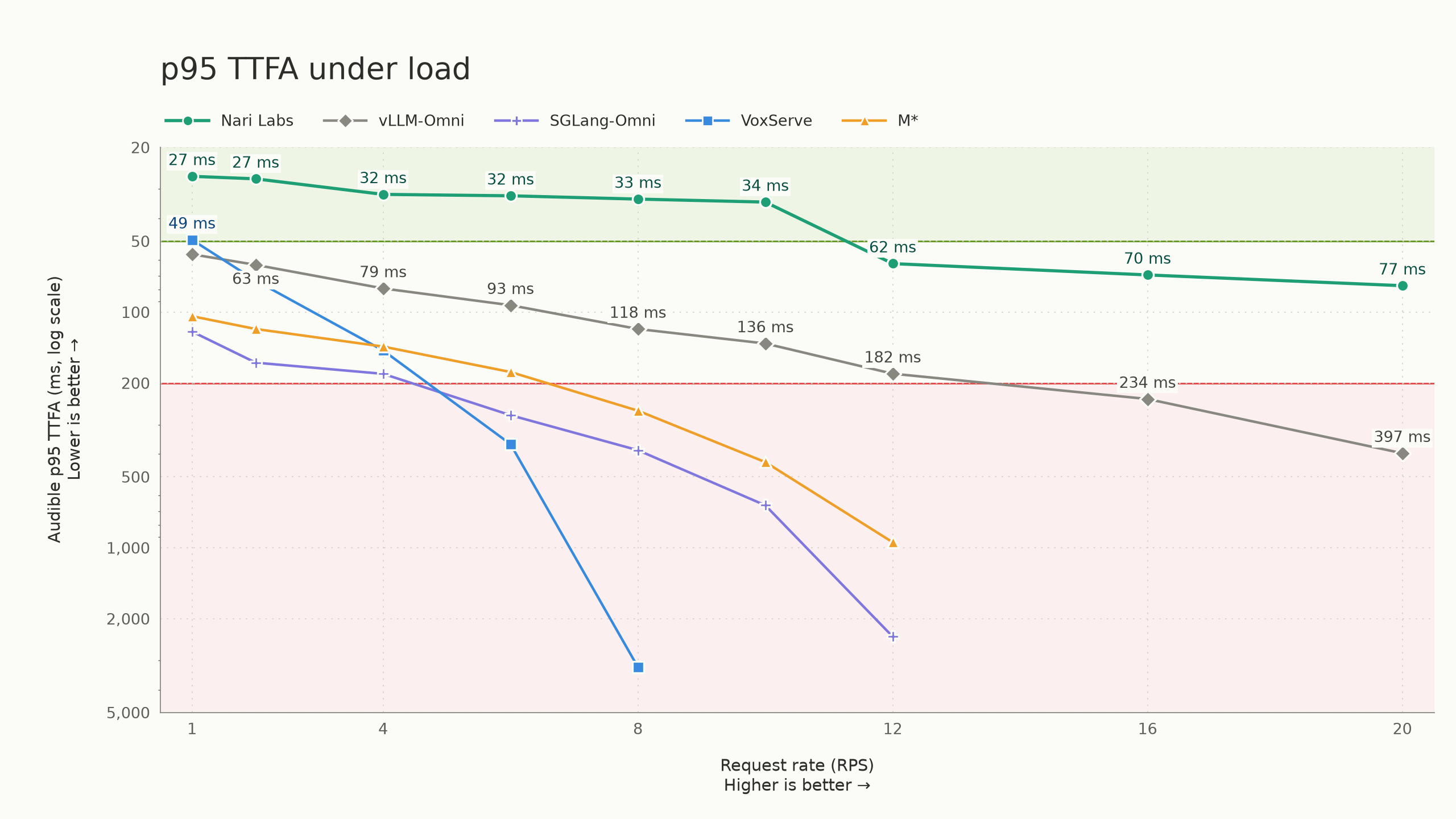
Generating human-like speech from text has long been a goal of AI research, but achieving real-time, low-latency responses has remained a significant engineering challenge. Traditional text-to-speech (TTS) models often suffer from noticeable delays, making them unsuitable for interactive applications where immediate feedback is crucial. Nari Labs, through their work on the Qwen3-TTS model, has systematically tackled these bottlenecks, pushing the boundaries to deliver speech synthesis in under 50 milliseconds. This achievement is not merely an incremental improvement; it represents a leap forward in making AI-powered voice truly conversational.
The core problem lies in the computational complexity of TTS models. These models must process input text, break it down into phonetic units, predict acoustic features, and then synthesize these features into audible waveforms. Each step in this pipeline introduces latency. For Qwen3-TTS, the objective was to compress this entire process into a timeframe that feels instantaneous to a human user. This requires optimizing not just the model architecture but also the inference engine and deployment strategy.
Architectural Innovations for Speed
At the heart of Qwen3-TTS's performance are several key architectural decisions. The model adopts a unified, end-to-end approach, moving away from multi-stage pipelines that introduce cumulative delays. This means the model learns to map text directly to acoustic features and then to speech, minimizing intermediate representations. Specifically, the team focused on improving the efficiency of the acoustic modeling component. Instead of relying on computationally intensive methods, they explored lightweight attention mechanisms and more efficient transformer variants. These modifications reduce the number of operations required per token without significantly sacrificing the quality of the predicted acoustic features.
A critical aspect of their approach involved parallelizing computations wherever possible. Modern TTS models often process sequences, but the internal computations within each step can be parallelized across different parts of the input or different acoustic feature dimensions. Qwen3-TTS leverages optimized kernels and hardware-aware design principles to maximize the use of parallel processing capabilities on modern hardware, such as GPUs. This allows for a much faster throughput of data through the model.
Optimizing Inference and Deployment
Beyond the model architecture itself, Nari Labs invested heavily in optimizing the inference process. This includes techniques such as model quantization, where the precision of the model's weights and activations is reduced (e.g., from 32-bit floating point to 8-bit integers). Quantization significantly reduces memory footprint and speeds up computation, often with minimal impact on speech quality. The team meticulously evaluated different quantization strategies to find the optimal balance between speed and fidelity.
Furthermore, they employed advanced compilation techniques. Tools like TensorRT or ONNX Runtime were used to fuse operations, optimize computation graphs, and select the most efficient kernels for the target hardware. This process transforms the abstract model definition into highly optimized machine code tailored for specific hardware accelerators. Batching, while typically used to improve throughput, was carefully managed to avoid introducing latency for single-user requests. For real-time applications, processing a single request with minimal delay is paramount, and the inference engine was tuned to prioritize this.
Deployment strategy also played a crucial role. Instead of relying on heavy, general-purpose inference servers, Nari Labs developed a lightweight, custom inference runtime. This runtime is designed from the ground up to minimize overhead, reduce memory allocation costs, and ensure fast data transfer between model components and the operating system. Deploying the model on edge devices or highly optimized cloud instances further reduces network latency, contributing to the sub-50ms response time.
Measuring and Validating Performance
The claim of sub-50ms latency is not trivial and requires rigorous measurement. Nari Labs detailed their methodology, which involves precisely timing the interval from when the input text is fully received by the inference server to when the first audio sample is generated. This measurement accounts for all internal processing steps, including text encoding, acoustic feature prediction, and vocoding. They utilized high-resolution timers and repeated tests under various load conditions to ensure the latency figures are consistent and reliable.
The surprising detail here is not just the speed but the consistency across a wide range of text inputs and voice styles. Achieving such low latency often comes at the cost of flexibility or quality. However, Qwen3-TTS appears to maintain high-quality speech output, a testament to the careful trade-offs made during model design and optimization. This level of performance opens up a new frontier for real-time voice applications.
Implications for the Future of Voice AI
The ability to generate speech in under 50 milliseconds has profound implications. For developers, it means building voice interfaces that feel as immediate and natural as human conversation. This could transform customer service bots, virtual assistants, in-car communication systems, and even real-time language translation tools. The perceived delay in current voice interactions can often break the flow of conversation; eliminating this delay makes AI voices far more engaging and less frustrating to interact with.
For end-users, this translates to a more seamless and intuitive experience. Imagine asking a question and receiving an answer without any perceptible pause, or having a virtual tutor respond to your queries in real-time during a study session. The technology blurs the lines between human and machine interaction, making AI a more integrated and natural part of our daily lives. This advancement by Nari Labs sets a new benchmark for real-time speech synthesis, pushing the entire field toward more responsive and human-centric AI systems.