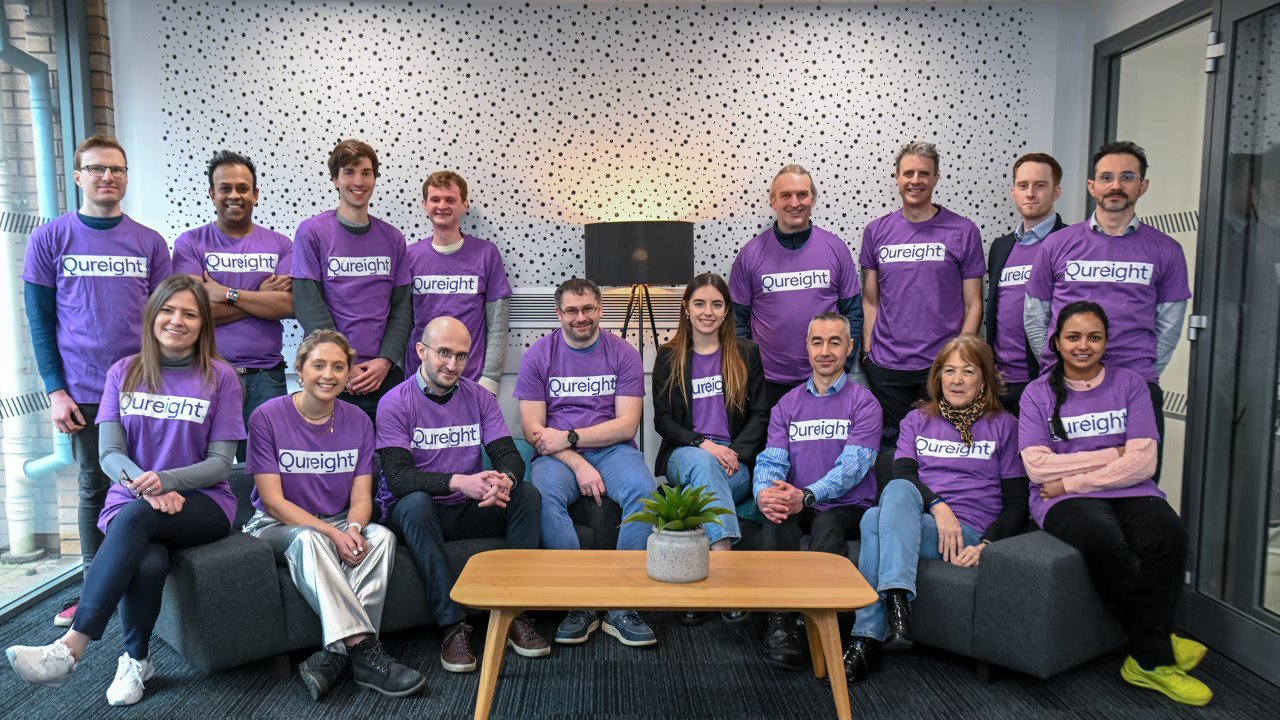
Qureight Secures $20M Series B to Accelerate AI in Clinical Trials
Qureight, a company specializing in enterprise-grade imaging and precision endpoints for clinical trials, today announced it has successfully closed a $20 million Series B funding round. This significant investment will fuel the expansion of its AI-powered imaging platform, particularly for trials focused on lung and heart disease. The funding round was led by new investor Medicxi, with participation from existing investors.
The company's platform aims to streamline the complex and often time-consuming process of clinical trials by leveraging artificial intelligence to analyze medical images with greater speed and accuracy. This precision is critical for identifying and quantifying disease progression, treatment response, and patient outcomes, ultimately accelerating the development of new therapies. Qureight's focus on lung and heart diseases targets areas with significant unmet medical needs and complex imaging biomarkers.
The healthcare industry, and particularly the pharmaceutical sector, is under constant pressure to reduce the time and cost associated with bringing new drugs to market. Clinical trials represent a substantial portion of this expenditure and timeline. Traditional methods of image analysis can be subjective, labor-intensive, and prone to inter-reader variability. Qureight's AI-driven approach promises to overcome these limitations by providing objective, reproducible, and highly sensitive quantitative imaging endpoints.
This Series B funding signifies strong market validation for Qureight's technology and its potential to disrupt the clinical trial landscape. The capital infusion will be strategically deployed to enhance platform capabilities, expand the company's commercial reach, and deepen its expertise in key therapeutic areas. Qureight plans to invest in further developing its AI algorithms, scaling its data infrastructure, and growing its team of AI specialists, data scientists, and clinical experts.
The increasing complexity of drug development, coupled with the growing volume of imaging data generated in trials, creates a fertile ground for AI-powered solutions. Qureight's platform is designed to handle these challenges, providing a comprehensive solution from image acquisition and management to AI-driven analysis and reporting. By offering precision endpoints, the company empowers researchers and clinicians to make more informed decisions, leading to more efficient trial designs and faster regulatory approvals.
The AI Advantage in Imaging Endpoints
The core of Qureight's offering lies in its sophisticated AI engine, capable of identifying subtle patterns and changes in medical images that might be missed by human interpretation alone. For lung diseases, this could mean detecting early signs of fibrosis or small nodules with high sensitivity. In cardiology, the platform can precisely quantify changes in cardiac function, vessel wall thickness, or plaque characteristics. These precise measurements serve as 'precision endpoints,' providing robust data for evaluating drug efficacy.
Think of Qureight's AI less like a diagnostic tool and more like an ultra-precise, tireless analyst that can review thousands of scans with consistent, objective criteria. This is a significant departure from traditional methods where radiologists or imaging specialists manually review images, a process that can be influenced by fatigue, experience levels, and inherent subjectivity. The consistency Qureight offers is invaluable for the statistical rigor required in clinical trials.
The company's focus on lung and heart diseases is strategic. These areas are characterized by complex imaging requirements and a high burden of disease globally. Developing effective treatments for conditions like idiopathic pulmonary fibrosis, lung cancer, or cardiovascular diseases requires highly sensitive and specific measures of treatment response. Qureight's AI platform is tailored to extract these critical insights from modalities such as CT, MRI, and PET scans.
The expansion of the platform will likely involve incorporating more advanced AI models, potentially including deep learning architectures capable of learning from vast datasets. This continuous improvement cycle, fueled by ongoing research and real-world trial data, is crucial for maintaining a competitive edge in the rapidly evolving field of medical AI. The company's ability to integrate seamlessly into existing clinical trial workflows, managing data from diverse sources and ensuring regulatory compliance, will be key to its adoption by pharmaceutical companies and contract research organizations (CROs).
Market Context and Future Outlook
The market for AI in clinical trials is experiencing rapid growth, driven by the imperative to accelerate drug discovery and improve trial efficiency. Qureight operates in a competitive landscape, with numerous companies developing AI solutions for various aspects of drug development. However, its specific focus on end-to-end imaging and precision endpoints for complex diseases like lung and heart conditions positions it as a key player. The $20 million Series B funding provides Qureight with the necessary resources to scale its operations, further differentiate its technology, and capture a significant share of this burgeoning market.
What remains to be seen is how Qureight will navigate the increasing regulatory scrutiny surrounding AI in healthcare. Ensuring that its algorithms are validated, transparent, and meet the rigorous standards of regulatory bodies like the FDA and EMA will be paramount for widespread adoption. The company's ability to demonstrate clear clinical utility and economic value to its customers will also be critical for sustained growth.
With this new funding, Qureight is poised to make a substantial impact on how clinical trials are conducted, potentially leading to faster development of life-saving treatments. The company's commitment to precision, efficiency, and innovation in medical imaging analysis sets a strong precedent for the future of AI in pharmaceutical research.