The Mechanics of Query Fan-Out
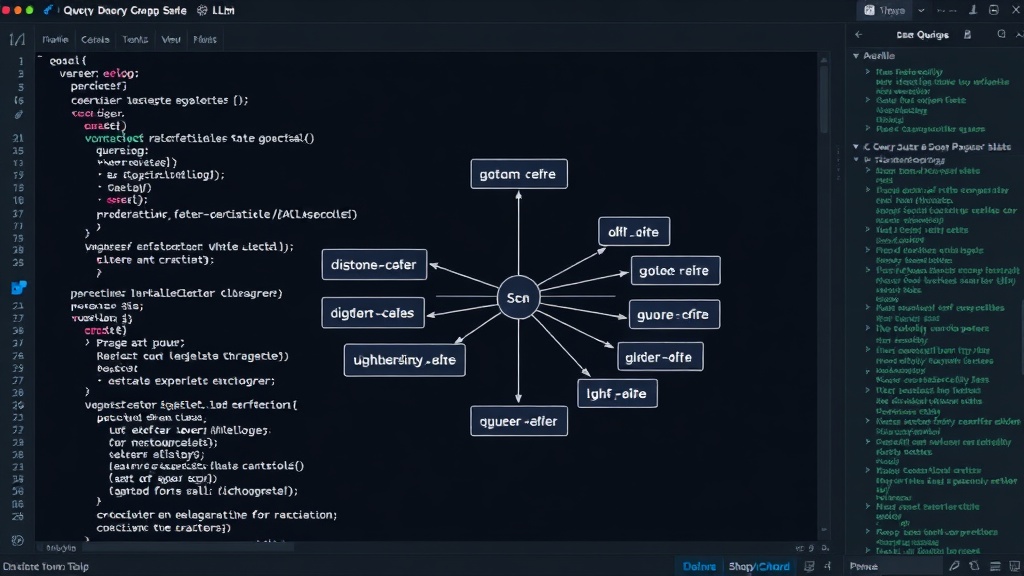
When a user interacts with an AI-powered search or shopping assistant, the system rarely performs a single database lookup. Instead, it employs a technique known as query fan-out. This involves decomposing a complex user question into several distinct sub-queries. Each of these sub-queries is then executed independently, and the results are synthesized to form a comprehensive answer.
Consider a query like, "Best running shoes for flat feet under $150." This is not a monolithic request. An intelligent system will break it down into at least four distinct sub-queries:
- Shoe recommendations specifically for individuals with flat feet.
- Filtering options to identify shoes priced under $150.
- Comparative analysis or ranking criteria to determine the "best" options.
- Potentially, a sub-query related to fit and sizing to mitigate the risk of returns.
The critical implication for product pages (PDPs) is that each of these sub-queries is evaluated against your product content independently. A well-crafted headline or a visually appealing product image is insufficient if the underlying content does not adequately address the specific parameters of each sub-query. For instance, if your product description doesn't clearly mention suitability for flat feet, or if the pricing information is ambiguous or missing, the product might be filtered out by the LLM, even if it's a perfect match for the user's needs.
Implications for Shopify PDP Optimization
For e-commerce platforms like Shopify, understanding query fan-out is crucial for optimizing Product Detail Pages (PDPs) to perform well in AI-driven search environments. Traditional SEO focused on matching keywords in a product title or meta description. Query fan-out demands a more granular approach. Every piece of content on your PDP – from the title and description to specifications, reviews, and even Q&A sections – must be optimized to answer potential sub-queries.
Let's take the flat feet example further. If a user searches for "running shoes for flat feet," and your product page has a section detailing the arch support features or mentioning podiatrist recommendations, this content directly addresses the "flat feet" sub-query. Similarly, if your pricing is clearly displayed and accurate, it satisfies the "under $150" constraint. The system isn't just looking for the presence of "running shoes"; it's validating that the product meets all the implicit and explicit criteria within the user's request.
This means a content strategy for PDPs needs to be more comprehensive. It's not enough to have a single, well-written paragraph. You need to anticipate the various facets of a user's need and ensure your content provides clear, concise answers for each. This might involve:
- Detailed Feature Breakdowns: Explicitly list features relevant to specific conditions or use cases (e.g., "enhanced stability for overpronation," "breathable mesh for long runs").
- Clear Pricing and Discount Information: Ensure prices are accurate, and any sales or promotions are prominently displayed.
- Size and Fit Guides: Comprehensive size charts and advice on how to measure for the best fit.
- Material and Construction Details: Information about the materials used, their benefits (e.g., "cushioned midsole," "durable rubber outsole"), and construction methods.
- Use Case Scenarios: Describe situations where the product excels (e.g., "ideal for trail running," "perfect for daily commutes").
The Surprise: Content Granularity Over Keywords
The most surprising aspect of query fan-out mapping for PDPs is the shift from broad keyword optimization to a deep emphasis on granular content resolution. Historically, SEO professionals focused on stuffing relevant keywords into titles, headings, and meta descriptions. While these elements remain important, query fan-out reveals that the AI is dissecting the user's intent and evaluating the PDP's ability to satisfy each component of that intent. Your page must be a comprehensive answer, not just a signpost.
This means that a product page that excels in detailed specifications, user reviews that highlight specific benefits, and even FAQ sections that address common concerns, will perform better than a page with a single, albeit well-optimized, product description. The LLM is, in essence, performing a content audit on your PDP for every sub-query it generates. If your page fails to provide satisfactory information for any of these sub-queries, it risks being deprioritized or excluded from the final synthesized answer presented to the user.
What This Means for Your Shopify Store
If your Shopify store relies on product pages to drive sales, you need to rethink content strategy through the lens of query fan-out. This isn't about adding more keywords; it's about adding more *answers*.
- Audit Your PDPs: Review your existing product pages. Can they answer questions about specific features, benefits, use cases, pricing, and fit without the user needing to click away or infer information?
- Expand Content Sections: Consider adding more detailed sections to your PDPs. Think about dedicated areas for technical specifications, material breakdowns, care instructions, and detailed fit guides.
- Leverage User-Generated Content: Encourage customers to leave detailed reviews that mention specific use cases, benefits for particular conditions (like flat feet), and their experience with sizing and fit. This user-generated content can be invaluable for answering sub-queries.
- Structured Data: Ensure your product data is well-structured using schema markup. This helps search engines and LLMs understand the attributes of your products more effectively, making it easier for them to match your content to specific sub-queries.
The era of the minimalist product description is over for AI-driven search. To succeed, your PDPs must become comprehensive information hubs, each section meticulously crafted to address the multifaceted nature of user intent as deconstructed by LLM-powered assistants. This granular approach to content ensures your products are not just found, but are understood and recommended.