
Prusa CORE One L+ Refinement: Precision at Scale
Prusa Research has a reputation for iterating on its designs, often with subtle yet significant improvements. The latest iteration, the CORE One L+, exemplifies this philosophy. While not a complete overhaul, this large-format 3D printer receives a series of hardware upgrades aimed squarely at improving print precision and reliability, particularly for demanding applications. For users already invested in the Prusa ecosystem or those requiring a larger build volume without sacrificing accuracy, these changes warrant a closer look.
The CORE One L+ builds upon the foundation of its predecessor, maintaining the generous 350 x 350 x 350 mm build volume. This is crucial for users needing to print large prototypes, functional parts, or even small batches of end-use products in a single piece. The printer’s core strengths—its robust construction, user-friendly interface, and commitment to open-source principles—remain intact. However, the devil, as always, is in the details, and Prusa Research has focused its attention on the components that most directly impact dimensional accuracy and surface finish.
Hardware Upgrades for Enhanced Accuracy
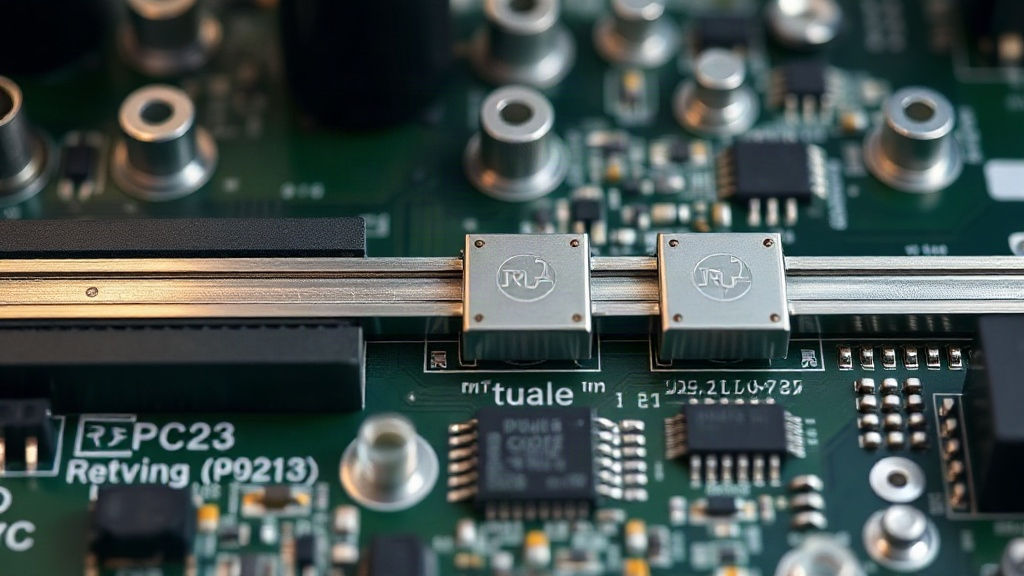
The most significant improvements in the CORE One L+ are concentrated in the motion system and the extruder. Prusa Research has introduced a new linear rail system on the X and Y axes. These aren't just any linear rails; they are high-precision components designed for smoother, more consistent movement with reduced backlash. This translates directly to sharper corners, more uniform wall thickness, and a reduction in the artifacts often seen in larger prints due to minor vibrations or inconsistencies in motion. Think of it like upgrading from a wobbly desk chair to a precision-engineered racing seat – the fundamental function is the same, but the control and feedback are exponentially better.
Complementing the improved motion system is an upgraded extruder. The L+ features a new, more robust extruder assembly. This includes a higher-torque motor and a refined gearing system, ensuring a consistent and reliable filament feed. This is critical for large prints where a single underextruded layer can compromise the entire piece. The thermal performance of the hotend has also been optimized, allowing for more stable temperatures across a wider range of materials. This consistency is key to achieving good layer adhesion and preventing warping, especially with materials like ABS or PC that are prone to thermal expansion.
Software and Firmware Enhancements
While the hardware forms the backbone of the precision upgrade, Prusa Research hasn’t neglected the software side. The firmware has been updated to take full advantage of the new hardware. This includes refined stepper motor drivers that offer smoother, quieter operation and more precise control over microstepping. Advanced input shaping algorithms have also been integrated, which actively counteract vibrations during rapid print movements. This is akin to noise-canceling headphones for your 3D printer, actively filtering out unwanted resonances that can degrade print quality.
The user interface remains familiar, but new calibration routines have been added. These guided procedures help users fine-tune the printer’s settings to match the new hardware, ensuring optimal performance right out of the box. Prusa’s commitment to its online knowledge base and community support means that users will find ample resources to help them leverage these new features for maximum benefit. The integration with PrusaSlicer, the company’s powerful slicing software, continues to be a strong point, with updated profiles for the L+ that incorporate the new hardware capabilities.
Performance and Print Quality
In practical terms, the improvements are noticeable. Dimensional accuracy on test prints is measurably better. Features that were previously at the edge of acceptable tolerance are now well within spec. The surface finish on vertical walls is smoother, with fewer visible layer lines and artifacts. The reduction in ringing and ghosting, thanks to the input shaping and improved motion system, is particularly evident on prints with complex geometries or sharp contrasts.
Material compatibility has also seen a slight improvement. While the CORE One L+ was already capable of printing a wide range of filaments, the enhanced thermal stability and extruder consistency mean that users can push the boundaries further, particularly with high-temperature materials. The larger build volume, when combined with these precision upgrades, makes the CORE One L+ a compelling option for professional users who require reliability and accuracy for larger, more complex prints. The printer now feels more like a production tool than a hobbyist machine, albeit one still accessible to dedicated enthusiasts.
The Verdict: Incrementalism That Matters
The Prusa CORE One L+ isn't a radical departure, but it represents a thoughtful evolution. The focus on precision through targeted hardware and software upgrades addresses key pain points for users who demand accuracy in large-format 3D printing. The new linear rails and extruder system provide a tangible improvement in print quality, reducing common artifacts and enhancing dimensional stability. For those who found the previous generation to be good but not quite precise enough for their professional needs, the L+ offers a compelling upgrade path. It’s a testament to Prusa Research’s engineering ethos: make it better, make it reliable, and make it for the people who use it most.