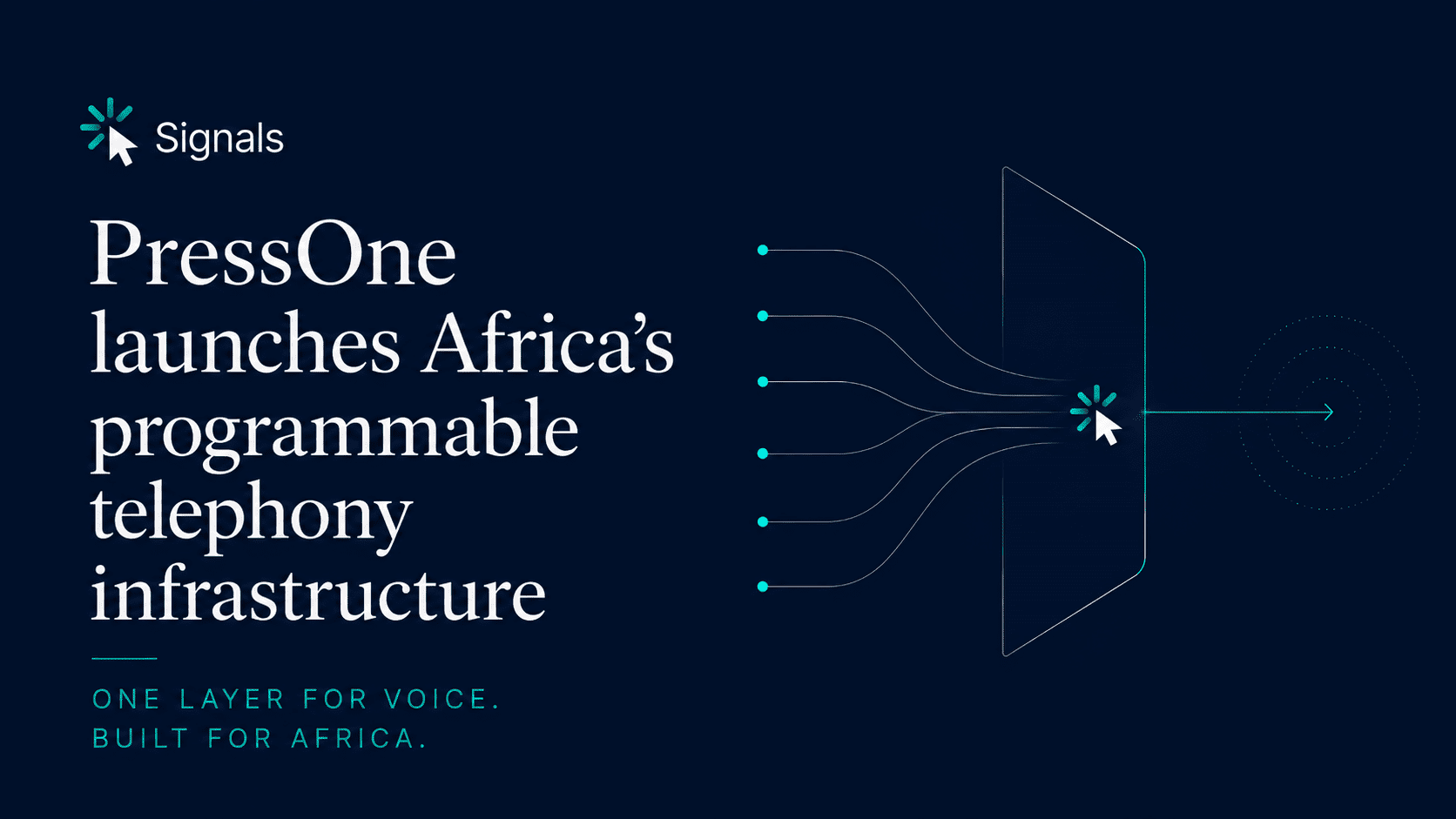
PressOne Signals: A New API for Voice Automation
PressOne, a significant player in the African digital communication landscape, has unveiled Signals, a new platform designed to democratize access to its robust telephony infrastructure. This move effectively transforms PressOne’s voice network into a programmable interface, allowing developers, software engineers, and AI specialists to build custom voice applications and integrate sophisticated voice capabilities directly into their existing systems. The platform aims to bridge the gap between traditional telecommunications and the rapidly evolving world of software and artificial intelligence, particularly within the African market.
Historically, integrating advanced voice functionalities into software has been a complex and often expensive undertaking, requiring specialized hardware, deep telecom knowledge, and significant development resources. Signals seeks to abstract away this complexity. By providing a set of APIs (Application Programming Interfaces), PressOne enables users to programmatically control voice calls, manage call flows, and leverage AI for real-time voice interactions. This opens up a vast array of possibilities for businesses and developers looking to enhance customer engagement, automate processes, and create novel voice-based experiences.
Democratizing Voice Infrastructure
The core innovation behind Signals lies in its accessibility. PressOne has essentially built a developer-friendly layer over its existing telephony network. This means that instead of needing to negotiate complex carrier agreements or manage intricate signaling protocols, developers can now interact with the voice network using familiar programming paradigms. This is akin to how cloud computing platforms like AWS or Azure provide access to massive computational resources through simple APIs, abstracting away the underlying hardware. Signals does this for voice.
Consider a small e-commerce startup looking to implement automated order confirmations via phone. Before Signals, this might have involved hiring a voice engineer, setting up an Interactive Voice Response (IVR) system, and integrating it with their order management software – a significant investment. With Signals, this startup can now use simple API calls to trigger a voice message with order details, prompt the customer for confirmation, and log the response, all within hours. This dramatically lowers the barrier to entry for sophisticated voice automation.
PressOne’s strategic decision to open its infrastructure is particularly impactful in markets where mobile penetration is high, but advanced digital services are still catching up. The platform’s design appears to cater to the specific needs of these regions, focusing on reliability and ease of integration. The ability to build custom voice bots, set up automated customer support lines, or even create dynamic outbound calling campaigns without needing to be a telephony expert is a significant development for businesses operating in these dynamic economies.
AI Integration and Future Possibilities
A key differentiator for Signals is its explicit focus on AI integration. The platform is not just about making calls; it's about making calls intelligent. Developers can integrate AI models for a multitude of purposes:
- Natural Language Processing (NLP): Enable voice bots to understand and respond to customer queries in a more human-like manner. This moves beyond simple keyword recognition to genuine conversational AI.
- Speech-to-Text and Text-to-Speech: Transcribe voice calls for analysis or compliance, and generate natural-sounding voice responses.
- Sentiment Analysis: Analyze the emotional tone of customer calls to gauge satisfaction and identify areas for improvement.
- Real-time Translation: Facilitate cross-lingual communication for businesses operating in diverse linguistic environments.
The potential applications are vast. Imagine a healthcare provider using Signals to automate appointment reminders, with an AI assistant that can reschedule appointments based on patient availability and doctor availability, all through a simple voice interaction. Or a financial services company using AI-powered voice agents to handle common customer inquiries, freeing up human agents for more complex issues. The platform’s programmability means these solutions can be tailored precisely to specific business needs.
PressOne’s move suggests a broader trend in the telecommunications industry: the shift from being mere providers of connectivity to becoming enablers of digital innovation. By opening their networks, companies like PressOne are empowering a new generation of builders to create services that were previously unimaginable or prohibitively expensive. This is particularly relevant for AI development, where real-world, interactive data streams are crucial for training and refining models. Signals provides a direct conduit for such data generation and interaction.
What This Means for the African Tech Ecosystem
The launch of Signals by PressOne is more than just a product release; it's a strategic play to foster innovation within the African tech ecosystem. By providing accessible, programmable voice infrastructure, PressOne is empowering local developers and startups to build globally competitive solutions. This could lead to a surge in new voice-based applications and services tailored to the unique challenges and opportunities present in African markets. The ability to integrate AI directly into voice interactions at scale is a powerful tool for addressing issues ranging from financial inclusion and education to customer service and logistics.
For developers, this means a new set of tools to play with. They can experiment with building voice UIs for applications that might not have a traditional screen, or create more engaging customer support experiences. For businesses, it represents an opportunity to significantly enhance their customer interactions and operational efficiency without massive upfront investment. The focus on AI integration also signals PressOne's commitment to the future of intelligent communication, positioning the platform as a critical enabler for businesses looking to leverage cutting-edge AI technologies.
The surprising detail here is not the launch of a new API, but the specific focus on opening up a foundational piece of infrastructure – telephony – to the AI and software development community in Africa. This is akin to gifting a generation of builders with a powerful new set of LEGO bricks, specifically designed for the world of voice.