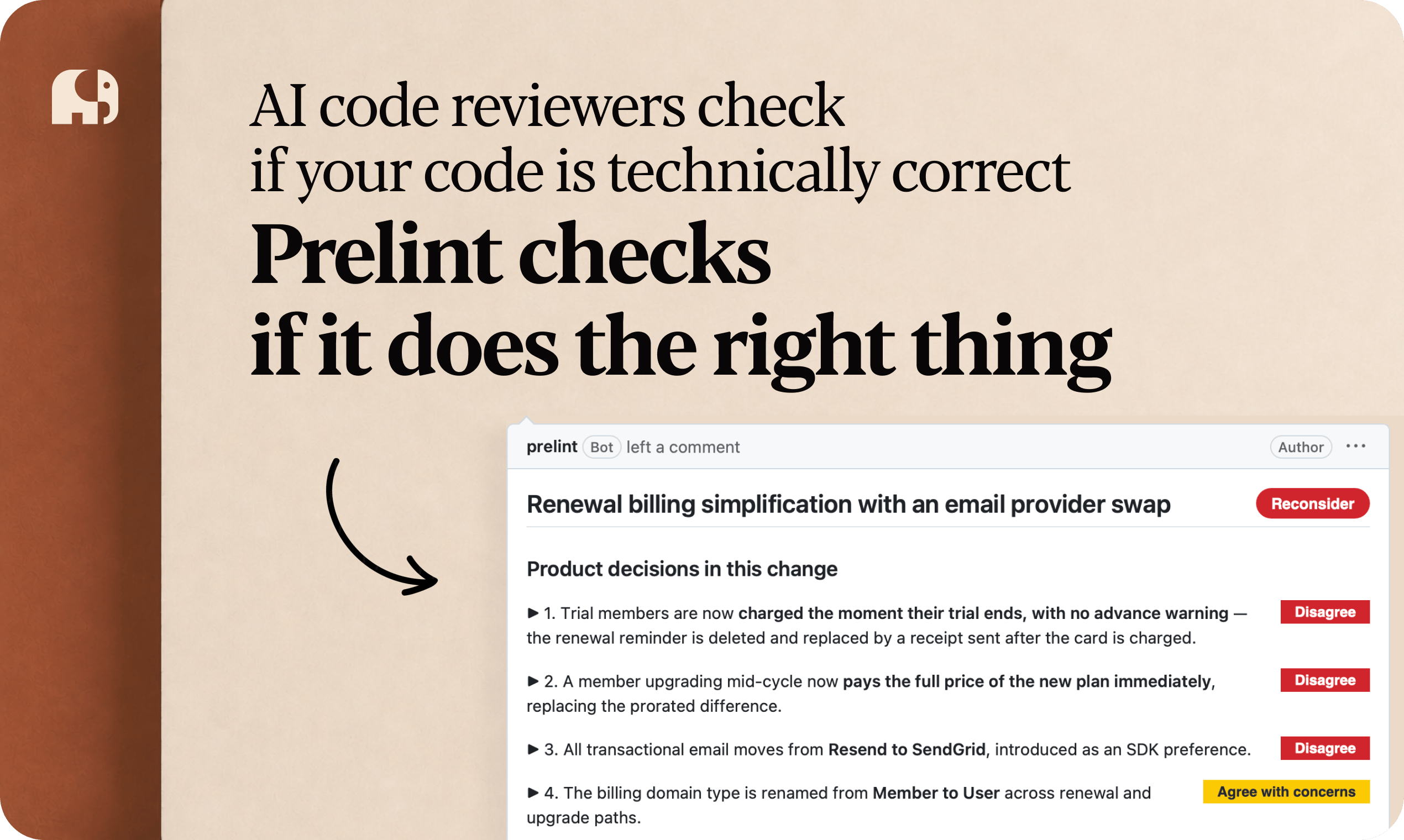
The Challenge of AI-Generated Code Stability
Large language models (LLMs) are rapidly changing software development. Tools like GitHub Copilot, Amazon CodeWhisperer, and others can generate code snippets, functions, and even entire classes in seconds. This accelerates development cycles, reduces boilerplate, and can help developers learn new languages or frameworks. However, a subtle but significant challenge is emerging: product drift in AI-generated code.
Imagine training a highly skilled but slightly forgetful assistant to build a specific model. Initially, they follow instructions perfectly. But over time, without constant, rigorous checks, their interpretation of the original requirements might subtly shift. They might start adding features not explicitly requested, optimizing for parameters that weren't the primary goal, or even introducing small logical errors that deviate from the initial intent. This is precisely the problem Prelint aims to solve for AI-generated code.
Product drift in AI code refers to the phenomenon where code generated by AI, initially conforming to specific product requirements, gradually deviates from those requirements as it is modified, extended, or re-generated. This drift can manifest in several ways:
- Functional Deviation: The code no longer performs the exact task it was originally intended for, perhaps due to subtle changes in logic or unintended side effects.
- Performance Degradation: Optimizations made over time might inadvertently lead to slower execution or increased resource consumption, straying from initial performance targets.
- Architectural Inconsistency: As the codebase evolves, new AI-generated components might not align with the original architectural patterns or coding standards, leading to a fragmented and harder-to-maintain system.
- Security Vulnerabilities: Unintended logic changes or the introduction of suboptimal patterns can inadvertently open up security loopholes.
This drift is particularly insidious because it often occurs gradually, making it difficult to detect through standard code reviews or testing until the cumulative effect becomes significant. Traditional static analysis tools might catch syntax errors or known anti-patterns, but they often struggle to identify deviations from a specific, nuanced product intent that wasn't explicitly coded into their rule sets.
How Prelint Addresses Code Drift
Prelint operates as a layer that sits between the AI code generator and the developer's codebase. Its core function is to analyze AI-generated code and compare it against a defined set of product specifications or desired outcomes. It doesn't aim to replace AI code generation tools, but rather to ensure the output remains aligned with project goals.
The process typically involves several key steps:
- Specification Definition: Developers first define the intended behavior, constraints, performance targets, and architectural guidelines for the code they want AI to generate. This can be done through natural language prompts, structured configurations, or even by providing examples of desired code behavior.
- AI Code Generation: The AI tool (e.g., Copilot) generates the code based on developer prompts.
- Prelint Analysis: Prelint intercepts the generated code. It uses its own sophisticated analysis engines, potentially combining static analysis, dynamic analysis (if feasible in a pre-commit hook), and even LLM-based reasoning to understand the code's intent and compare it against the predefined specifications.
- Drift Detection: If Prelint detects any deviation from the specified requirements—whether it's a functional mismatch, a performance concern, or an architectural inconsistency—it flags the code.
- Feedback Loop: Prelint provides actionable feedback to the developer, highlighting the specific areas of drift and suggesting how to correct them or re-prompt the AI. It can also automatically suggest modifications to bring the code back in line.
By integrating into the development workflow, potentially as a pre-commit hook or within the IDE, Prelint aims to catch these deviations early, before they are merged into the main codebase and become harder to fix.
The Underlying Technology and Potential
While the exact technical implementation of Prelint is proprietary, its effectiveness likely relies on advanced techniques in program analysis and potentially the use of secondary LLMs trained to understand code semantics and adherence to specifications. This is not simply about checking for syntax errors; it's about semantic validation against a moving target.
Consider a scenario where an AI is asked to generate a function that sorts a list of user IDs by their last login timestamp. Initially, it might generate perfect code. Later, the developer might ask the AI to optimize the sorting for a specific edge case or to handle a new data format. Without a guardrail like Prelint, the AI might subtly alter the sorting logic, perhaps prioritizing a secondary criterion not explicitly mentioned in the re-prompt, or introducing an inefficiency when handling null timestamps. Prelint would ideally detect this deviation from the *original* intent of sorting solely by last login and flag it.
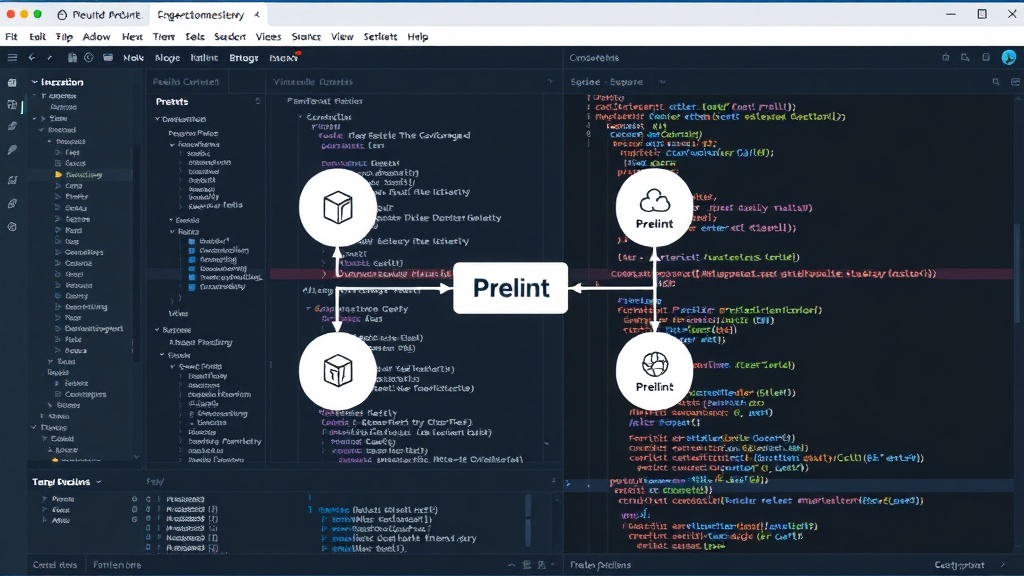
The potential applications are vast. For teams heavily relying on AI code generation for core business logic, Prelint could be instrumental in maintaining code quality and reliability. It could also serve as a training tool for developers, highlighting common pitfalls when working with AI assistants. Furthermore, as AI models become more sophisticated and capable of generating larger, more complex code blocks, the need for such validation tools will only increase.
What This Means for the Future of AI Development
Prelint represents a crucial step towards more robust and reliable AI-assisted software development. It acknowledges that AI is a powerful tool, but not an infallible one, and that human oversight, guided by clear specifications, remains essential. The emergence of tools like Prelint suggests a maturing AI development ecosystem where the focus shifts from merely generating code to ensuring that generated code is correct, maintainable, and aligned with business objectives.
The challenge ahead for Prelint and similar tools will be in the accuracy and expressiveness of the specification language and the sophistication of their drift detection algorithms. As AI models evolve, so too must the tools that govern and validate their output. If successful, Prelint could become an indispensable part of the MLOps for code, ensuring that the promise of AI-accelerated development doesn't devolve into unmanageable code debt and subtle product failures.