The AI Coding Assistant Pivot
The weekend of August 16-17, 2025, marked a significant shift in my personal development workflow. I installed Cursor, an AI-powered code editor, and the experience was immediately impactful. It felt like gaining a dedicated debugging partner, significantly accelerating my coding tasks. This newfound efficiency was timely, as I was simultaneously undertaking a redesign of my portfolio website.
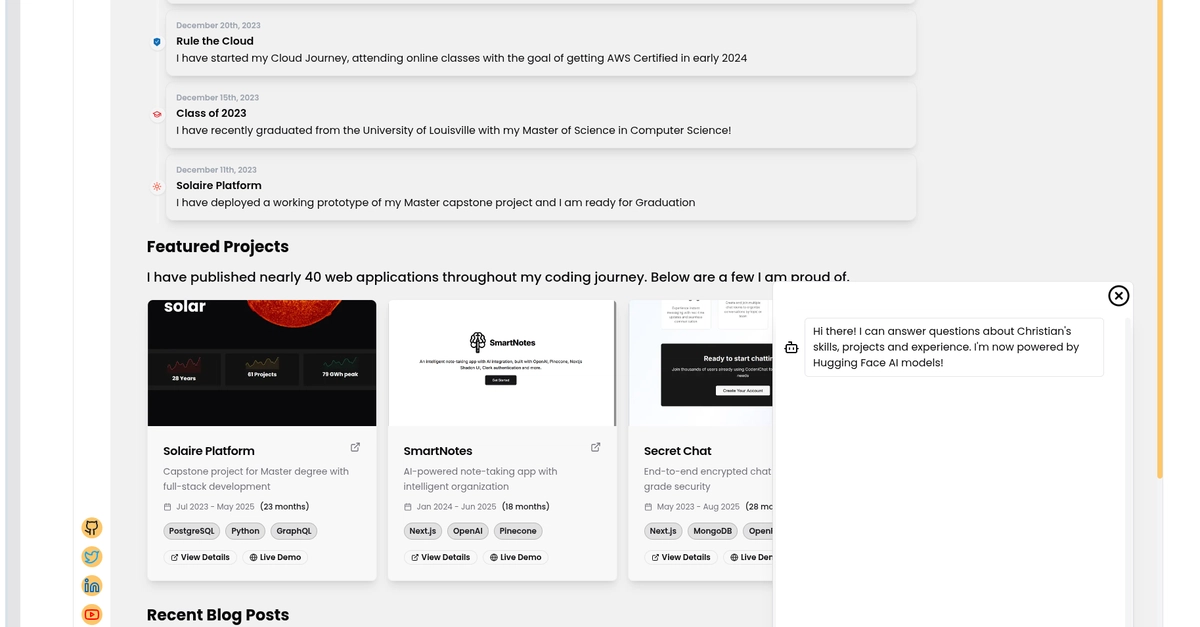
The core of this redesign involved an ambitious AI-driven chatbot. My previous iteration, detailed in an earlier post, successfully integrated a ChatGPT-based chatbot. The process involved creating content embeddings and leveraging OpenAI's API to provide contextual responses. This initial setup promised a more interactive and informative user experience for visitors to my portfolio.

When OpenAI Services Interrupted the Workflow
However, the reliance on a single, external service provider like OpenAI presented a critical vulnerability. My OpenAI account encountered unexpected issues, bringing the chatbot functionality to a standstill. This presented a stark choice: either temporarily disable the AI feature or find a robust alternative. The decision was clear – abandoning the functionality was not an option. This challenge became the catalyst for a more resilient and diversified approach to my portfolio's AI capabilities.
The disruption highlighted a common pitfall in modern development: over-dependence on specific vendor APIs. While powerful, these services can be subject to outages, policy changes, or account-level restrictions that are beyond a developer's direct control. The experience underscored the importance of building systems with redundancy and fallback mechanisms, especially for core features that define a user experience.
Exploring Alternative AI Models and Integrations
Faced with the OpenAI roadblock, I began exploring alternative AI models and integration strategies. This wasn't just about replacing one API with another; it was an opportunity to re-evaluate the underlying architecture and choose solutions that offered greater flexibility and control. The goal was to create a chatbot that was not only functional but also resilient to external service disruptions.
The exploration led me to consider a broader spectrum of natural language processing (NLP) models and frameworks. This involved researching different embedding techniques, vector databases, and inference engines. The objective was to build a more modular system where different components could be swapped or scaled independently. This architectural shift would ensure that if one AI service faltered, the entire chatbot functionality wouldn't collapse.
The process of evaluating alternatives involved several key considerations:
- Performance and Accuracy: How well did the alternative models perform in terms of response quality, latency, and factual accuracy compared to the previous OpenAI integration?
- Cost-Effectiveness: What were the pricing structures for these alternative services or self-hosted models, and how did they compare to OpenAI's rates, especially at scale?
- Ease of Integration: How complex was it to integrate these new models into the existing portfolio website infrastructure? Were there well-documented SDKs or APIs available?
- Scalability and Reliability: Could the chosen solutions scale to handle fluctuating user traffic, and what was their historical uptime and reliability record?
- Data Privacy and Control: Did the alternative solutions offer better control over data processing and privacy, especially concerning user interactions with the chatbot?
This rigorous evaluation process was crucial. It moved beyond a simple 'fix' to a strategic enhancement of the chatbot's underlying technology. The aim was to build a more robust and future-proof system.
Rethinking Chatbot Architecture for Resilience
The experience with OpenAI's service disruption fundamentally reshaped my thinking about chatbot architecture. Instead of a monolithic integration, the redesign focused on a more distributed and adaptable system. This involved decoupling the chatbot's core logic from the specific AI model provider.
One key architectural change was implementing a more sophisticated orchestration layer. This layer acts as an intelligent router, capable of directing user queries to different AI models or services based on availability, performance, or specific query types. If one model is unavailable or performs poorly on a certain task, the orchestrator can seamlessly switch to another, ensuring continuous service availability. This is akin to a sophisticated air traffic control system, managing multiple aircraft (AI models) to ensure smooth operations even when one runway (service) is temporarily closed.
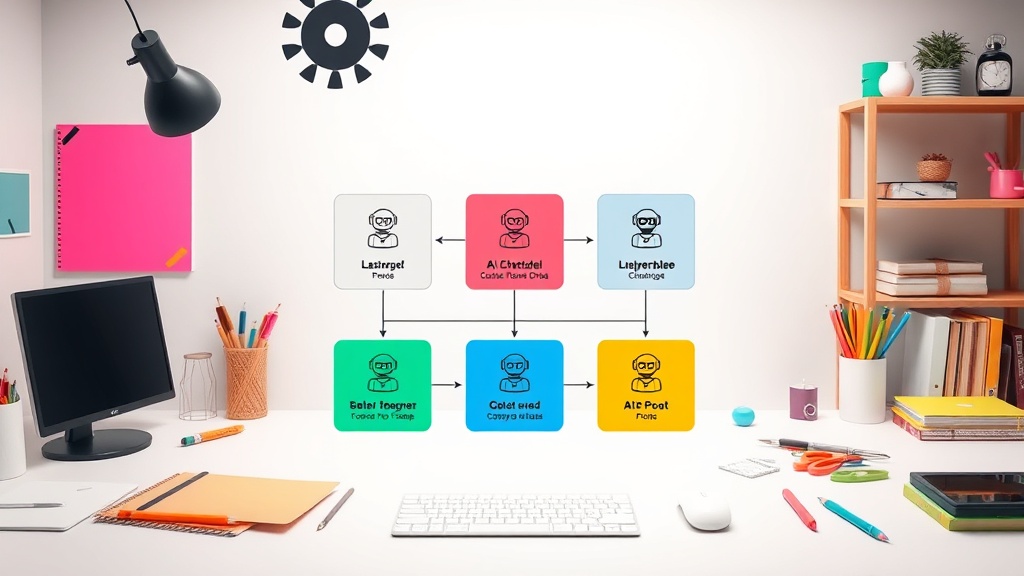
Furthermore, I began to experiment with smaller, more specialized language models that could be fine-tuned for specific tasks related to my portfolio content. This approach offers several advantages: reduced dependency on large, general-purpose APIs, potentially lower operational costs, and greater control over the model's behavior and output. The trade-off, of course, is the increased complexity in managing multiple models and ensuring their consistent performance.
The redesign also involved enhancing the content embedding strategy. Instead of relying solely on a single embedding model, I explored using multiple embedding techniques and storing them in a way that allows for easy switching or augmentation. This ensures that the chatbot's knowledge base remains accessible and searchable, regardless of the underlying AI model used for natural language understanding.
The Outcome: A More Robust and Versatile Portfolio
The outcome of this redesign is a portfolio website that is not only visually updated but also significantly more resilient and intelligent. The AI chatbot, while still leveraging advanced NLP, is now built on a more robust architecture. It can gracefully handle temporary outages or performance degradation of individual AI services by seamlessly switching to alternatives.
This architectural resilience provides a significant advantage. Visitors to my portfolio can rely on the chatbot's availability, ensuring a consistent and positive user experience. For me, as the developer, it means greater peace of mind, knowing that a single point of failure will not cripple a key feature.
The integration of Cursor as a primary coding tool has also been instrumental in accelerating the development and iteration process. The synergy between an efficient AI coding assistant and a resilient AI-powered feature on the website itself has created a powerful feedback loop, driving continuous improvement in both my personal development capabilities and the digital presence I present.
What remains to be seen is how other developers will adapt their AI-driven projects in response to the increasing volatility of external API services. The trend towards more modular, multi-provider AI architectures is likely to accelerate, as developers prioritize uptime and control over simplicity.