Porelio Raises €2.4M to Revolutionize Industrial Water Treatment
Porelio, a German deeptech startup, has successfully closed an oversubscribed pre-seed funding round, securing €2.4 million. This capital infusion is earmarked to accelerate the scaling of its proprietary advanced materials designed for industrial separation and water treatment processes. The investment underscores a growing market demand for sustainable and efficient solutions to address critical water scarcity and pollution challenges faced by industries worldwide. The company's core innovation lies in developing novel materials that offer superior performance in separating complex mixtures and purifying industrial wastewater. Unlike conventional methods that often rely on energy-intensive processes or generate significant secondary waste, Porelio's materials promise a more sustainable and cost-effective approach. This is particularly crucial for sectors such as chemical manufacturing, pharmaceuticals, and mining, which are major consumers and polluters of water.The Technology Behind Porelio's Materials
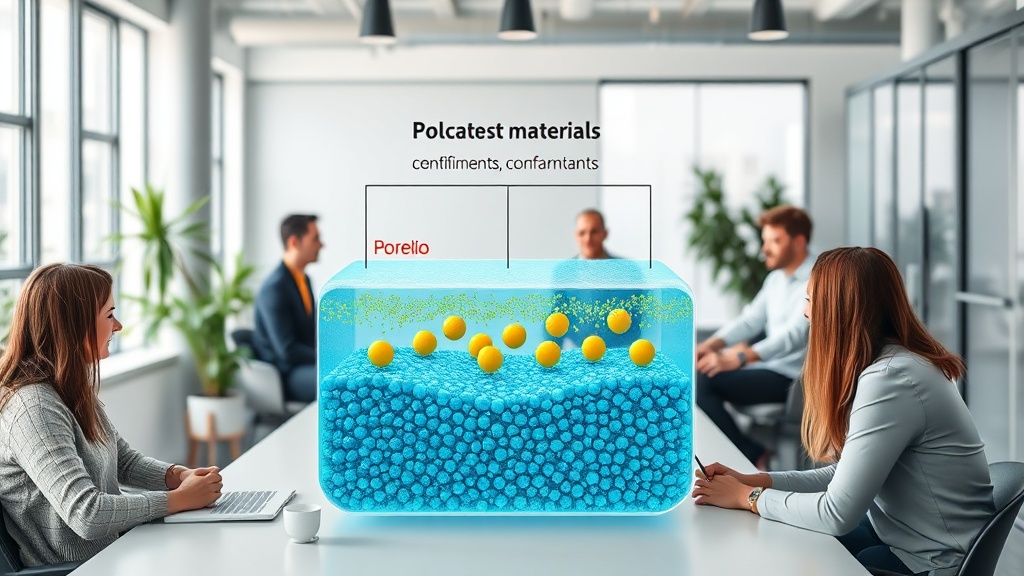
Porelio's technology centers on advanced porous materials, engineered at the molecular level to achieve highly selective separation. These materials function akin to molecular sieves, precisely capturing specific contaminants or valuable components from liquid streams. The key lies in the precise control over pore size, surface chemistry, and overall material architecture. This allows for tailored solutions that can address a wide range of separation challenges, from removing heavy metals and microplastics to recovering valuable chemicals from industrial effluents. Think of it less like a traditional filter and more like a highly specific chemical sponge. A conventional filter might catch particles of a certain size, but Porelio's material can be designed to bind only to specific molecules or ions, leaving other desired substances untouched. This selectivity is paramount in industrial processes where recovering valuable byproducts is as important as removing harmful pollutants. The development process involves sophisticated material science and nanotechnology, enabling the creation of materials that are not only effective but also durable and regenerable. This regenerability is a critical factor in reducing operational costs and environmental impact, as the materials can be reused multiple times without significant loss of performance. The company is reportedly exploring various synthesis routes to ensure cost-effective mass production.