Customizing the COSMIC Compositor for Enhanced Workspace Navigation
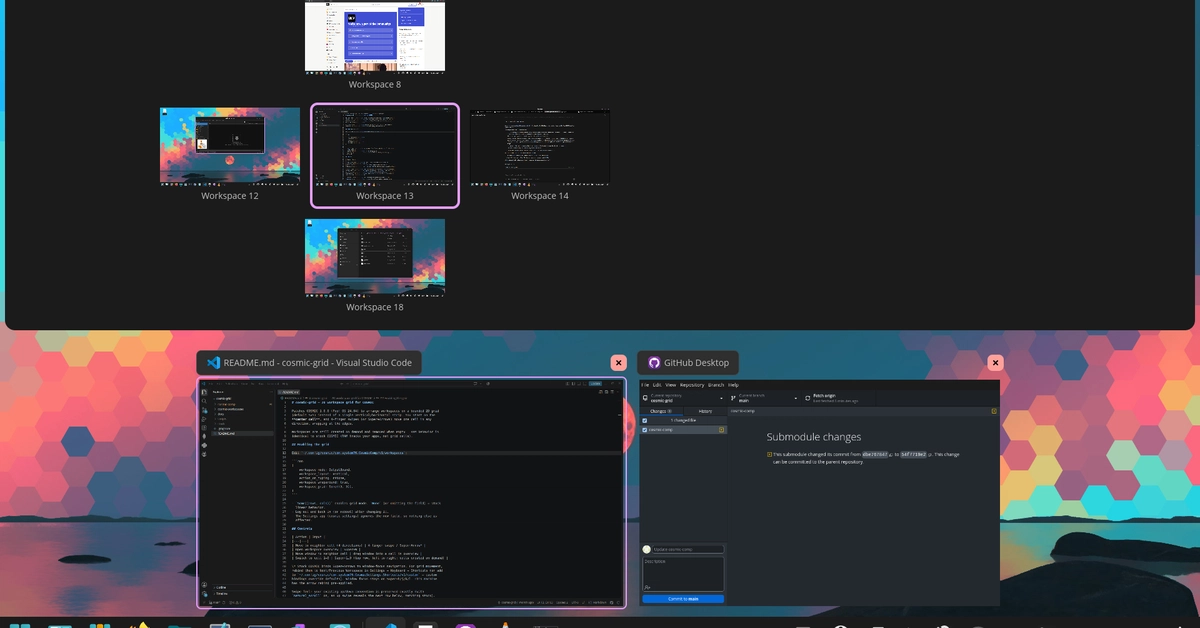
System76's COSMIC desktop environment, built on the Rust-based Smithay compositor for Pop!_OS, offers a modern approach to Linux desktop interaction. However, its default workspace management operates on a linear strip, supporting only horizontal or vertical movement. For users who prefer a more structured and navigable desktop layout, this linear approach can feel limiting. One developer, shaarkymoo, identified this limitation and implemented a significant customization: a bounded 5x5 workspace grid with edge-wrapping capabilities, starting the user in the center cell upon login.
This custom grid transforms workspaces from a linear scroll into a map. A simple four-finger swipe on a touchpad can move the user north, south, east, or west across the grid. Crucially, the grid wraps at the edges, meaning a swipe from the easternmost workspace brings you to the westernmost column, and vice-versa for north-south movement. The choice to start users in the center cell ensures that no workspace is ever more than two gestures away, promoting efficient navigation. This setup is designed for muscle memory, allowing hands to navigate the workspace grid without conscious thought.
Technical Approach: Patching Core Components
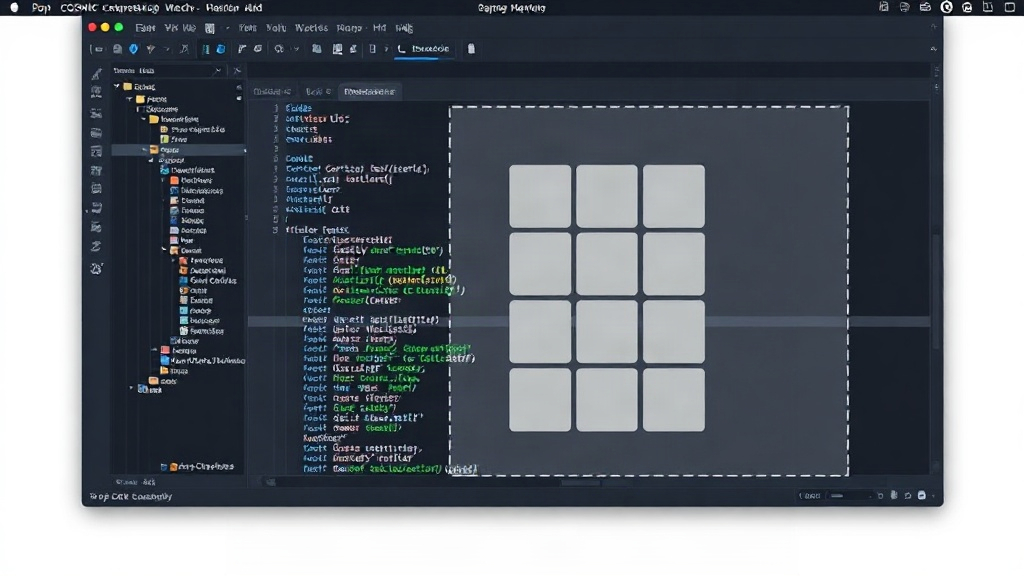
Implementing this 5x5 grid required direct intervention in the COSMIC compositor's core components. The developer focused on patching two key crates: cosmic-comp, which is the compositor itself, and cosmic-workspaces, the associated overview application. Both of these crates were pinned to a specific version (1.0.0) to ensure compatibility and predictable behavior during the patching process. This targeted approach allowed for precise modifications to the workspace management logic.
The fundamental change involved refactoring how workspaces are stored and accessed. Instead of a simple linear vector (Vec<Workspace>), the data structure needed to represent a two-dimensional grid. This would typically involve a 2D array or a similar structure that can map row and column indices. The edge-wrapping logic would then be applied to the index calculations. For instance, when moving east from the last column, the new column index would wrap around to 0. Similarly, when moving west from column 0, it would wrap to the last column index.
The Smithay compositor library, which COSMIC is built upon, provides the underlying framework for window management, input handling, and rendering. Modifying workspace behavior means interacting with Smithay's event loop and state management. The developer likely had to adjust how new workspaces are created, how existing ones are referenced, and how user input (like touchpad gestures) is translated into workspace switching commands. The goal was to integrate the new grid logic seamlessly into the existing Wayland compositor framework.
Implications for User Experience and Workflow
The impact of this patch extends beyond mere technical novelty; it offers a tangible improvement in user experience for those who manage a large number of applications and virtual desktops. A linear workspace strip can become unwieldy as the number of workspaces increases, forcing users to repeatedly swipe through many intermediate workspaces to reach their desired destination. A 5x5 grid, with its bounded nature and efficient navigation, mitigates this problem significantly.
For developers, designers, or anyone running multiple applications simultaneously, a well-organized workspace system is crucial for productivity. This grid layout provides a more intuitive mental model. Instead of a long, undifferentiated list, users have a structured 2D space. They can mentally assign types of tasks or application groups to specific rows or columns, further enhancing recall and speed. The edge-wrapping feature is particularly important; it prevents the feeling of hitting a dead end and maintains a fluid, continuous workflow, much like how virtual desktops are often conceptualized in games or complex simulations.
The choice to start the user in the center cell (cell [2,2] in a 0-indexed 5x5 grid) is a deliberate design decision. It balances access to all four cardinal directions and reduces the initial cognitive load. From the center, any of the 24 other workspaces are reachable within two gestures, making it an optimal starting point that minimizes immediate navigation effort.
The Future of COSMIC and Desktop Compositor Customization
This patch highlights the flexibility and extensibility of modern Wayland compositors like Smithay, and by extension, desktop environments built upon them like COSMIC. While System76 is developing COSMIC as a curated experience, the underlying technology allows for deep customization by users and the broader community. The fact that such a significant change to workspace management can be achieved by patching existing crates suggests a healthy ecosystem for innovation.
Victoria Brekenfeld (Drakulix), the lead for COSMIC, has been instrumental in its development. Projects like this demonstrate the community's engagement with the platform and its potential to evolve based on user needs. It also raises a question: will System76 eventually incorporate such advanced workspace management features into the official COSMIC releases, or will this remain a community-driven customization? The current COSMIC 1.0.0 release, while a solid foundation, still operates on the linear model. Users who desire the 5x5 grid functionality will need to apply these patches themselves, which requires a certain level of technical proficiency and willingness to manage custom builds or patches.
For users of Pop!_OS or other distributions considering COSMIC, this patch serves as a powerful example of what is possible. It underscores the shift towards more customizable and efficient desktop environments, moving away from the traditional, often rigid, paradigms. The successful implementation of this 5x5 workspace grid is a testament to the developer's skill and the underlying robustness of the COSMIC compositor.