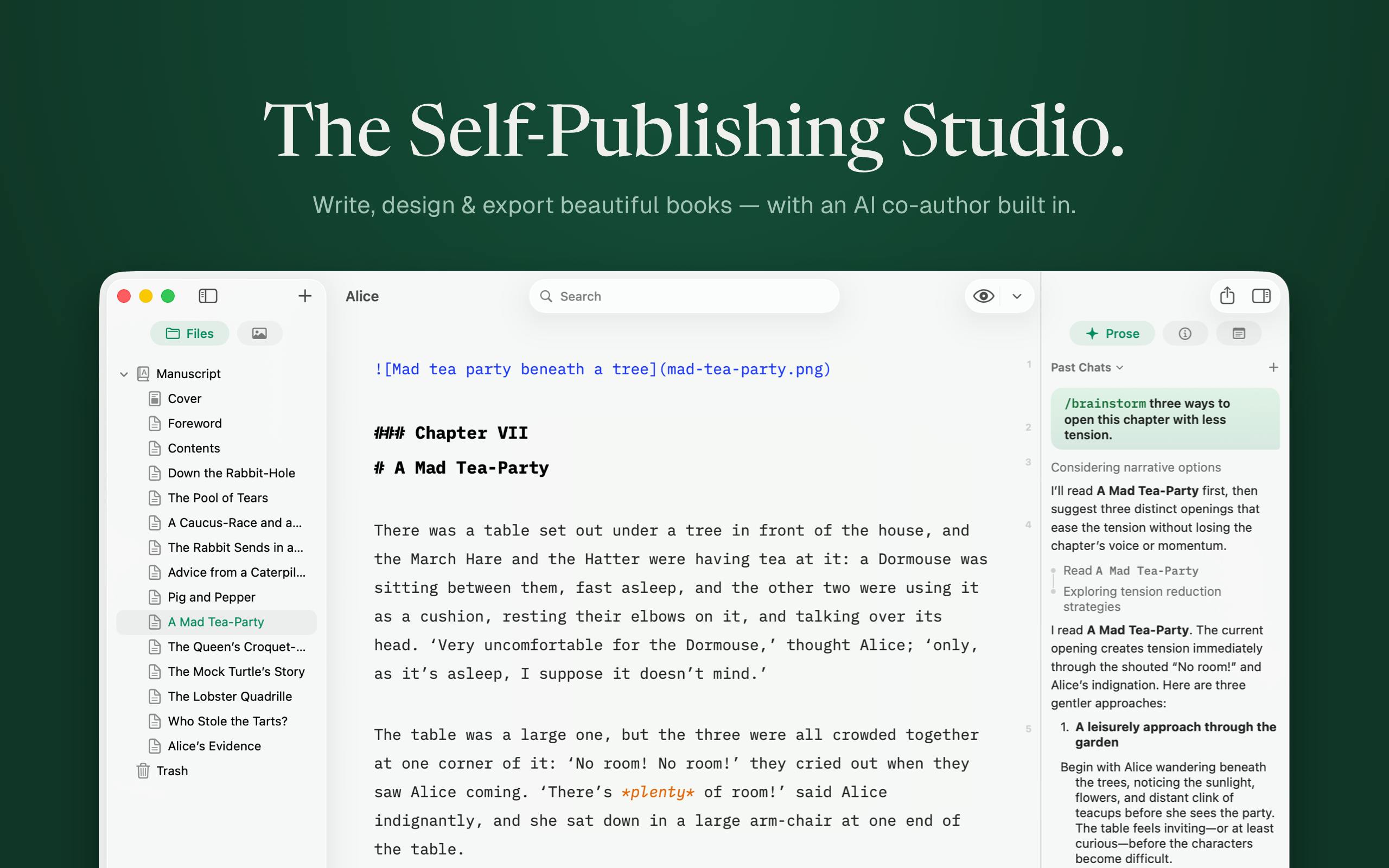
Introducing Pinery Prose: An AI Co-Author for Authors
Pinery Prose enters the crowded AI writing assistant market with a distinct philosophy: empowering authors by making the AI a collaborator whose changes are always transparent and approved. Unlike tools that might invisibly alter text or require users to sift through lengthy outputs, Pinery Prose presents its AI-generated edits as distinct differences, akin to version control in software development. This approach aims to give writers granular control and a clear understanding of how the AI is shaping their work.
The core premise of Pinery Prose is to serve as an AI co-author for books and long-form content. This suggests a focus on narrative structure, character development, and plot consistency, areas where AI assistance can be particularly valuable for authors facing writer's block or seeking to accelerate their production. The tool’s emphasis on user approval for every edit is a critical differentiator, positioning it as a supportive partner rather than an automated ghostwriter.
This diff-based editing model is particularly interesting. Imagine a scenario where you’re working on a chapter. The AI suggests a new paragraph or a rephrased sentence. Instead of simply accepting it and moving on, Pinery Prose would show you precisely what was added, removed, or changed. You, the author, then have the explicit choice to accept or reject this specific modification. This mirrors the workflow familiar to developers who use tools like Git, where every change is logged and can be reviewed, reverted, or merged. For writers, this means they are always in the driver's seat, maintaining full editorial authority.
Workflow and Control
The implications for a writer's workflow are significant. By presenting edits as diffs, Pinery Prose addresses a common concern with AI writing tools: the loss of authorial voice and control. Many writers fear that AI will homogenize their style or introduce errors they won’t immediately spot. Pinery Prose’s model mitigates this by making the AI’s contribution explicit. Each proposed change is a discrete unit that the author can evaluate on its own merits. This allows for a more nuanced integration of AI assistance, where authors can cherry-pick the AI’s best suggestions while retaining their unique voice and creative vision.
This granular control could also speed up the editing process. Instead of rereading entire sections to understand AI’s impact, authors can focus on reviewing specific changes. This is akin to a code review process where developers examine pull requests; the scope of review is defined and manageable. For authors working on lengthy projects like novels, this efficiency can be a game-changer, allowing them to iterate more rapidly and dedicate more time to creative aspects rather than laborious editing and fact-checking of AI output.
The tool’s design suggests a commitment to transparency and author agency. It’s not just about generating text; it’s about generating text in a way that respects the author’s process and ultimate ownership. This is particularly relevant in a market where the ethical implications of AI-generated content are increasingly scrutinized. By making the AI’s role a clearly approved set of modifications, Pinery Prose positions itself as a tool that augments human creativity rather than replacing it.
Target Audience and Market Position
Pinery Prose is clearly targeting authors, novelists, and potentially screenwriters or long-form content creators who are looking for an AI partner that enhances, rather than dictates, their creative process. The emphasis on diff-based edits suggests that the tool is designed for users who value precision, control, and a clear audit trail of changes.
The AI writing assistant market is saturated with tools offering various levels of automation. Some focus on rapid content generation for marketing, others on idea generation, and some on grammar and style correction. Pinery Prose carves out a niche by focusing on collaborative authorship for creative works, with a unique emphasis on editorial transparency. This approach could appeal to authors who have been hesitant to adopt AI tools due to concerns about losing their unique voice or the integrity of their work. The diff-based system acts as a built-in safeguard, ensuring that the author’s intent remains paramount.
What nobody has addressed yet is what happens to the thousands of developers who built on APIs that might be deprecated or changed by AI writing tools. While Pinery Prose focuses on the author's direct workflow, the broader ecosystem of writing and publishing tools will need to adapt to AI’s evolving role. Will there be standards for AI-assisted content attribution? How will publishing platforms handle AI-generated or AI-assisted manuscripts that have a clear diff history?
The surprising detail here is not the existence of another AI writing tool, but its specific mechanism for integration. Treating AI edits as approved differences is a novel approach that directly tackles the