The Shifting Sands of User Engagement
Ten years ago, the concept of persuasive design was rapidly gaining traction. It promised a framework for understanding and influencing user behavior, moving beyond mere usability to foster deeper engagement. Yet, as Anders Toxboe revisits the field in his latest analysis, it’s clear that many product teams have struggled to implement these principles effectively. The common pitfall? Relying on superficial usability improvements and isolated behavioral tweaks. These tactics, while offering short-term gains, often lead to plateaued results or devolve into shallow gamification, failing to achieve sustainable user activation, retention, or conversion. Toxboe’s work seeks to clarify what has genuinely endured and what has faded, offering a more robust and realistic approach for today’s complex digital landscape.
The core challenge, as Toxboe highlights, lies in the fundamental misunderstanding of persuasive design’s intent. It was never about manipulation or tricking users into undesirable actions. Instead, it was about aligning product design with human psychology to create experiences that are not only functional but also inherently motivating and satisfying. When teams focus solely on metrics like click-through rates or session duration without understanding the underlying psychological drivers, they build on a shaky foundation. This often results in a user experience that feels hollow or even exploitative, ultimately driving users away.
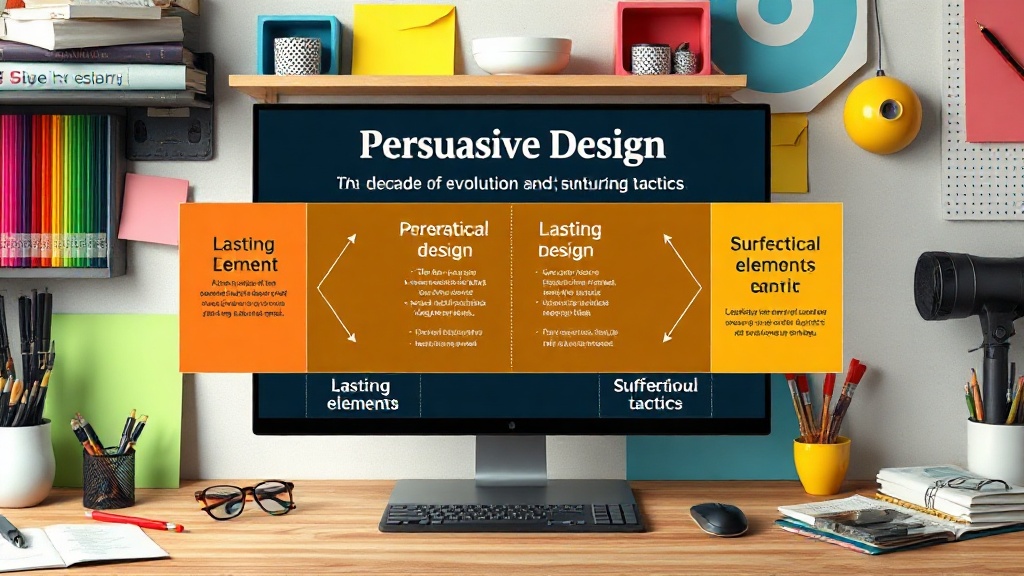
Foundations That Endure: Psychology Over Gimmicks
Toxboe’s updated framework emphasizes that the most effective persuasive design strategies are rooted in a deep understanding of human psychology, not in fleeting technological trends or arbitrary design patterns. Principles like commitment and consistency, social proof, scarcity, authority, liking, and reciprocity, first popularized by Robert Cialdini, remain remarkably potent. However, their application requires nuance. Simply slapping a "join 10,000 happy customers" banner on a page doesn’t leverage social proof effectively. True social proof involves demonstrating genuine community, shared values, or relatable user stories.
Similarly, the principle of scarcity, when used authentically, can enhance perceived value. Think of limited-time offers that genuinely reflect production constraints or exclusive access for early adopters who provide valuable feedback. When scarcity is artificial or overused, it erodes trust. The surprising detail here is not the enduring power of these principles, but how often they are misapplied. Teams often mistake the *presence* of a persuasive element for its *effective implementation*. The goal is to create an experience that feels natural and beneficial to the user, not one that feels like a sales pitch.
Beyond Activation: Fostering Long-Term Value
The initial excitement around persuasive design often focused on user activation – getting users to sign up and complete their first key action. However, Toxboe argues that a decade later, the true test of persuasive design lies in its ability to foster long-term engagement and retention. This requires a shift from short-term incentives to creating intrinsic motivation. Intrinsic motivation stems from the inherent satisfaction derived from an activity itself, such as a sense of mastery, autonomy, or purpose. Products that tap into these deeper needs are more likely to retain users over time.
Consider the difference between a fitness app that offers points for logging workouts (extrinsic, gamified) versus one that provides personalized insights into progress, celebrates milestones with meaningful feedback, and connects users with similar goals (intrinsic, psychological). The latter approach, deeply embedded in persuasive design principles, builds a more resilient user base. This isn’t about adding badges or leaderboards; it’s about understanding what truly drives a user’s commitment to a product or service. What nobody has addressed yet is how to systematically measure the impact of intrinsic motivational design on long-term customer lifetime value, moving beyond proxy metrics like churn rate.
The Ethical Imperative in Persuasive Design
As persuasive design matures, the ethical considerations surrounding its application become paramount. The line between helpful guidance and manipulative dark patterns can be thin. Toxboe’s updated perspective underscores the importance of transparency and user control. Persuasive design should empower users, not exploit their cognitive biases. This means clearly communicating the value proposition, providing opt-out mechanisms, and ensuring that the persuasive elements serve the user's goals as well as the business's.
For product teams, this translates to a more rigorous design process. It involves user research not just to understand *what* users do, but *why* they do it. It requires ethical reviews of design choices and a commitment to building trust. When a product feels genuinely helpful and aligned with user interests, persuasion becomes a natural outcome of a positive user experience. The danger lies in prioritizing short-term conversion metrics over long-term user well-being and trust. A product designed with genuine empathy and a focus on user value will inherently be more persuasive in the long run.
A Refined Toolkit for Modern Products
Toxboe’s decade-long perspective offers a crucial recalibration for product teams. The enduring principles of persuasive design are not a set of tricks but a deep dive into human motivation. They require careful, ethical application, focusing on creating genuine value and fostering intrinsic engagement. By moving beyond superficial tactics and embracing a psychology-first approach, teams can build products that not only attract and activate users but also retain them meaningfully over time, creating sustainable success grounded in user trust and satisfaction.