The Erosion of Digital Privacy
For years, the convenience of advanced AI services has come at a steep cost: our personal data. Users have routinely accepted terms of service without a second thought, granting tech giants unfettered access to everything from private communications and financial details to nascent business ideas and personal health queries. This data has been the fuel for massive cloud-based Large Language Models (LLMs), powering the AI tools we rely on daily. However, a growing unease is setting in. The realization that this intimate data is not only used to train models sold back to us but also remains vulnerable to breaches is prompting a fundamental reevaluation of AI infrastructure.
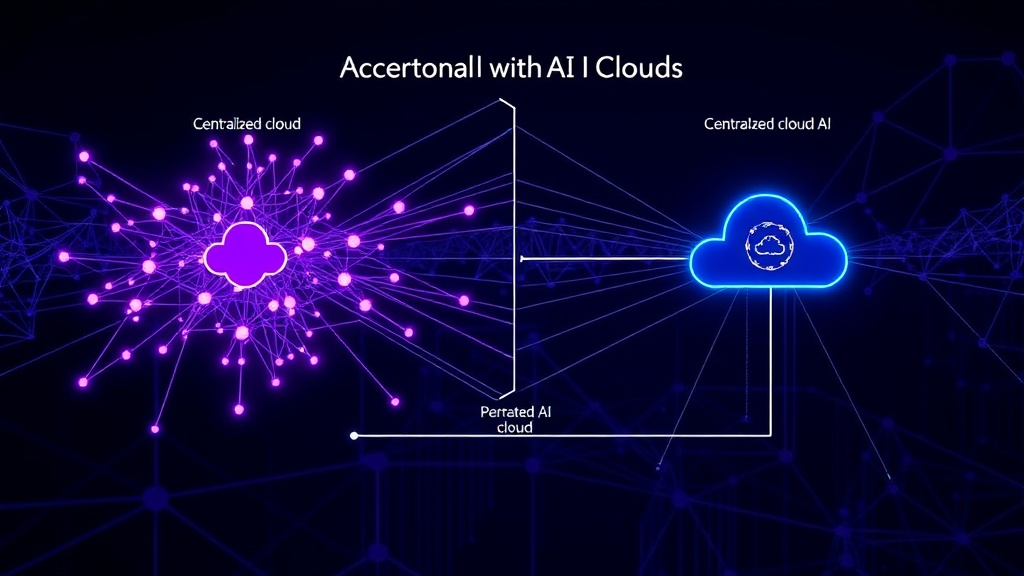
This isn't a call to abandon AI, but rather a powerful impetus to reclaim ownership of our digital selves and the intelligence derived from them. The emergence of the 'Personal AI Cloud' signifies a paradigm shift, moving away from centralized, corporate-controlled AI towards a decentralized, user-centric model. By 2027, this trend is poised to become the norm, with individuals managing their own private LLMs.
The Rise of the Personal AI Cloud
The Personal AI Cloud concept centers on the idea of localized, private AI. Instead of sending sensitive information to external servers, users will run LLMs on their own devices or within secure, private cloud environments they control. This approach offers several critical advantages:
- Data Sovereignty: Your data remains yours. It never leaves your personal infrastructure, eliminating the risk of it being harvested for commercial purposes or exposed in third-party data breaches.
- Enhanced Privacy: Interactions with your AI are inherently private. The model learns from your unique data without sharing it, offering a truly personalized experience without compromising confidentiality.
- Customization and Control: Users gain granular control over their AI's behavior, training data, and operational parameters. This allows for highly specialized AI agents tailored to specific needs, from creative writing assistants to financial advisors.
- Reduced Latency and Costs: Running models locally or on private infrastructure can reduce reliance on expensive API calls and minimize network latency, leading to faster response times and potentially lower operational costs over time.
Think of it less like a shared public library where anyone can read the books (and potentially leave their own notes for others to see), and more like a private, meticulously organized home study. You curate the books, decide who can enter, and keep your personal annotations entirely to yourself.
Technical Feasibility and the Path Forward
The technical hurdles to widespread adoption of private LLMs are rapidly diminishing. Advances in hardware, particularly specialized AI accelerators in consumer devices and more efficient model architectures, are making it increasingly feasible to run powerful AI models locally. Furthermore, the development of smaller, more efficient LLMs (like distillations or pruned models) means that high-performance AI no longer requires supercomputing resources. These models can operate effectively on personal computers, powerful mobile devices, or even dedicated home servers.
The software ecosystem is also evolving. Frameworks for easily deploying and managing local AI models are emerging, abstracting away much of the complexity. Projects are focusing on interoperability, allowing different private AI agents to communicate and collaborate securely. The challenge shifts from raw computational power to intelligent resource management and user-friendly interfaces that democratize access to these powerful tools.
Implications for the AI Landscape
The widespread adoption of Personal AI Clouds will fundamentally reshape the AI industry. Big Tech's current dominance, built on vast data aggregation and centralized model training, will face significant disruption. Companies will need to pivot from selling access to monolithic, data-hungry models to providing tools, platforms, and specialized services that support the decentralized AI ecosystem. This could involve developing better hardware for local AI, creating sophisticated management software, or offering secure, privacy-preserving data augmentation services.
For developers, this means a new frontier for innovation. Building applications that leverage local LLMs, creating secure communication protocols between private AI agents, and developing user interfaces for managing personal AI ecosystems will become critical areas. Security professionals will face new challenges in securing individual AI instances and ensuring the integrity of decentralized AI networks. Founders will need to rethink their business models, focusing on empowering users rather than harvesting their data.
The Unanswered Question: Interoperability and Standards
While the vision of a Personal AI Cloud is compelling, a critical question remains: how will these disparate, privately-run LLMs interact with each other and with the wider digital world? Establishing robust standards for interoperability, data exchange, and secure communication between personal AI agents will be crucial for realizing the full potential of this decentralized future. Without them, we risk creating isolated AI silos, limiting the collaborative power that has driven AI progress to date. The development of open protocols and federated learning techniques will be key to navigating this complex landscape and ensuring that the Personal AI Cloud era is not just private, but also connected and collaborative.
Conclusion: A Return to User Control
The shift towards Personal AI Clouds by 2027 is driven by a fundamental human desire for privacy and control in an increasingly data-driven world. It represents a powerful counter-movement to the centralized AI giants, offering a future where AI enhances our lives without compromising our personal information. This transition will demand significant innovation in hardware, software, and security, but the trajectory is clear: the era of the private, user-owned LLM is dawning.