PDF Engine: Local PDF Processing Arrives in Your Browser
The era of uploading sensitive documents to cloud services for basic PDF operations may be drawing to a close. PDF Engine, a new application built with Rust and WebAssembly (WASM), brings robust PDF processing capabilities directly into the user's web browser. This approach promises enhanced privacy, faster performance, and a departure from the recurring subscription fees that dominate the current market.
The Problem with Cloud PDF Editors
For years, users have relied on online PDF editors for tasks like merging, splitting, compressing, or signing documents. While convenient, these services often come with significant drawbacks. The most pressing concern is privacy: legal documents, tax returns, and medical records are inherently sensitive. Entrusting these files to third-party servers introduces a risk of data breaches or unwanted data indexing. As the Dev.to article points out, users are essentially "handing over your document" for operations that should ideally remain local.
Beyond privacy, the cost structure is another major pain point. Major players like Adobe charge around $20 per month, and services like Smallpdf follow suit with similar monthly fees. While many offer free tiers, these are typically limited to a small number of documents per day and almost always require account creation. This forces users into a cycle of subscriptions for tools that perform relatively simple, static operations. The pricing model feels increasingly out of step with the capabilities of modern web browsers and the demand for local data control.
Introducing PDF Engine: Local, Private, and Affordable
PDF Engine aims to solve these problems by leveraging the power of Rust compiled to WebAssembly. This allows complex PDF manipulation logic to run directly within the browser environment, eliminating the need to upload files to a server. The benefits are immediate:
- Privacy: Documents never leave the user's machine. All processing happens client-side.
- Speed: Local processing can be significantly faster than uploading, processing on a remote server, and downloading the result, especially for smaller operations.
- Affordability: PDF Engine offers a one-time purchase price of $19, a stark contrast to the recurring annual costs of cloud services.
- No Account Required: Users can start processing documents immediately without the hassle of signing up or creating an account.
The choice of Rust is significant. Known for its performance, memory safety, and concurrency features, Rust is an excellent candidate for computationally intensive tasks. Compiling it to WebAssembly allows it to run efficiently in web browsers, bridging the gap between native performance and web accessibility.
How It Works: Rust, WASM, and the Browser
At its core, PDF Engine utilizes a Rust PDF library that has been compiled into WebAssembly. This compiled code can then be loaded and executed by the browser's JavaScript engine. When a user interacts with PDF Engine through its web interface, the JavaScript code orchestrates the process: it takes the user's input (e.g., selecting files, choosing operations) and passes it to the WASM module. The WASM module then performs the heavy lifting – reading the PDF data, executing the requested manipulation (like merging pages or compressing), and returning the modified PDF data back to the JavaScript for saving or further display.
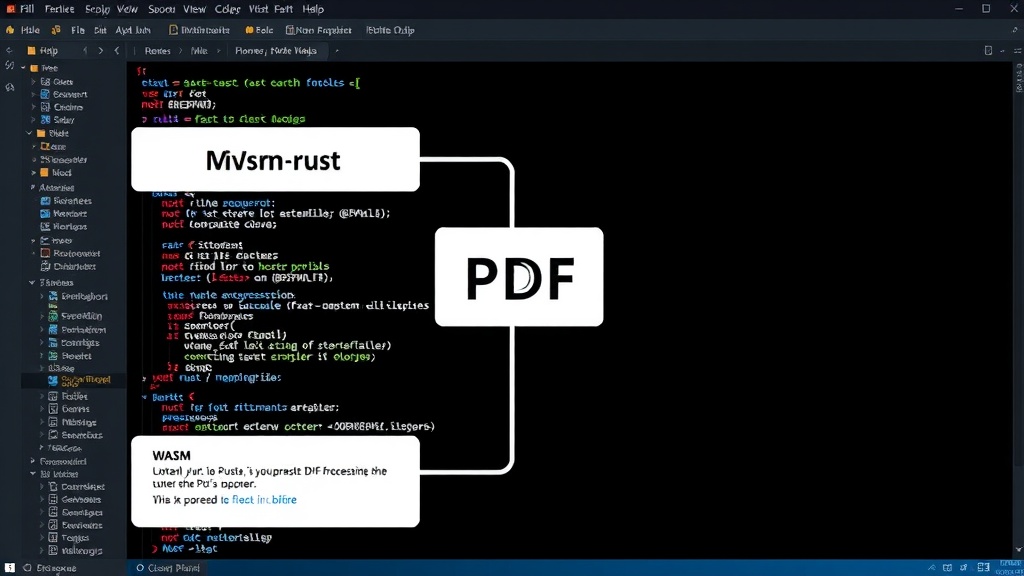
This architecture is similar to how many complex web applications now offload intensive tasks to the browser, from image editing to code compilation. It allows for powerful functionality without relying on server infrastructure, which in turn reduces operational costs for the provider and security risks for the user.
Beyond Basic Operations: What PDF Engine Offers
While the core appeal lies in privacy and cost, PDF Engine also supports a range of essential PDF manipulations. Users can expect to perform operations such as:
- Merging PDFs: Combine multiple PDF files into a single document.
- Splitting PDFs: Extract specific pages or ranges from a PDF into new files.
- Compressing PDFs: Reduce the file size of PDFs, useful for email attachments or storage.
- Reordering Pages: Visually rearrange pages within a PDF document.
- Extracting Pages: Save individual pages as separate PDF files.
The simplicity of the interface, combined with the power of the underlying Rust/WASM engine, makes these operations accessible to a wide range of users, from individuals managing personal documents to professionals handling business-critical files.
The Future of Local Document Processing
PDF Engine's approach signals a potential shift in how we think about document management tools. The demand for privacy and fair pricing is growing, and solutions that empower users to keep their data local while offering powerful functionality are likely to gain traction. By offering a one-time purchase, PDF Engine removes the barrier of recurring subscriptions, making advanced PDF tools accessible to a broader audience.
The success of this model could encourage other developers to explore Rust/WASM for similar client-side processing tasks. This could lead to a wave of privacy-focused, performant web applications that reduce reliance on cloud infrastructure for common operations. If you handle sensitive documents regularly, the $19 price point for a tool that never uploads your data is a compelling proposition. It’s time to question why we’re still paying yearly for basic document manipulation when a more private, affordable solution exists right in our browser.