The Evolving Landscape of Authentication
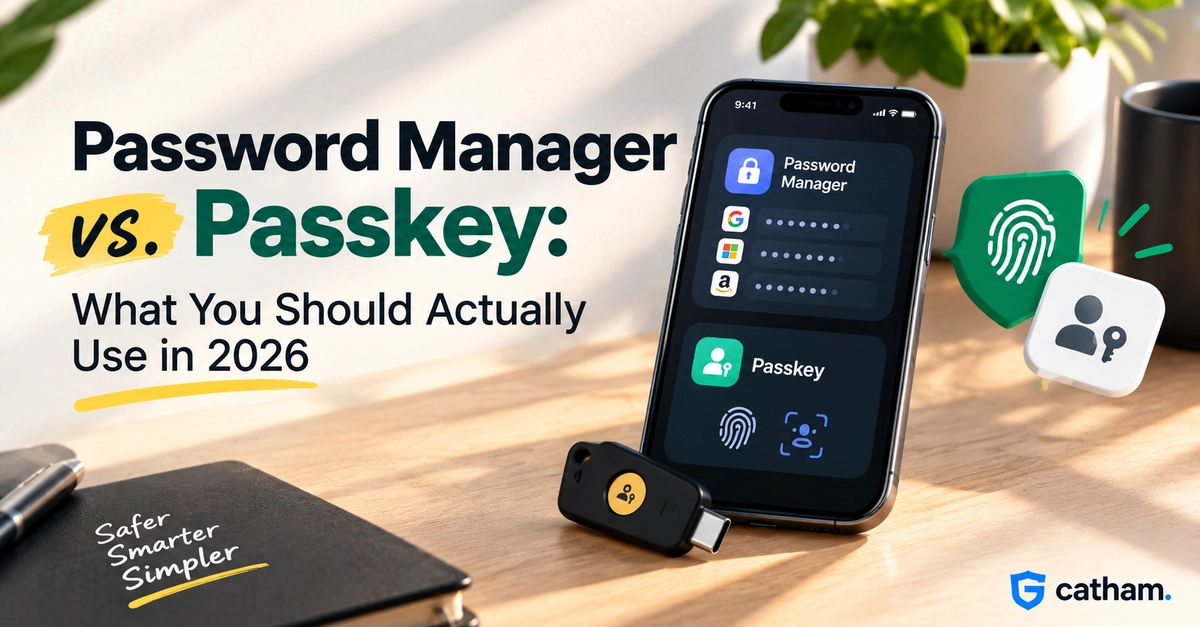
In the relentless pursuit of digital security, two primary solutions have emerged to combat the persistent threat of compromised credentials: password managers and passkeys. While both aim to simplify and secure the login process, they serve distinct roles and address different facets of authentication. As we look towards 2026, the prevailing wisdom is not to choose between them, but to embrace both as complementary tools in a comprehensive security strategy. This dual approach is crucial for navigating the increasingly complex threat landscape.
Password managers have been the bulwark against weak and reused passwords for years. They generate strong, unique passwords for every account, store them securely, and autofill them when needed. This eliminates the human tendency to create predictable passwords or reuse the same credentials across multiple sites, a common vector for widespread breaches. They are particularly vital for the vast majority of online accounts that have not yet adopted passkey technology.
Passkeys, on the other hand, represent a newer paradigm, leveraging public-key cryptography to enable passwordless logins. They are designed to be phishing-resistant and far more secure than traditional passwords. A passkey is essentially a digital key pair: a public key stored by the service provider and a private key stored securely on your device (phone, computer, or a hardware security key). Authentication occurs when your device uses its private key to cryptographically sign a challenge from the service, proving your identity without ever transmitting a password.
Why Both Are Necessary in 2026
The FIDO Alliance's 2026 World Passkey Day report indicates a significant adoption rate, with 5 billion passkeys in use globally and 75 percent of users having enabled at least one. This widespread adoption highlights the growing momentum and user acceptance of passkeys. However, this statistic alone doesn't render password managers obsolete. A March 2026 report reveals that a substantial number of users still rely on password managers for the bulk of their online accounts.
The critical distinction lies in the current state of adoption. Not all websites and applications support passkeys yet. For accounts that do not offer passkey integration, a strong, unique password managed by a password manager remains the only viable secure option. Attempting to use a passkey where it is not supported is impossible, leaving users with no alternative but to fall back to less secure authentication methods if they haven't maintained a robust password strategy.
Furthermore, even for services that support passkeys, the user experience and implementation can vary. While passkeys are inherently more secure against phishing than passwords, the underlying infrastructure and user device security still play a role. A sophisticated attack targeting the device where the passkey is stored, or exploiting vulnerabilities in the passkey implementation itself, could theoretically pose a risk. Password managers, by enforcing strong, unique passwords for non-passkey accounts, provide a crucial layer of defense against credential stuffing and brute-force attacks that target these legacy systems.
The Synergy: Combining Password Managers and Passkeys
The most effective security posture for 2026 involves using password managers and passkeys in tandem. Think of it like having both a high-security vault for your most valuable assets and a robust, well-maintained lock on your front door. The vault (passkey) is for new, highly sensitive digital interactions where advanced security is paramount and supported. The front door lock (password manager) secures everything else that hasn't yet upgraded to the vault.
Here's how this integration works in practice:
- For accounts supporting passkeys: Enable passkeys wherever available. Use your password manager's passkey integration features (if available) or your device's native passkey management to store and manage them. This ensures you benefit from the highest level of phishing resistance and convenience.
- For accounts that do not support passkeys: Continue to use your password manager to generate and store strong, unique passwords. This is non-negotiable for maintaining security across the vast majority of your online presence.
- Cross-device synchronization: Both password managers and passkeys (often managed via cloud sync services like iCloud Keychain or Google Password Manager) offer cross-device synchronization. Ensure this feature is enabled and secured with strong multi-factor authentication for your primary accounts.
The prompt adoption of passkeys for supported accounts, coupled with the continued diligent use of a password manager for all other accounts, creates a layered defense. This strategy mitigates the risks associated with both emerging technologies and legacy systems.
The Future Outlook
As more services integrate passkey support, the reliance on traditional passwords will diminish. However, the transition will not be instantaneous. There will be a significant overlap period where both authentication methods coexist. During this period, a security-conscious individual or organization must master the management of both. The ultimate goal is passwordless authentication everywhere, but the path to that future is paved with a pragmatic combination of today's best tools.
The surprising detail here is not the projected number of passkey users, but the implicit acknowledgment that even with high adoption, password managers will remain indispensable for the foreseeable future. This indicates that the industry is not looking for a single replacement, but an evolution of security practices that incorporate new technologies without discarding proven ones.
What remains to be seen is how seamlessly password manager vendors will integrate passkey management into their existing ecosystems. Early movers are already providing this functionality, but universal compatibility and a unified user experience across all password managers and all passkey-enabled services will be key to widespread, effortless adoption of this dual strategy.