The Password Problem Persists, But a Solution Emerges
For decades, passwords have been the gatekeepers of our digital lives. They are also a persistent vulnerability. The FIDO Alliance, a consortium dedicated to developing open authentication standards, has released its "State of Passkeys 2026" report, offering concrete data that finally quantifies what many in the tech industry have long suspected: passwords are fundamentally losing the battle for secure and efficient user authentication. The report, which surveyed 11,000 consumers and 1,400 enterprise decision-makers across ten countries, paints a clear picture of passkey adoption and its tangible benefits.
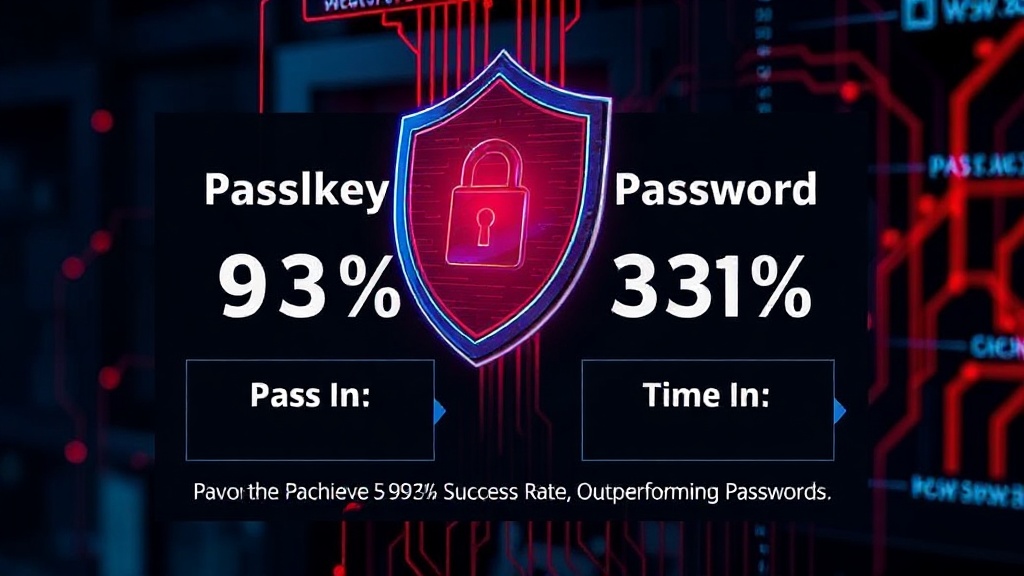
The numbers are stark. Passkeys boast a staggering 93% sign-in success rate. This dramatically contrasts with the 63% success rate for password-based logins. This isn't just a marginal improvement; it signifies a fundamental shift in how easily users can access their accounts. Furthermore, the time saved is substantial. The average sign-in time using passkeys hovers around 8.5 seconds, a significant leap from the over 30 seconds typically required for password entry, which often includes forgotten passwords, resets, and brute-force attempts.
Security: A Structural Fix, Not a Behavioral Band-Aid
Beyond convenience, the security implications are paramount. Passkeys are designed to be phishing-resistant by their very nature. Unlike passwords, which are shared secrets vulnerable to interception on fake login pages, passkey credentials are cryptographically bound to the specific website they were created for and the user's device. This cryptographic link means that even if a user is tricked into visiting a malicious site, the passkey generated for the legitimate service will not authenticate. This is a structural advantage, eliminating the reliance on user vigilance to spot sophisticated phishing attempts—a significant weak point in password-based security models.
The report highlights that 90% of consumers are now aware of passkeys, indicating a significant increase in public understanding and acceptance. Globally, approximately 5 billion passkeys are now active, a testament to their growing adoption across various platforms and services. This widespread activation suggests a tangible shift away from the traditional, often insecure, password paradigm.
Enterprise Adoption and the Future of Authentication
For enterprise decision-makers, the benefits extend beyond user experience and security. The report indicates that businesses are increasingly recognizing the value of passkeys in reducing support costs associated with password resets and account lockouts. By implementing passkey authentication, companies can streamline user access while simultaneously bolstering their security posture against common cyber threats like credential stuffing and phishing attacks.
The transition to passkeys is not merely an incremental update; it represents a fundamental re-architecting of authentication. It moves away from something users must remember and manage (often poorly) to something that is intrinsically linked to their devices and biometrics. This shift has profound implications for how we design and implement digital identity systems. The inherent security of passkeys, tied to device hardware and cryptographic proofs, makes them a far more robust defense against the evolving landscape of cyber threats. The FIDO Alliance's findings provide the empirical evidence needed to accelerate this transition, demonstrating that a passwordless future is not only achievable but demonstrably superior.
The Road Ahead: Overcoming Inertia
Despite the compelling data, the complete eradication of passwords will take time. The inertia of legacy systems and the need for widespread developer adoption of passkey standards pose challenges. However, the numbers presented in the FIDO Alliance report offer a powerful incentive for businesses and consumers alike to accelerate this transition. The improved security, enhanced user experience, and reduced operational overhead associated with passkeys make them the logical successor to the beleaguered password. As more platforms and services integrate passkey support, the network effect will further solidify their position as the dominant authentication method of the future.
The report signals a turning point. The data is no longer theoretical; it is empirical. Passkeys deliver on the promise of a more secure, more convenient, and ultimately more user-friendly digital world. The question is no longer *if* we will move beyond passwords, but *how quickly* we can embrace this superior authentication standard. The numbers finally prove it: passwords are losing, and passkeys are winning.