OrioleDB's MVCC Innovation: Beyond Row History
Traditional Multi-Version Concurrency Control (MVCC) in databases like PostgreSQL primarily focuses on managing historical versions of rows. This ensures that concurrent transactions can access consistent data without blocking each other. However, PostgreSQL's MVCC implementation, while robust, operates on the heap, with indexes pointing to these rows. This separation can lead to inefficiencies, particularly when dealing with frequent updates and complex queries.
OrioleDB introduces a fundamental shift by integrating MVCC directly into the index structure itself. Instead of treating the heap as the primary data store and indexes as mere pointers, OrioleDB employs index-organized tables. In this model, the B-tree index is no longer just a lookup mechanism; it becomes the primary storage for complete rows, and crucially, it's version-aware. This means that historical versions of rows are managed directly within the B-tree structure, alongside the current versions. This approach allows OrioleDB to track not only row history but also the search-key space, a critical distinction from traditional heap-based MVCC.
To understand the significance of this, consider the alternative of out-of-place undo logging, as explored by zheap. Zheap attempted to rebuild historical row versions by storing old tuples in an undo log separate from the main heap. While this approach operated at the table access method level without altering index methods, it was ultimately abandoned. OrioleDB builds upon this conceptual groundwork but extends it by incorporating versioning directly into the index access method. This allows for more efficient management of data history and concurrency.
The Bridge Index: Ensuring Ecosystem Compatibility
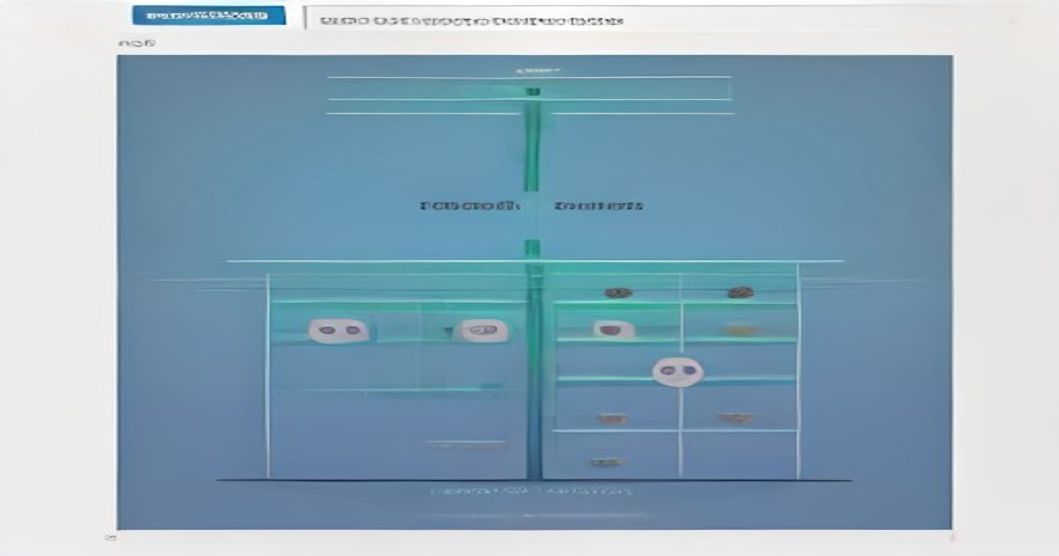
PostgreSQL boasts a rich ecosystem of extensions that support various index types, including hash, GIN, BRIN, and SPGiST, among others. A critical challenge for any new table access method aiming to replace or augment PostgreSQL's native heap is maintaining compatibility with this diverse indexing landscape. OrioleDB addresses this by implementing a "bridge index" mechanism.
This bridge index acts as an intermediary, translating requests and ensuring that OrioleDB's internal version-aware B-tree structure can seamlessly interact with other index types. This design choice is paramount for adoption. Developers and organizations have invested heavily in optimizing their applications and infrastructure around specific PostgreSQL index types. Without compatibility, the benefits of OrioleDB would be severely limited, forcing a complete re-evaluation of indexing strategies. The bridge index effectively abstracts away the underlying storage differences, presenting a consistent interface to the rest of the PostgreSQL ecosystem. This ensures that existing queries and applications that rely on secondary indexes function correctly, even when the primary table storage is managed by OrioleDB's novel MVCC B-trees.
Implications for Concurrency and Performance
OrioleDB's index-organized, version-aware B-tree structure has profound implications for concurrency and performance. By managing row versions directly within the index, the database can reduce the overhead associated with traditional MVCC. In heap-based systems, fetching a row might involve traversing the index to find a tuple ID, then fetching the tuple from the heap, and potentially dealing with dead tuples or forwarding pointers. With OrioleDB, the complete, versioned row is available directly within the B-tree leaf node it belongs to. This localized data access can significantly speed up read operations, especially for queries that frequently touch historical data or require scanning index ranges.
Furthermore, the management of the search-key space within the MVCC framework is a key differentiator. Traditional MVCC often struggles with scenarios where updates to indexed columns can lead to complex cleanup processes or contention. By versioning the search-key space along with the row data, OrioleDB aims to provide more predictable performance under high-concurrency workloads. Transactions can operate on historical snapshots of the index, allowing for more granular control and reduced blocking. This is particularly beneficial for analytical workloads that often read large amounts of historical data, or for transactional systems with high rates of concurrent writes and reads on the same data sets.
The decision to build OrioleDB as a PostgreSQL table access method, rather than a fork or a standalone database, is also strategic. It allows OrioleDB to leverage the maturity and extensive features of the PostgreSQL ecosystem, including its query planner, transaction management, and extensibility features. The MVCC implementation within the index access method is the core innovation, designed to enhance, not replace, the fundamental strengths of PostgreSQL.
The Future of PostgreSQL MVCC
OrioleDB's approach represents a significant evolution in how MVCC can be implemented. By bringing versioning directly into the B-tree, it tackles some of the inherent performance limitations of traditional heap-based MVCC. While still a relatively new development, its success could influence future directions for database concurrency control, not just within PostgreSQL but potentially across other relational database systems. The challenge ahead lies in demonstrating its scalability and robustness across a wide range of real-world workloads and in further optimizing the bridge index for maximum compatibility and performance with the vast array of PostgreSQL extensions.