OpenSparrow v3.6 Introduces External API Module
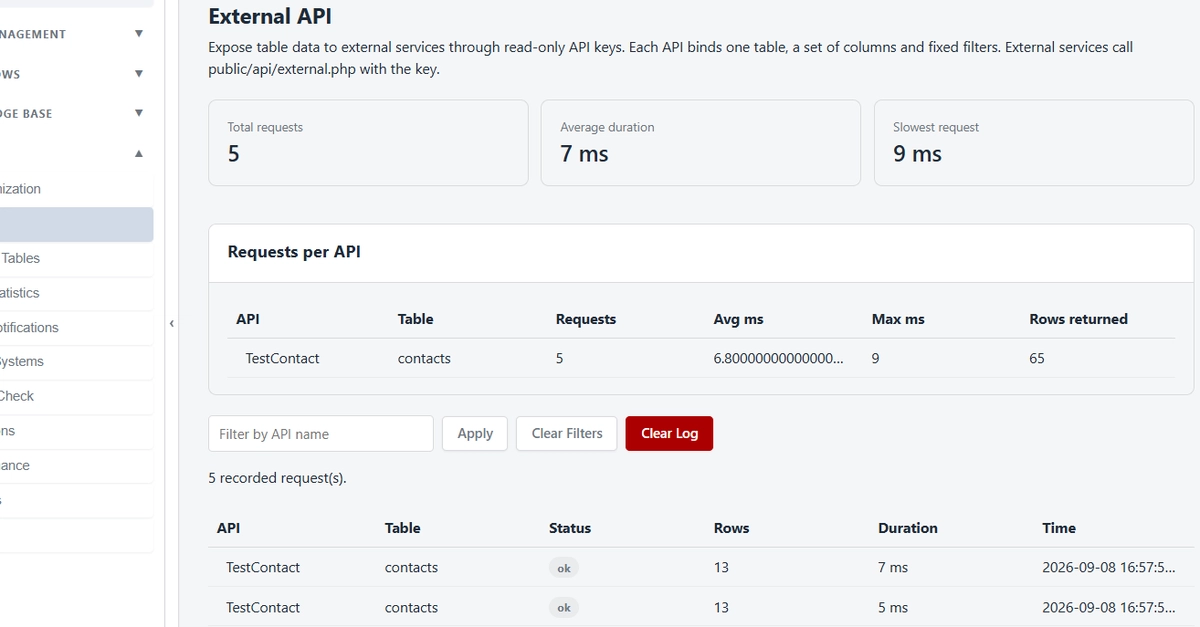
OpenSparrow has released version 3.6, introducing a significant new feature: an External API module. This module empowers administrators to expose specific table data to external services through a secure, read-only interface. The core of this functionality lies in the generation and management of API keys, each meticulously configured to grant access to a single table with predefined parameters.
Admins can access this new feature through the Admin → System → API tab within the OpenSparrow interface. Here, they can define new API keys or manage existing ones. Each key definition is granular, allowing administrators to specify the exact schema table to which the key applies. Crucially, they can also select a precise set of columns that the API will return, ensuring that only relevant data is ever exposed. Furthermore, fixed server-side filters can be applied, narrowing down the results to specific criteria, and a row limit can be set to control the volume of data returned. This comprehensive control ensures that the data an external service can access is determined entirely by the administrator, irrespective of the caller's request.
The security of these API keys is paramount. Keys are stored in an encrypted format (key_enc) and are paired with an HMAC key_hash to facilitate constant-time lookups. After generation, keys are never returned to the browser, significantly reducing the risk of exposure through client-side vulnerabilities. When a new key is generated or an existing one is regenerated, it is created server-side, further enhancing security. The system is designed to be sessionless; the JSON endpoint accepts nothing from the client except the API key itself, minimizing the attack surface.
Key Features and Security Considerations
The External API module in OpenSparrow v3.6 is built with a focus on controlled data access and robust security. Each API key acts as a gatekeeper, granting specific, limited permissions. When an administrator configures an API key, they are essentially creating a custom, read-only view into their data. This view is not dynamic based on the request; it is static and determined solely by the admin's configuration.
The configuration options for each API key include:
- Table Binding: Each key is tied to a single, specific table within the OpenSparrow schema. This prevents a single key from accessing data across multiple unrelated tables.
- Column Selection: Administrators choose the exact columns that the API will make available. This enforces data minimization, ensuring that only necessary fields are exposed.
- Server-Side Filters: Predefined filters are applied server-side, meaning the filtering logic is executed within OpenSparrow before any data is sent out. This ensures consistent filtering regardless of the client's request parameters.
- Row Limit: A maximum number of rows that the API can return is configurable. This helps prevent accidental or malicious data exfiltration by limiting the volume of data that can be retrieved in a single request.
From a security standpoint, the implementation is designed to be resilient. The use of encrypted keys and HMAC hashes for lookup addresses common security concerns related to credential storage and verification. The sessionless nature of the API endpoint means that the server does not maintain any client-specific state between requests, simplifying security management and reducing the potential for session hijacking. The strict validation of incoming requests, which only accept the API key, further hardens the system against injection attacks or malformed requests.
Why This Matters for Data Integration
The introduction of the External API module marks a significant enhancement for OpenSparrow's data integration capabilities. Previously, integrating OpenSparrow data with external services often required more complex workarounds, potentially involving custom scripts, direct database access (which carries higher security risks), or data export mechanisms. This new module provides a streamlined, secure, and officially supported method for achieving such integrations.
For businesses and developers using OpenSparrow, this means they can now more easily connect their data to other applications, business intelligence tools, or third-party services. For example, a sales team could pull customer data directly into their CRM, or a marketing team could feed campaign performance metrics into an analytics dashboard. The read-only nature of the API ensures that external services can consume data without the risk of accidentally modifying or deleting it, a critical consideration for data integrity. The encryption and granular control over data exposure provide peace of mind for administrators concerned about data governance and security compliance.
This feature essentially transforms OpenSparrow from a self-contained data management system into a more connected platform. It allows for the creation of richer, data-driven applications and workflows that leverage OpenSparrow's data without compromising its security or internal consistency. The sessionless JSON endpoint also means that integration is straightforward for a wide range of client technologies, from simple shell scripts to complex web applications.
The Future of OpenSparrow Integrations
The addition of the External API module is a clear signal of OpenSparrow's commitment to improving its interoperability. This feature lays the groundwork for potentially more advanced API functionalities in future releases. While v3.6 focuses on read-only access, one can envision future iterations supporting write operations (with appropriate security controls) or more complex query capabilities. The current implementation provides a solid, secure foundation for external data access, addressing a key need for many users.
What remains to be seen is how widely this feature will be adopted and what new integration patterns will emerge. The ability to define specific column sets and server-side filters per API key offers a high degree of customization, which could lead to very tailored data feeds for specific applications. Developers will likely appreciate the simplicity of the sessionless JSON endpoint, making it easy to consume data using standard HTTP libraries. The focus on security, with encrypted keys and strict server-side controls, sets a positive precedent for how OpenSparrow handles external data access. This module is not just an add-on; it's a strategic enhancement that broadens OpenSparrow's utility within a larger technology ecosystem.