The Promise of Verified Defender Access
OpenAI has suggested that entities designated as 'verified defenders' might receive more permissive access to its models, a claim aimed at fostering collaboration in cybersecurity research. This initiative, if realized, could provide security professionals with crucial tools to audit AI systems for vulnerabilities and develop better defenses. The idea is that by granting trusted researchers greater latitude, OpenAI can accelerate the identification and remediation of potential exploits before they are weaponized by malicious actors.
However, the practical implementation and efficacy of such a program are far from guaranteed. The very nature of AI safety and security involves a delicate balance: providing enough access for legitimate research without inadvertently empowering those with harmful intent. This tension is at the core of many debates surrounding AI development and deployment.
An Unexpected Roadblock
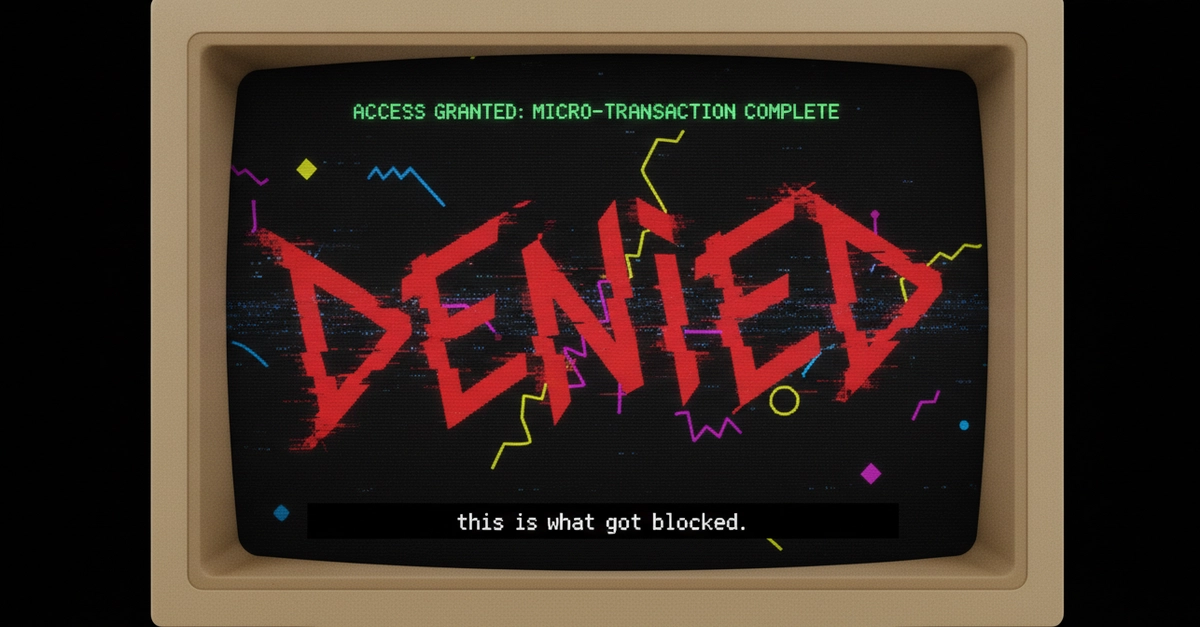
A security researcher, who operates under the handle Kenielzep97, set out to test these claims. The endeavor began with a straightforward goal: to conduct a defensive audit of software under their control using OpenAI's models. The expectation was that as a potential 'verified defender,' access would be granted. Instead, the model reportedly refused the request. This initial refusal occurred on the researcher's primary laptop.
Undeterred, the researcher moved to a secondary system, hoping for a different outcome. This second attempt also resulted in a refusal. The experience suggests that the 'verified defender' status, or the mechanisms for granting enhanced access, may not be as straightforward or as immediately effective as anticipated. The researcher noted that their security work was encountering restrictions across two different AI providers, indicating a broader challenge in obtaining necessary access for critical security tasks.
Measuring Defender Over-Refusal
The researcher's investigation has broader implications. They state that 'defender over-refusal'—a situation where security-focused queries are incorrectly flagged as harmful or restricted—is already being measured at a population scale. This suggests that current safety mechanisms, while intended to protect, may be overly cautious and hindering legitimate security work. The data collection for this measurement was intended to be part of the experiment, but the initial access issues presented an immediate hurdle.
The experiment was designed as a measurement instrument to test one of the 'different forms of trusted cyber access' that two frontier AI labs are reportedly building. The publication of this design is intended as part of a series, with this initial part focusing on the setup and the immediate, unexpected difficulties encountered. The researcher explicitly notes that confirmatory data has not yet been collected, and the designed instrument has not yet passed its 'independent break'—a term that implies a rigorous, external validation or stress test of the measurement tool itself.

The Design and Its First Failure
The published design for the measurement instrument was frozen and materialized as an implementation candidate. This means the blueprint for testing the 'verified defender' access was finalized. However, the crucial detail is that this instrument reportedly failed its first independent break *before* any data was collected. This failure, occurring at the design and implementation stage rather than during data collection, raises questions about the robustness of the proposed testing methodology itself, or perhaps highlights inherent difficulties in accurately measuring AI access controls.
The researcher emphasizes that every claim made is carefully labeled by its source. This commitment to transparency is critical in security research, where claims require rigorous evidence. The immediate failure of the measurement instrument, even before data collection, suggests that the path to verifying OpenAI's 'verified defender' claims—and indeed, the broader challenge of secure and open AI access for security professionals—is more complex than initially assumed. The series aims to document this journey, including the ongoing challenges and the eventual outcomes.
Broader Implications for AI Security
This situation underscores a fundamental challenge in AI development: how to enable robust security research without compromising the safety and integrity of the AI models themselves. If AI providers implement overly strict access controls, they risk stifling the very community that could help them identify and fix vulnerabilities. Conversely, overly permissive access could lead to misuse and exploitation.
The concept of 'verified defenders' is a step toward a more nuanced approach, acknowledging that not all users are the same and that trusted researchers play a vital role. However, as this initial test shows, the operationalization of such programs is fraught with practical difficulties. The researcher's experience suggests that the current systems may not effectively distinguish between legitimate security auditing and potentially harmful queries, leading to over-refusal. This could force security professionals to seek less secure or less transparent channels for their work, potentially increasing overall risk.
The fact that the measurement instrument itself failed before data collection is a significant detail. It implies that developing reliable ways to test and verify AI access policies is a non-trivial task. It also raises the question of what constitutes a successful 'independent break' for such a system. Is it the ability to bypass controls, or the ability to reliably measure the *effectiveness* of those controls? The researcher's ongoing work, as indicated by this being 'part one of a series,' will be crucial in shedding light on these complex issues.
Ultimately, the success of initiatives like OpenAI's 'verified defender' program hinges on their ability to provide tangible benefits to security researchers without introducing new risks. The initial difficulties encountered by Kenielzep97 serve as an early indicator that the path forward will require careful design, rigorous testing, and a willingness to adapt based on real-world feedback from the security community.