OpenAI Releases Full Security Stack: AEGIS and ENLIL
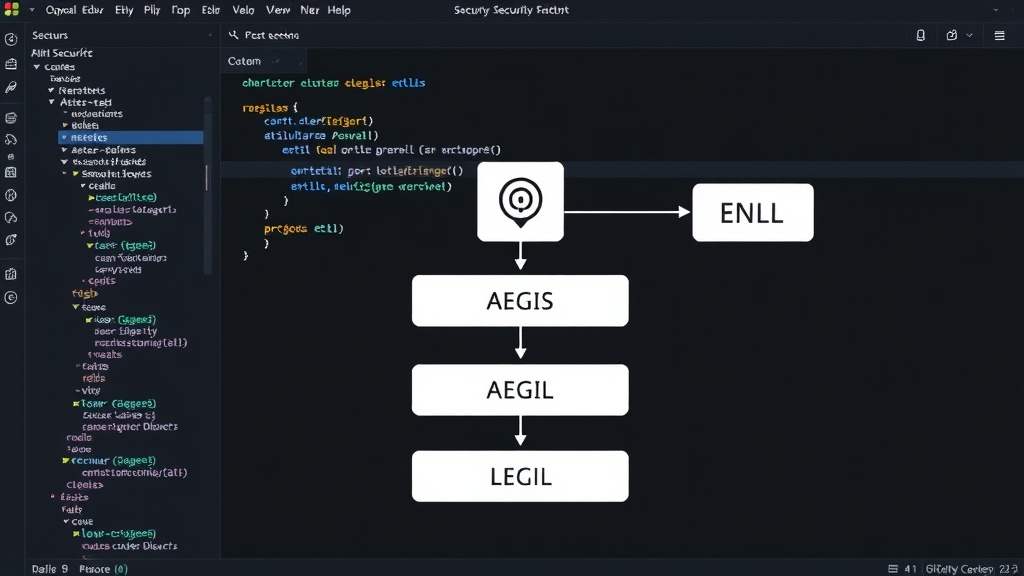
OpenAI has open-sourced its entire security stack, comprising two distinct but integrated systems: AEGIS for threat detection and ENLIL for threat deliberation. This move, detailed in a recent Dev.to post, marks a significant step in the company's commitment to transparency and collaborative security development. By releasing both halves of their security infrastructure, OpenAI invites the broader community to scrutinize, contribute to, and build upon these tools.
The decision to open-source the stack stems from a belief that security is a shared responsibility. While AEGIS and ENLIL have been discussed separately in the past—AEGIS for its post-quantum forensic logging capabilities and ENLIL for its parallel LLM architecture—this release unifies them as a cohesive system. The core philosophy behind this release is to ensure that the tools OpenAI uses to protect its own infrastructure are accessible to others, fostering a more robust and resilient security landscape for all.
AEGIS: The Detection Engine
AEGIS functions as an intrusion detection and prevention system (IDPS). It operates by monitoring network traffic and correlating signals across nine distinct layers. These layers range from low-level cryptographic filtering to adaptive machine learning models. The system is designed to identify anomalous behavior and potential threats with high fidelity, minimizing false positives that can plague traditional security systems. A key feature highlighted is AEGIS's implementation of post-quantum cryptography for its forensic logging. This forward-looking approach ensures that logs remain secure and tamper-proof even against future quantum computing threats, a critical consideration for long-term data integrity and auditability.
The sophistication of AEGIS lies in its multi-layered approach. Instead of relying on a single detection method, it synthesizes information from various sources. This includes network packet analysis, endpoint telemetry, and behavioral anomaly detection. The system's ability to adapt and learn from observed patterns allows it to stay ahead of evolving threat vectors. By open-sourcing AEGIS, OpenAI aims to leverage the collective intelligence of the security community to further refine its detection algorithms and expand its threat intelligence capabilities.
ENLIL: The Deliberation Framework
Complementing AEGIS is ENLIL, the deliberation framework. While AEGIS identifies potential threats, ENLIL is responsible for analyzing and deciding the significance and appropriate response to those threats. A striking aspect of ENLIL's design is its use of nine Large Language Models (LLMs) running in parallel, rather than a single, monolithic model. This parallel architecture provides redundancy and allows for diverse perspectives on threat assessment. Each LLM can process the alerts generated by AEGIS, offering unique interpretations and confidence scores.
The outputs from these nine LLMs are then aggregated and signed using post-quantum cryptography. This signing process ensures the integrity and authenticity of the final decision, preventing any single point of failure or manipulation. This approach to threat deliberation is innovative, as it harnesses the power of multiple AI models to achieve a more nuanced and reliable outcome than a single model could provide. The decision to run multiple LLMs in parallel is a direct response to the inherent uncertainties in threat detection and response, aiming for a more robust decision-making process.
Integration and Community Impact
The synergy between AEGIS and ENLIL forms a complete security solution. AEGIS acts as the vigilant guardian, flagging suspicious activities, while ENLIL serves as the intelligent analyst, interpreting the findings and recommending actions. This integrated approach is designed to be highly effective in modern, complex digital environments. OpenAI's decision to open-source this entire system is a strategic move to accelerate innovation in cybersecurity. By making these tools freely available, they hope to empower developers and security professionals worldwide, enabling them to build more secure systems and defend against sophisticated attacks.
The open-sourcing effort is not merely about releasing code; it's an invitation to collaborate. OpenAI is actively seeking feedback and contributions from the community. This includes identifying new threats, improving detection accuracy, enhancing response mechanisms, and exploring novel applications of the AEGIS and ENLIL frameworks. The expectation is that community involvement will lead to faster iteration cycles and the development of features and capabilities that OpenAI might not have envisioned on its own. This mirrors the success of many open-source projects that have become industry standards through broad developer participation.
The implications for the security industry are substantial. Companies can now adopt and adapt OpenAI's cutting-edge security technology without proprietary barriers. This could lead to a democratization of advanced security capabilities, particularly for smaller organizations or startups that may not have the resources to develop such systems in-house. Furthermore, the focus on post-quantum cryptography in both detection logging and output signing positions these tools as future-proof solutions in an era of rapidly advancing computational power.