OpenAI Prepares for Major AI Model Rollout
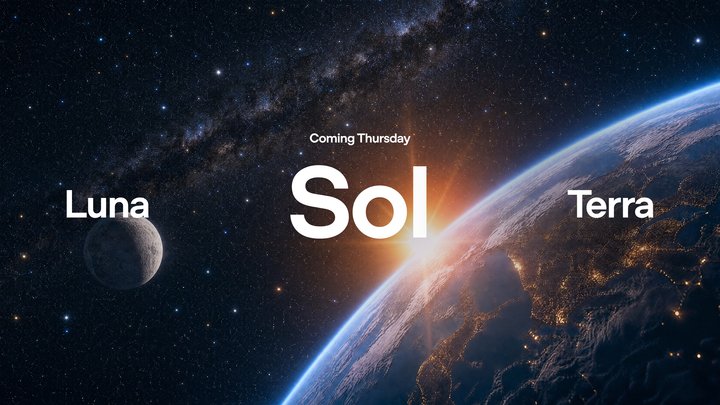
OpenAI has announced the upcoming public launch of three new AI models: GPT-5.6 Sol, Terra, and Luna. The release is scheduled for this Thursday, marking a significant expansion of the company's artificial intelligence offerings. While details about the specific capabilities and intended applications of each model remain largely under wraps, the announcement on OpenAI's official channels has generated considerable anticipation within the AI and tech communities. The naming convention itself—'Sol,' 'Terra,' and 'Luna'—suggests a potential thematic connection, possibly alluding to celestial bodies or fundamental concepts, which could hint at the models' core functionalities or the scope of their intended impact.
The timing of this multi-model release is noteworthy. OpenAI has consistently pushed the boundaries of what is possible with large language models and generative AI. The progression from previous GPT versions to what is now designated as GPT-5.6 Sol implies a substantial leap in performance, understanding, or perhaps a new architectural approach. The inclusion of 'Terra' and 'Luna' alongside a GPT model suggests these might not be direct successors in the same lineage but could represent specialized AI systems designed for distinct tasks or domains. Speculation is rife regarding whether these models will focus on enhanced reasoning, multimodal capabilities, improved efficiency, or entirely new forms of AI interaction.
Anticipating the Capabilities of GPT-5.6 Sol
GPT-5.6 Sol is the most directly named iteration in the company's flagship series. The '5.6' designation implies an incremental but potentially significant advancement over existing models like GPT-4. Developers and researchers will be keenly observing whether this version introduces breakthroughs in areas such as long-context understanding, advanced code generation, or more nuanced conversational abilities. The previous iterations of GPT models have set industry benchmarks, and the expectations for GPT-5.6 Sol are exceptionally high. Its architecture might incorporate novel techniques for attention mechanisms, training methodologies, or data processing, enabling it to handle more complex queries and generate more coherent, contextually relevant outputs.
The 'Sol' moniker could signify a focus on 'sunlight'—perhaps implying transparency, broad applicability, or a powerful, centralizing force in AI development. It might also relate to solar energy or systems, hinting at efficiency or a connection to real-world, dynamic environments. Given OpenAI's history, it's plausible that GPT-5.6 Sol will offer improved performance metrics across a range of benchmarks, including natural language understanding, generation, and reasoning tasks. The public launch will likely be accompanied by updated API documentation, research papers, and demonstration use cases that illustrate the model's enhanced capabilities. For developers integrating OpenAI's models into their applications, the performance gains and new features will be critical in determining the next steps for their product roadmaps.
Terra and Luna: Specialized AI Systems
The introduction of 'Terra' and 'Luna' alongside GPT-5.6 Sol suggests a diversification strategy by OpenAI. 'Terra,' Latin for Earth, could indicate a focus on grounded, real-world applications, perhaps involving geospatial data, environmental modeling, or complex system simulations. Alternatively, it might refer to the terrestrial domain, suggesting AI that interacts more directly with physical systems or data derived from them. 'Luna,' the Moon, might imply applications related to cycles, observation, data collection from remote or challenging environments, or perhaps even space exploration and related technologies. These names could also reflect distinct architectural paradigms or training datasets, differentiating them from the general-purpose nature of the GPT series.
If 'Terra' is focused on Earth systems, it could be designed for advanced climate modeling, agricultural optimization, or urban planning. Its capabilities might include processing massive spatio-temporal datasets with unprecedented accuracy. 'Luna,' on the other hand, could be geared towards tasks requiring meticulous data analysis, pattern recognition in cyclical data, or applications in fields like astronomy or logistics where precise scheduling and observation are key. The synergy between these specialized models and GPT-5.6 Sol is also a point of interest. OpenAI might envision a future where these systems work in concert, with GPT-5.6 Sol handling natural language interfaces and complex reasoning, while Terra and Luna provide specialized domain expertise and data processing.
Broader Implications for the AI Landscape
The release of multiple advanced AI models simultaneously by a leading organization like OpenAI is a significant event for the entire technology sector. It signals an acceleration in AI development and a strategic move to broaden the application of AI across diverse fields. Competitors will undoubtedly be analyzing the capabilities of GPT-5.6 Sol, Terra, and Luna to understand how they stack up against their own offerings and to identify new market opportunities or threats. For startups and established companies alike, the availability of these new tools could enable the development of novel applications and services that were previously infeasible due to computational or algorithmic limitations.
The potential impact on research is also substantial. Access to more powerful and specialized AI models can accelerate scientific discovery in fields ranging from medicine and materials science to astrophysics and climate science. Researchers may find new avenues for hypothesis generation, data analysis, and simulation. However, this rapid advancement also brings renewed focus on the ethical considerations surrounding AI, including issues of bias, responsible deployment, and the potential for misuse. OpenAI's approach to safety and alignment in these new models will be as closely watched as their performance metrics. The public launch on Thursday is not just an unveiling of new technology, but a potential inflection point in how AI is developed, understood, and integrated into the fabric of society and industry.