
OpenAI Expands Agent Capabilities and Monetization
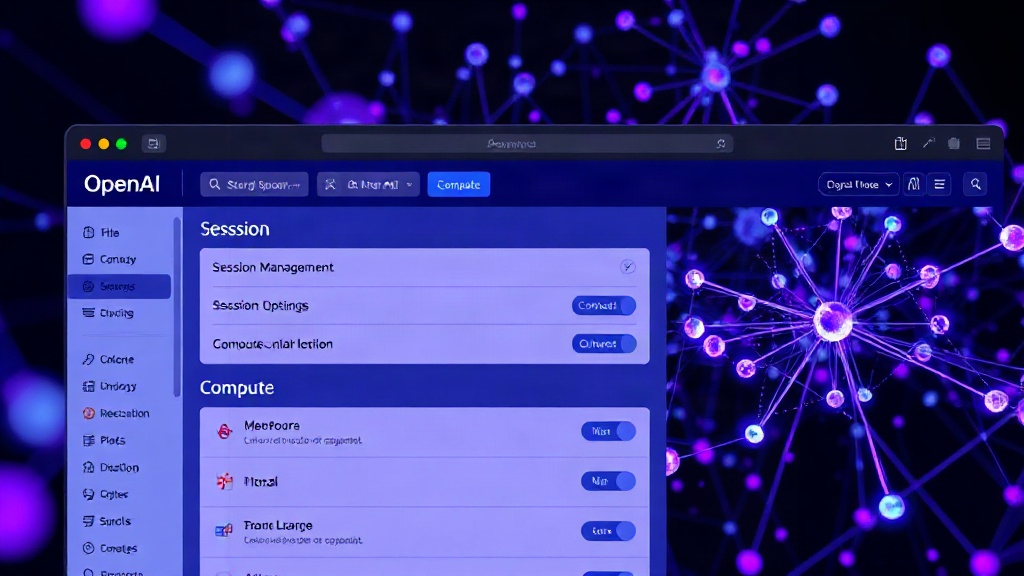
OpenAI has moved its Agents API into public beta, signaling a significant step towards more sophisticated AI orchestration. This managed service offers developers long-running sessions, robust context management, and sandbox compute environments. OpenAI is directly providing compute, but has also partnered with Vercel and DigitalOcean to offer these resources, giving developers flexibility in how they deploy and scale their agent applications. The move aims to abstract away much of the complexity associated with managing state and execution for multi-turn AI interactions.
Beyond the API, OpenAI is actively exploring monetization strategies for its AI agents. The company has begun testing sponsored agents within ChatGPT, with Wayfair and Angi participating as initial advertisers. This feature allows brands to offer specialized AI assistants directly within the ChatGPT interface, providing users with curated experiences and potentially driving targeted engagement and conversions. This represents a new frontier for advertising within conversational AI platforms.
In parallel, OpenAI is integrating its AI capabilities more deeply into existing workflows. A new ChatGPT sidebar integration for Microsoft Word aims to bring AI assistance directly into the document creation process, potentially streamlining content generation, editing, and summarization for users of the popular office suite.
It's worth noting that OpenAI is also preparing for the retirement of GPT-5.5, scheduled for October 14th. This model will be phased out across ChatGPT, ChatGPT Work, and Codex, indicating a shift towards newer, more advanced models as the primary offering.
Apple's Siri Gets a Major AI Overhaul, Reportedly with Google's Help
Apple has launched its AI-powered Siri, a significant upgrade promising more natural interactions and deeper system integration. The new Siri boasts personal context awareness, allowing it to understand user history and preferences. It also features on-screen awareness, enabling it to interact with content displayed on the device's screen, and the ability to perform system-wide app actions. A key differentiator is its standalone app capability, suggesting a more modular and potentially extensible architecture.
The initial English beta release is available now, with support for five additional languages planned for October. However, multiple industry reports suggest that Apple's ambitious AI upgrade for Siri is powered by Google's Gemini models under the hood. This alleged partnership, if true, represents a surprising collaboration between two major tech rivals, highlighting the immense computational and developmental resources required to build state-of-the-art AI assistants. The implications of this reliance on a competitor's foundational models are significant for Apple's long-term AI strategy and its relationship with Google.
The announcement comes at a critical time for Apple, which has faced criticism for Siri's perceived limitations compared to competitors like Google Assistant and Amazon Alexa. This overhaul aims to close that gap and position Siri as a more intelligent and capable assistant, integrated seamlessly into the Apple ecosystem.
Vendors Introduce Controls for Agent Spend
As AI agents become more prevalent and sophisticated, concerns around cost management and potential runaway expenses are growing. In response, several vendors are introducing new features to help organizations control and monitor their spending on AI agent operations. These controls are crucial for businesses looking to adopt AI agents responsibly and predictably, ensuring that the benefits of automation do not come with unforeseen financial burdens.
These new offerings likely include features such as budget alerts, usage monitoring dashboards, and potentially rate limiting or approval workflows for agent actions that incur costs. For instance, a company might set a daily spending cap for a customer service agent or require manager approval for agents performing high-cost data analysis tasks. This focus on financial governance is a natural evolution as AI agents move from experimental phases into production environments where operational costs become a significant factor.
The introduction of these spend controls by multiple vendors underscores a maturing market for AI agent solutions. It reflects an understanding that while the capabilities of AI agents are rapidly advancing, the practicalities of deployment, including cost, security, and governance, are equally important for widespread enterprise adoption. This trend suggests a growing ecosystem of tools and services designed to support the enterprise-level deployment of AI agents, extending beyond just the core model providers.
What remains to be seen is how granular these controls will become and whether they can effectively anticipate and mitigate the most complex cost scenarios that might arise from emergent agent behaviors. The challenge lies in balancing necessary flexibility with robust financial oversight.