Web Application for Data Lineage Visualization
This article concludes a three-part series on developing an open-source tool for cross-database, field-level data lineage analysis. Parts 1 and 2 focused on parsing and storing script-level data lineage information. Part 3 shifts to building a web application that leverages this stored lineage data for analysis and visualization. The implementation uses the Python Django framework, with the project named web_data_lineage_show.
The core functionality of this web application is to present the extracted data lineage information in an accessible and understandable format. After startup, the application presents an interface that allows users to explore how data flows and transforms across different fields and databases. This is crucial for understanding data dependencies, debugging data pipelines, and ensuring data quality and compliance.
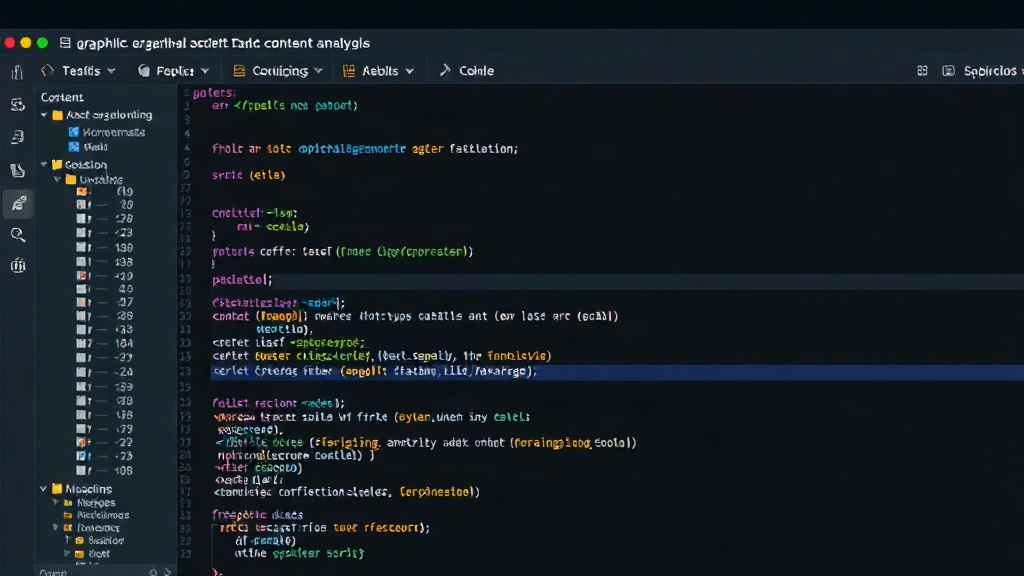
Graphical Display of Script Content
The first major feature demonstrated is the graphical display of script content. This visualization aims to provide a clear overview of the operations performed on data within scripts. By representing script operations visually, users can more easily identify complex transformations, potential bottlenecks, or areas where data might be misinterpreted. This visual representation serves as a foundational element for understanding the broader data lineage.
The web application is designed to be a reference implementation, allowing developers to adapt and extend its capabilities based on their specific needs and ideas. The goal is to provide a flexible foundation for building robust data lineage solutions. The underlying data captured in the previous parts of the series is key here; without the parsed and saved lineage information, the web application would have no data to visualize.
Data Lineage Analysis and Visualization
The primary purpose of the web_data_lineage_show application is to perform data lineage analysis and visualization. This involves taking the detailed field-level lineage information extracted from various scripts and databases and transforming it into interactive visual representations. Users can explore data origins, transformations, and destinations at a granular level.
This level of detail is essential for several reasons:
- Debugging: When data anomalies occur, tracing the field-level lineage helps pinpoint the exact script or transformation step where the issue originated.
- Impact Analysis: Before making changes to a data source or script, understanding which downstream fields and processes will be affected is critical. Field-level lineage provides this clarity.
- Compliance and Auditing: For regulatory purposes, demonstrating a clear audit trail of data transformations is often required. This tool facilitates that by showing the complete journey of data fields.
- Data Governance: Establishing clear ownership and understanding of data assets is a cornerstone of good data governance. Lineage visualization aids in this by mapping data flows.
The Django framework provides the necessary tools for building a dynamic web interface, handling data retrieval, and rendering the visualizations. Python's extensive libraries for data manipulation and visualization can be integrated seamlessly within the Django structure. This approach ensures that the application is not only functional but also maintainable and scalable.
Future Extensions and Customization
While this implementation serves as a demonstration, the open-source nature of the tool encourages community contributions and customization. Developers can extend the application to support additional database types, parsing logic for new scripting languages, or more sophisticated visualization techniques. The modular design allows for the integration of different front-end charting libraries or back-end data processing engines.
The ability to analyze and visualize data lineage at the field level is a significant step towards improving data transparency and trust within complex data ecosystems. This final part of the series brings the theoretical parsing and storage of lineage information into a practical, usable application, empowering users to better understand and manage their data assets.
The development of such tools is vital as data volumes and complexity continue to grow. Organizations increasingly rely on data for decision-making, and ensuring the integrity and understandability of that data is paramount. This open-source project offers a valuable resource for any team grappling with data lineage challenges across diverse database environments.