
The Context Problem in AI Coding Assistants
AI coding assistants have become indispensable tools for many developers. They can generate code snippets, explain complex logic, and even refactor existing code. However, a significant limitation plagues most of these assistants: they have no memory between sessions. Each new chat or interaction starts from a blank slate, forcing developers to re-explain project context, dependencies, and previous decisions. This constant re-onboarding erodes productivity and turns what should be a time-saving tool into a source of frustration.
This ephemeral nature means that if you're working on a complex feature that spans multiple coding sessions, the AI assistant has no recollection of the work done in the previous session. You'd have to provide it with all the relevant file contents, your overall goal, and any constraints again. This is akin to hiring a junior developer who forgets everything they learned at the end of each workday.
Aethos Memory: The Open-Source Solution
Nisarg Patel, a developer frustrated by this limitation, decided to build a solution. He developed an open-source tool called Aethos Memory, designed to inject persistent memory into these AI coding assistants. The core idea is to maintain a history of interactions and project context that can be fed back to the AI, allowing it to recall previous discussions and code modifications.
Aethos Memory works by intercepting and storing the conversation history. This stored history can then be selectively retrieved and fed back into subsequent interactions with the AI. Instead of starting from scratch, the AI receives a summarized or relevant portion of the past conversation, enabling it to maintain context. This transforms the AI assistant from a stateless tool into one that can build upon previous work, much like a human collaborator.
The project is hosted on GitHub, allowing other developers to inspect the code, contribute, and integrate it into their own workflows. Patel's goal is to make AI coding assistants more practical and effective for long-term, complex development tasks.
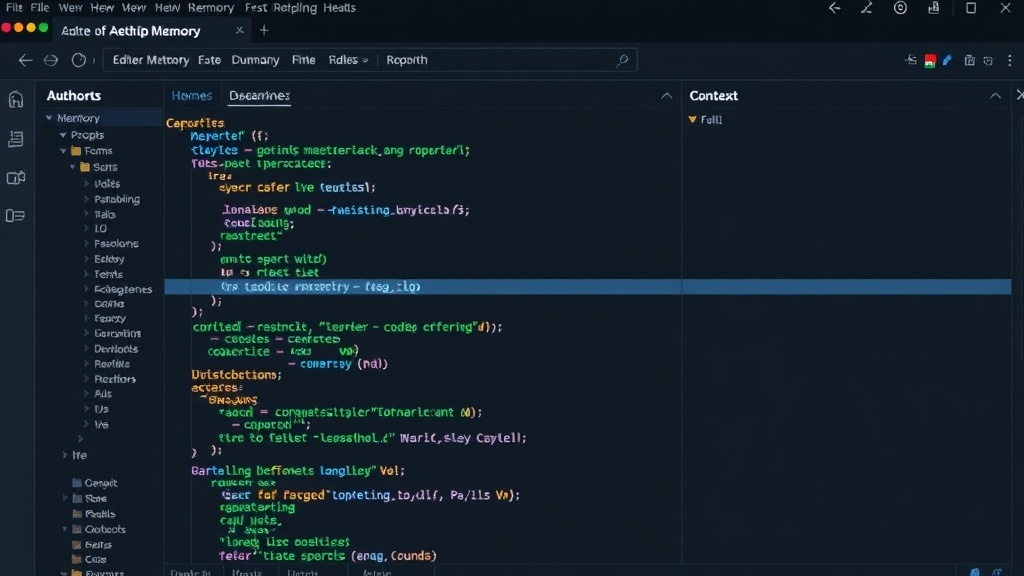
How Aethos Memory Works Under the Hood
While the exact implementation details are available in the open-source repository, the general principle involves a layer that sits between the user and the AI assistant. When a user interacts with the assistant, Aethos Memory logs the prompt and the AI's response. This log is stored locally. Before a new prompt is sent to the AI, Aethos Memory analyzes the existing log and the new prompt to determine what context is relevant from the past conversation.
This context can be a summary of previous discussions, specific code snippets that were worked on, or key decisions made. This curated context is then prepended to the new prompt, effectively giving the AI a memory of the preceding interaction. The challenge lies in efficiently summarizing and retrieving the most pertinent information without overwhelming the AI's context window or incurring excessive API costs if using a service.
Patel's approach aims to strike a balance, ensuring that the AI has enough information to be helpful without exceeding practical limits. This allows for more coherent and productive coding sessions, especially for larger projects where context is critical. The open-source nature means that different strategies for context management can be experimented with and implemented by the community.
Implications for Developers and the Future of AI Assistants
The existence of tools like Aethos Memory highlights a critical gap in the current AI assistant landscape. By addressing the memory limitation, developers can leverage these tools more effectively for sustained development efforts. Imagine working on a large codebase where the AI remembers the architectural decisions, the libraries in use, and the specific bugs addressed in prior sessions. This capability would significantly accelerate development cycles and reduce the cognitive load on developers.
This project also points towards a future where AI assistants are not just one-off query tools but true collaborators. As models become more sophisticated, the ability to maintain long-term, project-specific memory will be a key differentiator. It’s not surprising that major AI labs are also working on similar persistent memory solutions, but an open-source approach democratizes this capability, allowing for rapid iteration and customization by the very users who need it most.
The surprising detail here is not the ingenuity of the solution itself, but the fact that such a fundamental limitation persists in widely used AI coding tools. It underscores the ongoing need for community-driven innovation to bridge the gap between theoretical AI capabilities and practical developer workflows. If you're a developer using AI assistants, this is precisely the kind of tool that could save you hours of repetitive context re-explanation each week.
What’s Next for Aethos Memory?
As an open-source project, the future of Aethos Memory depends on community adoption and contributions. Potential enhancements could include more sophisticated context summarization algorithms, integrations with popular IDEs, and support for a wider range of AI models and platforms. The project provides a foundational layer upon which more advanced memory management techniques can be built.
For developers looking to improve their AI coding assistant experience, Aethos Memory offers a tangible solution to a pervasive problem. It's a testament to how individual developers can identify pain points in existing technology and create practical, open-source alternatives that benefit the entire community.