The Pain of Managing OpenTelemetry Collectors
Running a handful of OpenTelemetry Collectors is manageable. Scaling to dozens or hundreds across diverse environments—from Kubernetes clusters and VMs to edge devices—introduces significant operational overhead. Teams often resort to manual processes like SSHing into individual hosts, orchestrating complex DaemonSet redeployments, or maintaining bespoke GitOps pipelines for each cluster. This distributed management approach leads to configuration drift, making it difficult to ensure all collectors are running the intended pipelines and processors. The observability team ends up spending more time on fleet management than on analyzing the telemetry itself.
OpAMP (OpenTelemetry Agent Management Protocol) directly addresses this scalability challenge. It defines a standardized protocol enabling a central server to push configurations to a fleet of collectors, monitor their health status, and orchestrate staged rollouts of changes. This eliminates the need for manual intervention on each host, providing a robust and reliable way to maintain consistency across a large deployment of OpenTelemetry Collectors.
How OpAMP Works
At its core, OpAMP is a client-server protocol. The OpenTelemetry Collector acts as the client, communicating with an OpAMP server. This server is responsible for managing the lifecycle and configuration of all connected collectors. The communication flow is designed for efficient and secure management of distributed agents.
Two Communication Modes
OpAMP supports two primary modes for collectors to communicate with the server, offering flexibility based on network topology and security requirements:
1. Agent Mode
In Agent Mode, the OpenTelemetry Collector initiates a connection to the OpAMP server. This is a common scenario for collectors deployed behind firewalls or in environments where outbound connections are permitted but inbound connections are restricted. The collector periodically polls the OpAMP server for new configurations, health status updates, or commands. This mode is akin to a device checking in with a central command center for instructions.
2. Gateway Mode
In Gateway Mode, the OpAMP server initiates connections to the collectors. This mode is typically used in environments where the server has direct network access to the collectors, such as within a controlled datacenter or a private cloud. The server can actively push configurations and status requests to the collectors. This mode allows for more immediate control and responsiveness from the management server.
Configuring an OpenTelemetry Collector for OpAMP
Integrating an OpenTelemetry Collector with OpAMP requires defining a specific configuration block within the collector's settings. This block tells the collector how to connect to the OpAMP server and what its unique identifier is.
Collector Configuration Example
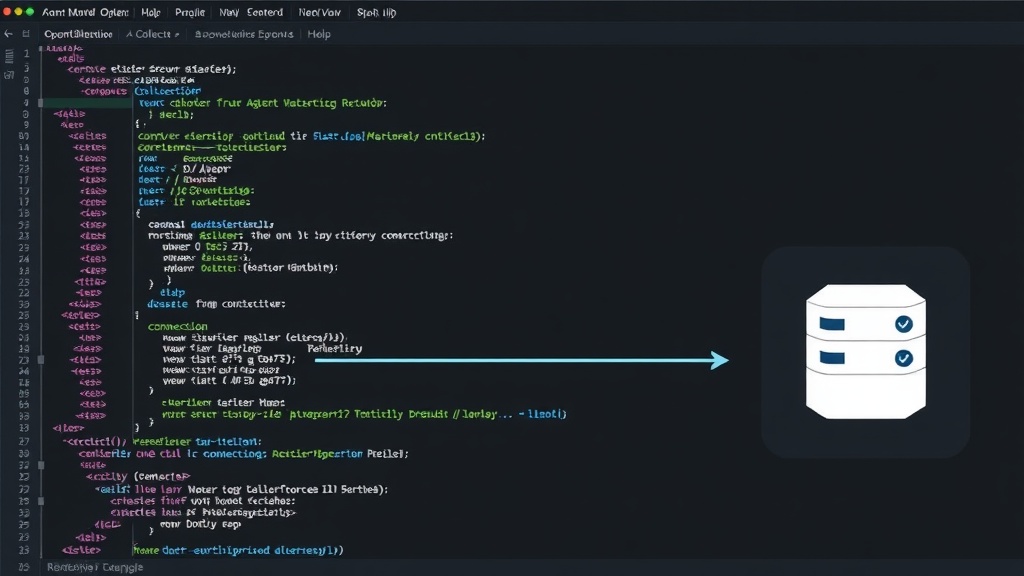
A typical OpAMP configuration in the collector's `config.yaml` would look something like this:
receivers:
  opamp:
    id: "my-unique-collector-id"
    transport:
      ws:
        endpoint: "ws://opamp-server.example.com:4321/v1/agents"
# ... other receivers, processors, exporters, service components ...
In this example:
receivers.opamp: This section declares the OpAMP receiver.id: A unique identifier for this specific collector instance. This is crucial for the OpAMP server to track and manage individual collectors.transport.ws.endpoint: Specifies the WebSocket endpoint of the OpAMP server the collector should connect to. WebSocket is commonly used for its ability to maintain persistent, bidirectional communication channels.
The collector will then use this configuration to establish a connection with the specified OpAMP server. Once connected, it will register itself using its unique ID and await further instructions or configuration updates.
The OpAMP Server Component
While the collector configuration is straightforward, the OpAMP server itself is a more complex piece of infrastructure. It needs to handle:
- Receiving connections from potentially thousands of collectors.
- Authenticating and authorizing incoming collector connections.
- Storing and managing configurations for different groups or individual collectors.
- Distributing configuration updates to collectors, potentially in staged rollouts.
- Collecting and displaying health status, metrics, and logs from collectors.
- Providing an API for operators to interact with the management system.
Several open-source and commercial solutions are emerging or have integrated OpAMP support. These servers abstract away much of the complexity, providing a user interface or API for managing the collector fleet.
Benefits of Adopting OpAMP
The adoption of OpAMP offers significant advantages for organizations managing OpenTelemetry deployments:
- Centralized Management: Eliminates the need for per-host configuration management, reducing operational burden.
- Consistency and Reliability: Ensures all collectors are running the same, verified configuration, minimizing drift and errors.
- Staged Rollouts: Allows for gradual deployment of new configurations, enabling teams to monitor impact and roll back quickly if issues arise. This is critical for high-stakes observability systems.
- Health Monitoring: Provides real-time insights into the health and status of the collector fleet, enabling proactive issue detection and resolution.
- Scalability: Designed from the ground up to handle large numbers of agents, making it suitable for enterprise-scale observability platforms.
OpAMP transforms the management of OpenTelemetry Collectors from a distributed, error-prone task into a centralized, manageable operation, freeing up valuable engineering time.