The Challenge of Actionable Meeting Insights
In the fast-paced environment of modern teams, meetings are a hotbed of decisions, crucial insights, and actionable tasks. Yet, a significant portion of these valuable outputs often gets lost. MiningLamp encountered this problem firsthand: their team, conducting over six meetings daily, found that approximately 40% of verbally agreed-upon tasks never made it into any formal tracking system. This wasn't due to a lack of willingness but often a simple failure to record, transfer, or remember these commitments. The gap between spoken word and executed action represented a substantial drain on productivity and a risk to project momentum. To address this, they sought a solution that could bridge the gap between real-time conversations and structured task management, minimizing manual intervention.
The solution involved integrating Octic, their proprietary on-device AI recorder, with Octo, an open-source collaboration platform designed for agent-orchestrated work. The core objective was ambitious yet elegant: to automatically create and assign tasks within Octo whenever an actionable item was identified in a meeting, all without requiring human operators to intervene. This required a robust pipeline that could handle audio capture, accurate speech recognition, intelligent extraction of user intent, and seamless task creation and dispatch to the appropriate agents within the Octo ecosystem.
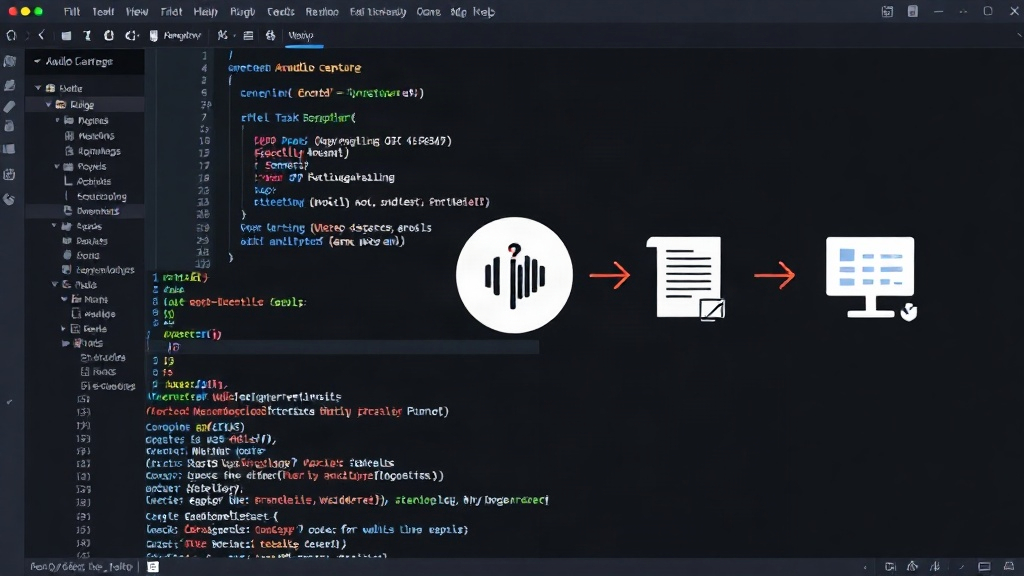
Building the End-to-End Pipeline
The integration process was broken down into several key stages, each critical for the successful automation of task management from spoken input.
Audio Capture and Pre-processing
The first step in the workflow is capturing audio from meetings. Octic, designed for on-device processing, handles this directly. This ensures that sensitive meeting data remains local, enhancing privacy and security. The captured audio is then pre-processed to optimize it for speech recognition. This typically involves noise reduction, echo cancellation, and normalization to ensure the best possible input quality for the subsequent Automatic Speech Recognition (ASR) engine.
On-Device Automatic Speech Recognition (ASR)
At the heart of the system is Octic's on-device ASR. Unlike cloud-based ASR services, on-device processing means that speech-to-text conversion happens locally on the user's machine. This offers significant advantages: lower latency, enhanced privacy as raw audio doesn't leave the device, and continued functionality even without a stable internet connection. The ASR engine transcribes the spoken words into text, forming the raw material for further AI analysis. The accuracy of this step is paramount, as any transcription errors can cascade and lead to misinterpretation of intent or incorrect task creation.
Intent Extraction and Action Item Identification
Once the speech is transcribed, the next challenge is to discern actionable items from general conversation. This is where natural language understanding (NLU) and intent extraction come into play. Sophisticated AI models analyze the transcribed text to identify phrases that indicate a task, a decision, or an assignment. For instance, sentences like "Can you follow up on the Q3 report?" or "Let's assign the bug fix to Sarah" are prime candidates for conversion into tasks. The system needs to differentiate between a suggestion, a question, and a concrete directive. This often involves identifying keywords, sentence structure, and contextual cues within the meeting transcript. The goal is to isolate the core components of an actionable item: what needs to be done, who is responsible, and potentially a deadline.
Task Creation in Octo
With an actionable intent identified and its components extracted, the system then interfaces with Octo to create a new task. This involves using Octo's API to instantiate a new 'Loop'—the platform's term for a task or agent-orchestrated workflow. The extracted information—the task description, assignee, and any associated metadata—is populated into the Loop. This step requires careful mapping between the identified intent and the fields available in Octo's task structure. The system ensures that the task is not just created but also correctly categorized and prioritized based on the context derived from the meeting.
Agent Execution and Orchestration
The final stage involves the dispatch and execution of the newly created task. Octo is designed for agent-orchestrated work. Once a Loop is created, it can trigger specific agents—autonomous software entities designed to perform particular functions. For example, a task to "Send a summary email to the marketing team" would trigger a 'reporting' agent. An agent assigned to "Investigate the server error logs" would trigger a 'debugging' agent. This automated dispatch ensures that tasks are immediately routed to the most appropriate resource for completion, minimizing delays and streamlining the workflow. The system’s ability to intelligently select and assign agents based on the task's nature is key to its effectiveness.
The Benefits of On-Device Processing
The decision to use on-device ASR for this workflow was deliberate and offered several critical advantages. Firstly, privacy is a major concern for meeting recordings. By processing audio locally, sensitive conversations never leave the user's device, mitigating risks associated with data breaches or unauthorized access that cloud-based solutions might entail. This is particularly important for internal team meetings where proprietary information might be discussed. Secondly, latency is significantly reduced. Cloud-based ASR can introduce noticeable delays, especially in areas with poor connectivity. On-device processing provides near real-time transcription, enabling faster intent extraction and task creation, making the automation feel more immediate and responsive. This immediacy is crucial for capturing the dynamic flow of meeting discussions. Finally, the independence from network connectivity ensures that the system remains operational even in environments with unreliable internet access, a common scenario in many workplaces. This resilience makes the automation more dependable.
Future Implications and Considerations
This integration represents a significant step towards truly automated meeting-to-action workflows. It moves beyond simple transcription to intelligent action dispatch. However, several questions remain. The accuracy of intent extraction, especially for nuanced or ambiguous statements, will continue to be a critical area for improvement. As AI models become more sophisticated, they can better handle the subtleties of human language. Furthermore, the scalability of on-device processing across a large organization needs careful consideration, both in terms of computational resources on individual devices and centralized management of updates and configurations. The impact on team dynamics also warrants observation: will users become overly reliant on automation, potentially reducing personal accountability or the deliberate practice of note-taking and task delegation?
The potential for this technology extends beyond simple task management. Imagine meeting summaries automatically generated, key decisions logged in a knowledge base, or even follow-up meetings automatically scheduled based on project progress. The seamless wiring of on-device ASR into collaborative platforms like Octo is not just about efficiency; it's about unlocking the latent value within everyday conversations, transforming spoken words into tangible progress.