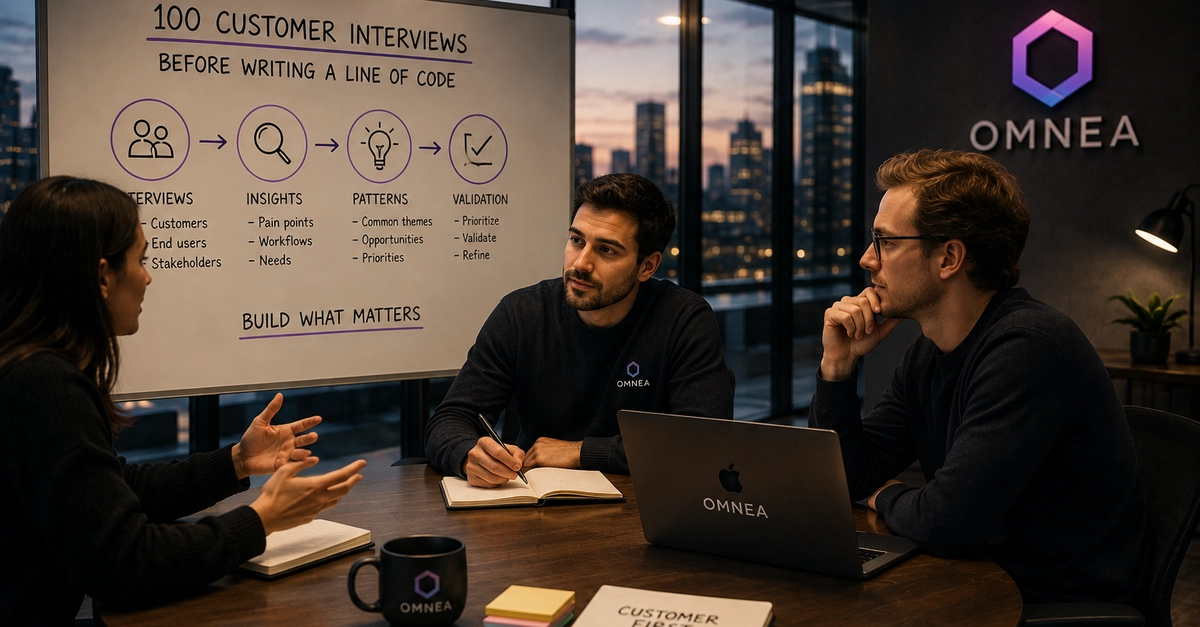
The Discovery Phase: 300 Conversations
Most "how we built it" stories start with the tech stack, detailing architectural choices and favorite frameworks. Omnea's origin story begins much earlier, rooted in a relentless discovery process. Founder Ben Freeman didn't just talk to a few potential users; he engaged in approximately 300 distinct conversations with procurement leaders. This intensive period wasn't about validating a pre-conceived solution, but about deeply understanding the lived experience and frustrations within the procurement domain.
The consistent theme emerging from these interviews was a widespread dissatisfaction with existing procurement processes and the clunky, outdated tools supporting them. While many acknowledged the problems, no one seemed to be rebuilding the stack from the ground up to address these fundamental issues. This recurring complaint, voiced by nearly everyone Freeman spoke with, became the bedrock upon which Omnea would be built.
Why Discovery Trumps Early Architecture
It's a common pitfall, especially for technically-minded individuals, to view product discovery as a secondary, 'soft' skill detached from the 'real' work of engineering. However, Omnea's journey demonstrates that the technical decisions made later are entirely contingent on the insights gained during this crucial discovery phase. Skipping this step is akin to building a skyscraper without first understanding the geological conditions of the land.
The specific technical choices Omnea eventually made—such as opting for a two-way data orchestration layer rather than a simplistic dashboard, and prioritizing natural language input over rigid, form-based requests—only gain their full significance when viewed through the lens of those 300 interviews. These weren't arbitrary technological bets; they were direct responses to the articulated needs and unmet expectations of procurement professionals. Without that deep understanding of user failure modes and workflow inefficiencies, these architectural decisions might have been misguided or superfluous.

Identifying the Core Problem: The Procurement Stack
The procurement landscape, as revealed by Freeman's interviews, is characterized by inefficiency and a lack of user-centric design. Procurement professionals, tasked with managing budgets, sourcing suppliers, negotiating contracts, and ensuring compliance, often find themselves hampered by software that is more of an obstacle than an enabler. These tools, frequently built on legacy architectures, struggle to integrate with modern enterprise systems, lack intuitive interfaces, and fail to provide the real-time data and flexibility required in today's dynamic business environment.
The core complaint wasn't about a single missing feature, but about the fundamental inadequacy of the entire system. Users reported spending an inordinate amount of time on manual data entry, reconciling disparate information sources, and navigating complex, often unintuitive, workflows. This created a significant drag on operational efficiency, increased the risk of errors, and ultimately impacted the bottom line. The market was saturated with point solutions and incremental improvements, but a holistic, modern reimagining of the procurement stack was conspicuously absent.
Omnea's Strategic Technical Decisions
Armed with a clear understanding of the user's pain points, Omnea's engineering team was able to make deliberate and strategic technical choices. The decision to build a two-way data orchestration layer, for instance, moves beyond the traditional one-way flow of information seen in many dashboards. This allows for more dynamic interaction, enabling data to be not only consumed but also actively managed and updated, reflecting a deeper integration with the user's workflow. This approach treats procurement data as a living, interactive entity rather than a static report.
Similarly, prioritizing natural language intake over traditional form-based requests acknowledges the human tendency to communicate and process information more fluidly through language. This suggests a move towards a more intuitive and less burdensome user experience, where users can interact with the system in a manner closer to how they would communicate with a colleague. This focus on natural language processing (NLP) and understanding (NLU) signals a commitment to reducing the cognitive load and manual effort associated with procurement tasks. These choices, informed by hundreds of real-world conversations, position Omnea not just as another procurement tool, but as a fundamental rethinking of how procurement operations can be managed.
The Unanswered Question: Scaling Beyond Discovery
While Omnea's rigorous discovery process is commendable, the critical challenge now lies in scaling this user-centric approach as the company grows. How will Omnea ensure that its product development remains tightly coupled to evolving customer needs when the team expands beyond the founder? What mechanisms will be put in place to prevent the introduction of features that, while technically feasible, do not directly address a validated customer pain point identified in the initial discovery or subsequent feedback loops? The long-term success of Omnea will hinge on its ability to maintain the discipline of its discovery-led ethos, even as it navigates the complexities of rapid growth and market expansion.