The Unassailable AI Fortress
Nvidia has achieved a position of near-monopoly in the AI hardware market, a feat driven by its CUDA ecosystem and the immense computational demands of modern machine learning. The company's GPUs, originally designed for graphics rendering, proved exceptionally well-suited for the parallel processing required by AI workloads. This early mover advantage, coupled with continuous innovation, has created a moat that is formidable. Developers and researchers are deeply entrenched in the CUDA environment, making it difficult and costly to switch to competing architectures. This lock-in effect, combined with the sheer performance lead Nvidia maintains, has allowed the company to command premium pricing and capture the vast majority of the AI accelerator market.
The demand for Nvidia's H100 and its predecessors has been insatiable, driven by the proliferation of AI models across virtually every industry. From large language models like GPT-4 to sophisticated image generation tools and scientific research, the computational power required is staggering. Nvidia’s ability to scale production to meet this demand, while challenging, has been a key differentiator. However, this immense demand also creates significant risks.
Supply Chain Tightrope Walk
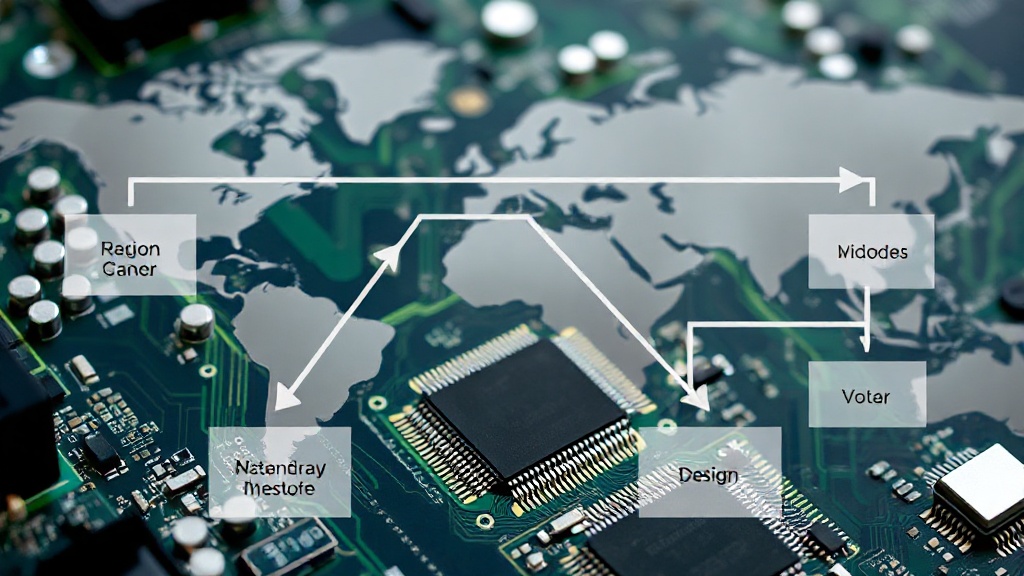
Nvidia's success is inextricably linked to its complex global supply chain. The company relies heavily on foundries like TSMC for manufacturing its advanced chips. Any disruption in this chain – whether due to geopolitical tensions, natural disasters, or increased competition for foundry capacity – can have immediate and severe consequences for Nvidia's ability to meet demand. The concentration of manufacturing in a few key locations, particularly Taiwan, presents a significant geopolitical risk. Furthermore, the lead times for producing these highly sophisticated chips are lengthy, meaning that even minor supply chain hiccups can result in months-long delays for customers eager to deploy AI infrastructure.
This reliance on a concentrated supply chain is akin to a chef relying on a single, highly specialized supplier for a critical ingredient. If that supplier faces an issue, the entire restaurant's menu is affected. Nvidia’s strategy has been to secure capacity and forge strong relationships with its manufacturing partners. However, the sheer scale of demand means that even with these efforts, shortages are inevitable, leading to extended wait times and potentially stifling the rapid growth of AI adoption for some organizations.
The Specter of Competition
While Nvidia enjoys a dominant position, it is not without competitors. AMD, Intel, and a host of specialized AI chip startups are all vying for a piece of the lucrative AI hardware market. AMD's Instinct MI300X, for instance, is positioned as a direct competitor to Nvidia's H100, offering competitive performance and a more open software ecosystem. Intel is also investing heavily in its Gaudi accelerators. These competitors are not only developing new hardware but also working to build out their own software stacks to rival CUDA.
The challenge for Nvidia is to continuously innovate at a pace that outstrips its rivals. The company must not only improve the raw performance of its GPUs but also enhance its software offerings and developer tools. Furthermore, as AI models become more specialized, there is an increasing demand for custom silicon solutions tailored to specific workloads. While Nvidia offers its own custom solutions, this trend could empower smaller, more agile players to gain traction in niche markets. The surprising detail here is not the emergence of competition, but the sheer speed at which rivals are closing the performance gap, forcing Nvidia to remain perpetually on the offensive.
Cyclicality and AI's Uncharted Waters
The semiconductor industry has historically been cyclical, characterized by periods of high demand followed by downturns. While the current AI boom appears robust, the inherent nature of hardware demand suggests that a slowdown is inevitable at some point. Nvidia's current stratospheric valuation reflects an expectation of continued exponential growth, an expectation that is inherently risky. What nobody has addressed yet is how Nvidia will manage its operational costs and investor expectations during the inevitable next downturn in the semiconductor cycle, especially given the massive capital expenditure required to maintain its leading edge.
Moreover, the long-term trajectory of AI hardware is still uncertain. Advances in areas like AI model efficiency, algorithmic breakthroughs that reduce computational needs, or the rise of entirely new computing paradigms could shift the landscape. Nvidia’s strategy appears to be one of aggressively capturing market share and maximizing revenue during the current AI gold rush, betting that its ecosystem and continued innovation will allow it to weather future storms and maintain its leadership. This is a high-stakes gamble, where the company leverages its current dominance to invest in future dominance, a strategy that has paid off handsomely but carries significant embedded risk.
The Path Forward
Nvidia's current position is a testament to its engineering prowess and strategic foresight. However, the company operates in a dynamic and inherently risky environment. Navigating the complexities of global supply chains, fending off increasingly capable competitors, and managing the cyclical nature of the hardware market are significant challenges. The company's future success will depend on its ability to maintain its technological lead, diversify its supply chain where possible, and adapt to evolving market demands. The current AI boom provides an unprecedented opportunity, but Nvidia's journey is far from secure. It is a high-wire act, balancing immense current demand with the volatile uncertainties of the future.