
The CMP 170HX: A Mining Card Reimagined for AI
Nvidia's Cryptocurrency Mining Processors (CMP) were designed with a singular purpose: to mine cryptocurrencies efficiently, stripping away features deemed unnecessary for that task, like display outputs. Among these was the CMP 170HX, a card based on the Turing architecture, typically equipped with 32GB of GDDR6 VRAM. While its mining days are largely behind it, a new software modification, dubbed 'CMP Unlocker,' is breathing new life into these specialized cards by restoring their full VRAM potential for AI and machine learning tasks. This development is particularly significant given the insatiable demand for VRAM in the burgeoning AI sector.
The CMP 170HX, despite its age, offers a compelling proposition when its VRAM limitations are addressed. The card's original specification lists 32GB of GDDR6 memory. However, through a clever software hack, it's now possible to unlock an additional 32GB, bringing the total VRAM to a substantial 64GB. This effectively doubles the memory capacity, making the card far more suitable for training larger AI models, handling complex datasets, and running inference tasks that were previously out of reach for this hardware. The unlocker targets specific VRAM controllers and configurations within the card's firmware, a process that requires a certain level of technical understanding but is now accessible to a wider audience.
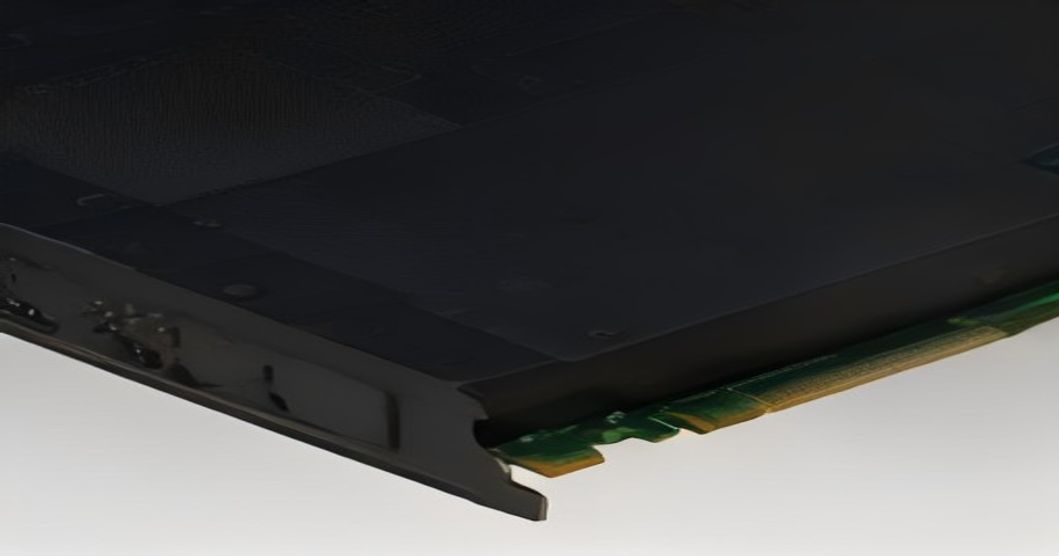
Unlocking the Potential: How CMP Unlocker Works
The process of unlocking the VRAM on the CMP 170HX is not a simple driver update. It involves a specialized software tool that modifies the card's BIOS or firmware settings. This tool, developed by an independent entity and shared within enthusiast communities, interacts with the GPU's memory controller to enable access to the full 64GB of VRAM that is physically present on the card but artificially limited by Nvidia's original design for mining purposes. Think of it less like a software patch and more like a key that opens a previously locked compartment on the hardware itself. The implications are substantial for anyone looking to acquire more VRAM on a budget, especially as the cost of high-VRAM GPUs continues to skyrocket.
The CMP 170HX was originally launched with a retail price around $250, a figure that now appears astonishingly low for a card with the potential for 64GB of VRAM. While the initial cost was justified by its mining efficiency, its utility for general computing or AI was limited by the VRAM cap. The CMP Unlocker effectively redefines the card's value proposition. It transforms a piece of hardware designed for a niche, and now declining, market into a viable option for AI researchers, developers, and small-scale AI startups who are often constrained by the high cost of enterprise-grade GPUs. This hack is a testament to the ingenuity of the hardware enthusiast community, finding new applications for older, specialized hardware.
Why Now? The AI VRAM Crunch
The timing of this unlocker's emergence is no coincidence. The current AI boom has created an unprecedented demand for graphics cards with large amounts of VRAM. Large language models (LLMs) and sophisticated deep learning architectures require significant memory to load model parameters, process training data, and perform complex computations. As a result, GPUs with 48GB, 80GB, or even more VRAM are in extremely high demand and command premium prices, often reaching thousands of dollars. This scarcity and high cost create a substantial barrier to entry for many individuals and smaller organizations looking to experiment with or deploy AI models.
The CMP 170HX, with its newly accessible 64GB of VRAM, offers a compelling alternative. While it may not match the raw computational power or the latest architectural features of cutting-edge AI accelerators, the sheer amount of memory it provides at a potentially low cost can be a game-changer. It allows users to run models that would otherwise require much more expensive hardware. This is particularly relevant for tasks like fine-tuning existing LLMs, running inference on moderately sized models, or exploring novel neural network architectures that are memory-intensive. The community's ability to find and exploit these hidden capabilities in older hardware highlights a critical market need for more affordable, high-VRAM solutions.
Considerations and Caveats
While the CMP Unlocker offers a significant advantage, it's crucial to understand the potential risks and limitations. Modifying a graphics card's firmware can be a delicate process. If done incorrectly, it could potentially render the card inoperable. Users undertaking this modification do so at their own risk. Furthermore, the CMP 170HX is an older card. While its VRAM capacity is now substantial, its compute performance may not be on par with newer GPUs designed specifically for AI workloads, which feature more advanced Tensor Cores and optimized architectures for deep learning. However, for tasks where VRAM is the primary bottleneck, this unlocked card could still offer a substantial performance uplift compared to GPUs with less memory.
The success of this hack also raises questions about Nvidia's strategy and the future of hardware. By artificially limiting VRAM on cards that physically possess more, Nvidia, like other manufacturers, aims to segment its product lines and encourage upgrades to more expensive, professional-grade hardware. This community-driven modification bypasses that segmentation. It's a powerful demonstration of how user ingenuity can adapt and repurpose hardware, potentially impacting the market for specialized AI accelerators and pushing manufacturers to reconsider their product segmentation strategies in light of user demand and available physical hardware capabilities.