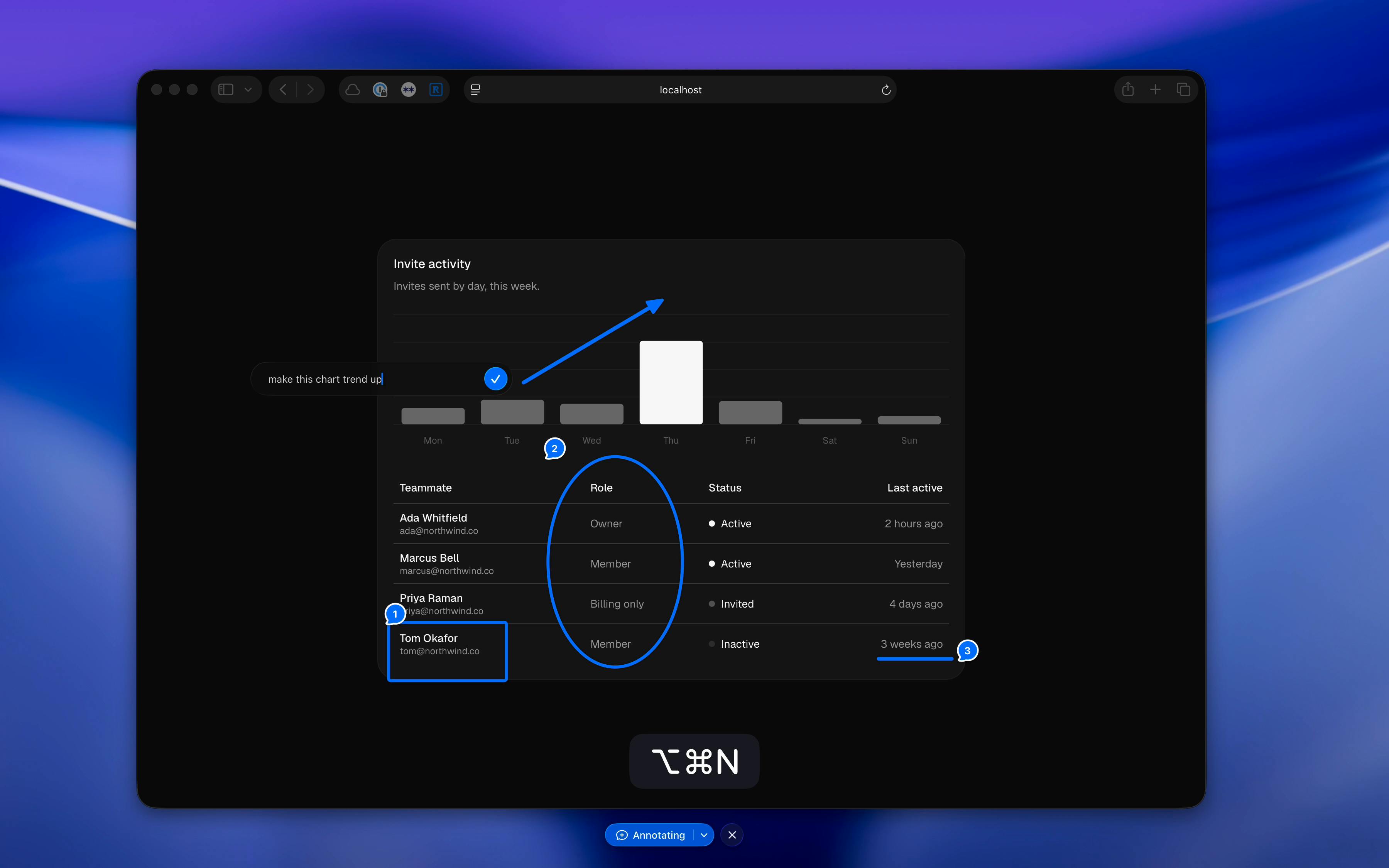
AI-Powered Annotation for Complex Data
Notate has launched a new platform designed to fundamentally change how we annotate data for both human consumption and artificial intelligence agents. The core proposition is to create a unified system that supports nuanced, complex annotations, moving beyond simple labeling to richer, more context-aware data enrichment. This is particularly relevant in fields where AI is being deployed for tasks requiring deep understanding, such as medical imaging analysis, legal document review, and scientific research.
The challenge with traditional annotation tools is their often rigid structure, which struggles to capture the subtleties required for advanced AI models or detailed human analysis. Notate aims to bridge this gap by offering a flexible framework that can accommodate a wide range of annotation types, from basic bounding boxes to complex relational annotations and semantic segmentation. This flexibility is crucial for datasets that demand more than just superficial tagging.
Think of it less like a simple spreadsheet for labeling images and more like a sophisticated digital notebook for a team of expert researchers. Each entry can contain not only the annotated data itself but also detailed notes, inter-annotation relationships, and confidence scores, all organized in a way that is easily navigable and searchable. This rich context is what enables both human reviewers to collaborate effectively and AI agents to learn from more granular, meaningful data.
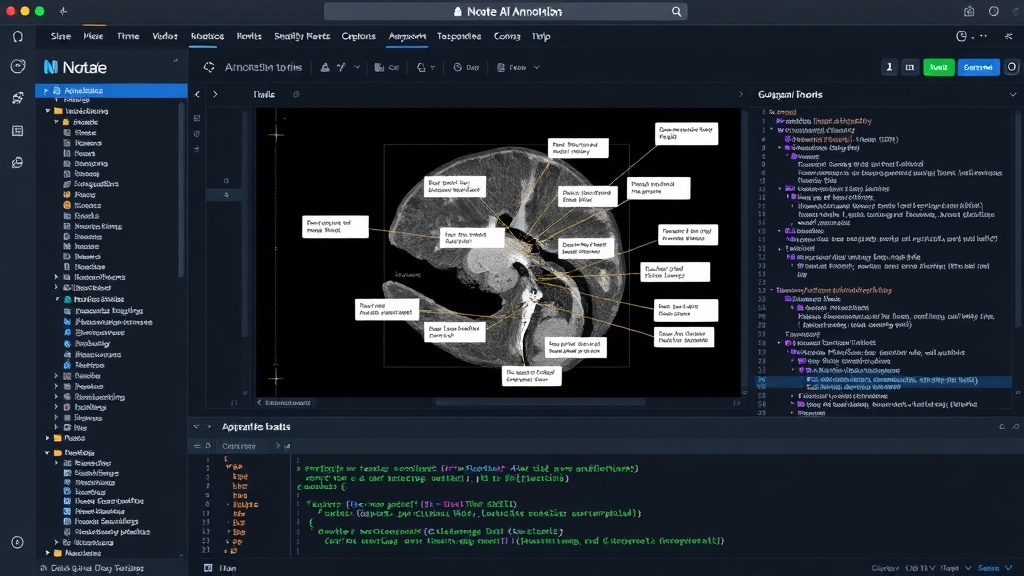
Key Features and Functionality
Notate’s platform offers several key features to support its ambitious goal:
- Flexible Annotation Schema: Users can define custom annotation schemas to match their specific project needs, allowing for a wide array of data types and relationships to be captured. This moves beyond one-size-fits-all solutions.
- Human-Agent Collaboration: The system is built to facilitate seamless handoffs and collaboration between human annotators and AI agents. This could involve AI pre-annotating data for human review or humans providing feedback to refine AI models.
- Rich Contextual Data: Beyond simple labels, Notate allows for the inclusion of extensive metadata, notes, and relationships between annotations. This creates a more comprehensive understanding of the data.
- Advanced Search and Filtering: With rich annotations comes the need for powerful retrieval capabilities. Notate provides robust search functionalities to quickly find specific annotations or data points based on complex criteria.
- Version Control and Auditing: For projects requiring high levels of accuracy and traceability, Notate offers version control for annotations and audit trails, ensuring accountability and reproducibility.
The platform’s design prioritizes an intuitive user experience, aiming to reduce the learning curve associated with complex annotation tasks. For developers and researchers working with large, intricate datasets, Notate promises to streamline workflows and improve the quality of annotated data, which is a critical bottleneck in many AI development pipelines.
The Future of Data Annotation
The launch of Notate signals a broader trend in the AI industry: the increasing sophistication required in data preparation. As AI models tackle more complex problems, the demand for high-quality, contextually rich data grows exponentially. Simple, manual annotation is no longer sufficient for many cutting-edge applications.
Notate’s approach, emphasizing both human expertise and AI assistance, reflects a pragmatic view of AI development. It acknowledges that AI is a powerful tool but still requires human oversight and nuanced input to achieve optimal performance, especially in specialized domains. The ability to annotate “anything for humans and their agents” suggests a universal ambition, aiming to become the go-to platform for any project where data understanding is paramount.
What remains to be seen is how well Notate scales to truly massive datasets and the diverse range of annotation tasks that fall under its broad umbrella. The success of such a platform will hinge on its ability to remain both flexible enough for niche applications and robust enough for enterprise-scale deployment. If Notate can deliver on its promise, it could significantly accelerate the development and deployment of AI in fields that have, until now, been hampered by the limitations of existing annotation tools.