The Hallucination Problem in LLMs
Neural language models (LLMs) offer unprecedented capabilities in semantic search, context capture, and fuzzy retrieval. However, their inherent probabilistic nature makes them prone to hallucination when faced with tasks requiring multi-hop logical deduction, absolute consistency, or strict structural constraints. This is a critical bottleneck for production-grade AI applications demanding reliability.
The core issue lies in the LLMs' continuous, probabilistic representation of information. Unlike symbolic logic, which deals with discrete, deterministic entities and relationships, LLMs operate on statistical likelihoods. This fundamental difference means they can generate plausible-sounding but factually incorrect or logically inconsistent outputs, especially when complex reasoning chains are involved.
Why Graph Databases are Key to Zero-Hallucination AI
To build production-grade AI systems that guarantee factual accuracy and logical consistency, a paradigm shift is necessary. Developers must move away from isolated relational tables and flat document stores. The solution lies in adopting native graph topologies. In a graph database, entities are represented as nodes, and the semantic relationships between them are first-class, directional edges. This structure inherently maps to the way humans reason and understand complex systems.
By materializing entities and their relationships as nodes and edges, graph databases provide a discrete, deterministic framework. This allows for the grounding of LLM outputs within a verifiable, structured knowledge base. The continuous, probabilistic nature of vector embeddings, which power semantic search, can be bridged with the discrete, deterministic rigor of symbolic logic inherent in graph structures. This hybrid approach is the foundation for zero-hallucination AI architectures.
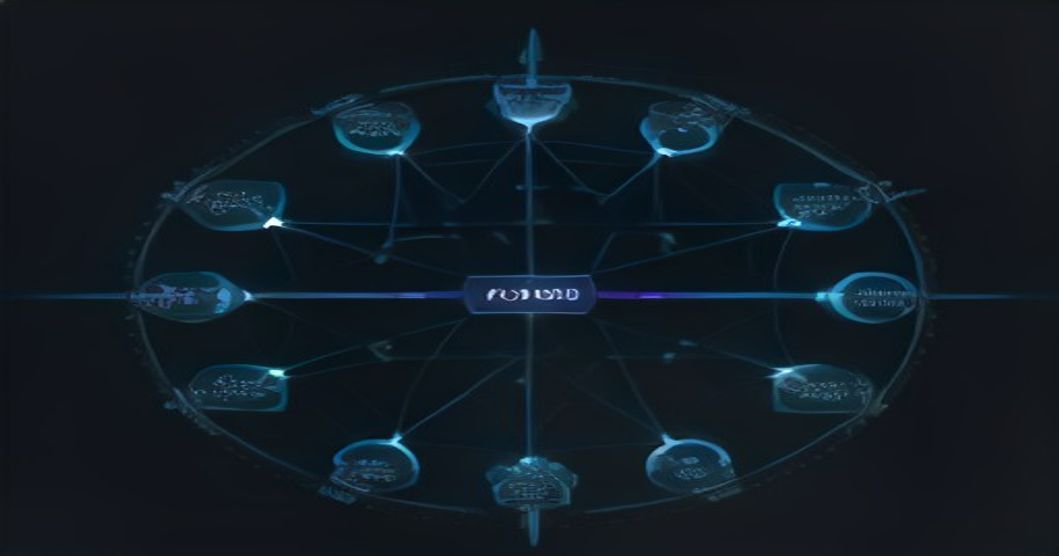
Bridging Vector Embeddings and Symbolic Logic in Node.js
Node.js, with its asynchronous, event-driven architecture and strong TypeScript support, is an ideal runtime for building these sophisticated AI applications. The challenge is to effectively connect the world of vector embeddings (continuous space) with the world of symbolic logic represented in graph databases (discrete space).
This connection allows applications to perform tasks such as:
- Semantic Search with Factual Guarantees: Find information based on meaning (vector embeddings) and then verify its logical consistency and structural integrity within the graph.
- Complex Querying: Execute multi-hop queries that require traversing relationships, ensuring that each step adheres to defined rules and constraints.
- Knowledge Graph Reasoning: Build and query knowledge graphs that represent domain-specific information, enabling AI to infer new facts and relationships based on established logic.
- Contextual Understanding with Consistency: Provide LLMs with highly relevant, factually grounded context derived from the graph, reducing the likelihood of fabricated information.
Industry-Leading Graph Databases for Node.js Integration
Several powerful graph databases are well-suited for this task, offering robust features and excellent Node.js drivers. The article highlights three prominent options:
Neo4j
Neo4j is the most mature and widely adopted native graph database. It excels in handling complex relationships and offers a rich query language, Cypher. Its ACID compliance ensures data integrity and reliability, crucial for production systems. Neo4j's extensive documentation and community support make it a strong choice for enterprise-level applications.
Memgraph
Memgraph is a high-performance, in-memory graph database designed for real-time analytics and streaming data. It supports Cypher and offers extensions for real-time graph algorithms and machine learning. Memgraph's ability to process streaming data makes it ideal for applications requiring continuous updates and immediate insights, such as fraud detection or real-time recommendation systems.
FalkorDB
FalkorDB is a modern, open-source graph database built for scalability and performance. It uses a unique approach to indexing and querying that allows it to handle very large graphs efficiently. FalkorDB's architecture is designed to minimize latency and maximize throughput, making it suitable for demanding AI workloads where speed is paramount.
Implementation Considerations
Connecting these databases to a Node.js TypeScript application involves several key steps:
- Data Modeling: Design your graph schema, defining nodes, edge types, and properties that accurately represent your domain.
- Vector Embedding Generation: Use embedding models to convert textual or other data into dense vector representations.
- Graph Data Ingestion: Load your data and their corresponding vector embeddings into the chosen graph database. Nodes can store their vector embeddings as properties.
- Hybrid Querying: Develop strategies to query both the graph structure (e.g., using Cypher) and the vector similarity (e.g., using vector search capabilities within the database or an external vector index).
- LLM Integration: Use the retrieved graph data and vector search results to augment LLM prompts. This provides the LLM with factual context, guiding it towards accurate and consistent outputs.
The surprising detail here is not the existence of these databases, but the increasing necessity of grounding LLM outputs in discrete, deterministic knowledge structures. For too long, developers have accepted LLM hallucinations as an unfortunate side effect. By embracing graph databases, we can build AI systems that are not only intelligent but also truthful and reliable.
The Future of Reliable AI
The ability to combine the semantic power of LLMs with the logical rigor of graph databases is a significant leap forward. It allows developers to build applications that can understand natural language, retrieve relevant information, and perform complex reasoning without fabricating facts. This is essential for use cases ranging from enterprise knowledge management and customer support to scientific research and financial analysis.
As AI becomes more integrated into critical systems, the demand for zero-hallucination capabilities will only grow. Node.js developers equipped with TypeScript and an understanding of graph databases are well-positioned to lead this charge, building the next generation of reliable, intelligent applications.