The Limits of Browser-Based Automation
For years, autonomous software agents have been confined to the browser. They excel at tasks within the Document Object Model (DOM), parsing HTML, evaluating JSON, and interacting with simulated environments via protocols like Chrome DevTools Protocol (CDP). These agents are adept at web-based operations: clicking buttons, filling forms, and scraping web data. However, they hit an insurmountable wall when workflows require interaction with native desktop applications, manipulating operating system file pickers, or verifying local client installations.
The demand for more sophisticated autonomous workflows, especially within modern enterprises, necessitates agents that can operate beyond the browser's sandbox. This includes manipulating the host operating system directly. The traditional approach of using browser automation tools like Puppeteer or Selenium, while powerful for web content, simply cannot bridge the gap to native desktop interactions.
Attempting to control native applications from within a browser context often involves complex workarounds. These might include launching external processes, inter-process communication (IPC) mechanisms that are brittle and difficult to manage, or relying on platform-specific scripting languages. Each of these methods introduces significant overhead, security risks, and maintenance challenges. They fragment the development experience, requiring developers to switch between different toolchains and paradigms depending on whether they are interacting with the web or the native desktop.
Bridging the Gap with Node.js Native Addons
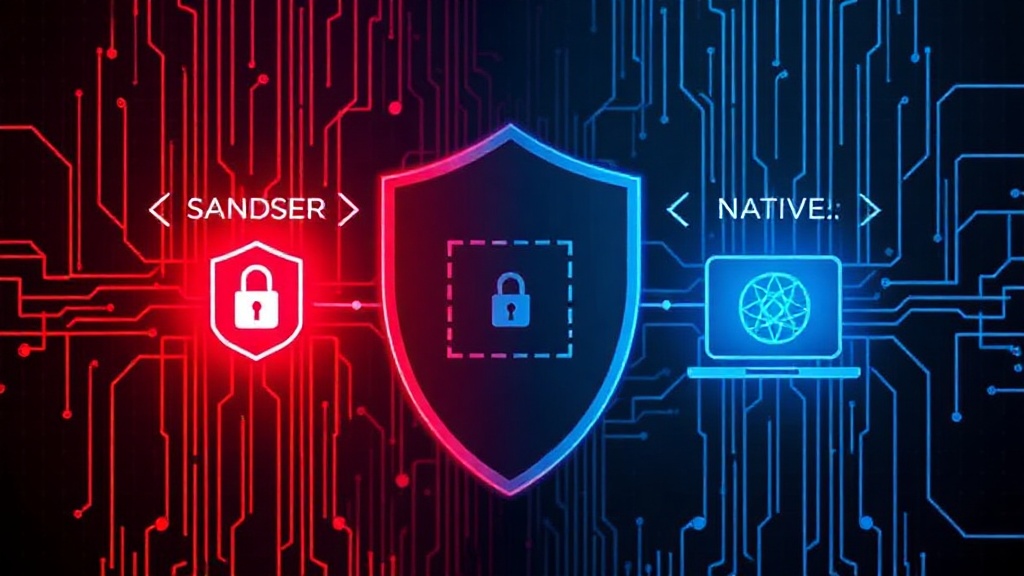
The solution lies in leveraging Node.js's capability to integrate with native code through Native Addons. These are dynamic libraries, typically written in C or C++, that can be loaded and used directly within a Node.js application. This architecture allows developers to write performance-critical or system-level code in C/C++ and expose it as JavaScript functions. For desktop automation, this means writing the core logic that interacts with the operating system in C/C++ and then controlling it from a familiar Node.js environment.
The process involves creating a C/C++ library that uses platform-specific APIs to interact with the OS. For instance, on Windows, this would involve using the Win32 API to find windows, send messages, simulate mouse and keyboard input, and access file system operations. On macOS, it would involve using the Cocoa framework or other relevant Objective-C/C++ APIs. On Linux, it might involve X11 or Wayland APIs.
Node.js provides the Node-API (formerly N-API) to facilitate this integration. Node-API is a stable API that allows C/C++ addons to be compiled and run across different Node.js versions without recompilation. It abstracts away the complexities of the V8 JavaScript engine and Node.js internals, providing a consistent interface for addon development.
A typical workflow would involve:
- Defining the Native Interface: In C/C++, define functions that perform specific OS-level actions (e.g., `findWindow`, `clickButton`, `typeText`, `getFilePath`).
- Exposing to Node.js: Use Node-API to wrap these C/C++ functions, making them callable from JavaScript. This involves creating JavaScript-callable functions that handle argument conversion between JavaScript types and C/C++ types, and managing memory.
- Node.js Control Layer: Write JavaScript code in Node.js that orchestrates these native functions. This layer acts as the agent's brain, deciding which native actions to perform based on its goals and context.
- Integration with Web Automation: Crucially, this Node.js control layer can simultaneously manage web automation tasks using libraries like Puppeteer or Playwright. This allows for a unified agent that can seamlessly transition between browser interactions and native desktop operations.
Use Cases and Implications
This approach unlocks a new generation of automation agents capable of performing tasks previously out of reach for web-based solutions. Consider these scenarios:
- Complex Enterprise Workflows: Automating multi-step processes that involve interacting with legacy desktop applications, custom internal tools, and cloud services simultaneously. For example, an agent could extract data from a proprietary desktop ERP system, process it, and then upload it to a web-based CRM.
- Advanced Testing Frameworks: Creating end-to-end testing agents that can test not only web applications but also the installation, configuration, and interaction with accompanying desktop clients. This is particularly relevant for software that has both a web portal and a desktop component.
- System Administration and DevOps: Building agents that can manage server configurations, deploy applications to local machines, or perform diagnostic checks on the host operating system, all controlled from a centralized Node.js script.
- Cross-Platform Compatibility: While the C/C++ native code will be platform-specific, the Node.js control layer remains consistent. This means a single Node.js application can manage different native addons for Windows, macOS, and Linux, providing a unified development experience for cross-platform desktop automation.
The surprising detail here is not the technical feasibility, which has been possible with native extensions for years, but the growing industry readiness and demand for such hybrid automation capabilities. As AI agents become more sophisticated and capable of general-purpose task execution, the need to break free from the browser sandbox becomes paramount.
Challenges and Considerations
While powerful, this approach is not without its complexities. Developing native addons requires expertise in C/C++ and a deep understanding of the target operating system's APIs. Debugging can also be more challenging, often requiring specialized tools for native code debugging in addition to JavaScript debugging.
Security is another critical consideration. By granting agents direct access to the operating system, the potential attack surface increases significantly. Careful design and rigorous security audits are essential to prevent malicious code injection or unintended system modifications. Developers must implement robust input validation and error handling in the native code to mitigate risks. The principle of least privilege should guide the design, ensuring agents only have the permissions necessary to perform their intended tasks.
Furthermore, maintaining compatibility across different operating system versions and architectures adds to the development burden. Node-API helps, but platform-specific nuances in APIs will always require careful handling. Developers must also consider the lifecycle management of these native addons, ensuring they are correctly installed and updated alongside the Node.js application.
The Future of Autonomous Agents
The ability to build native desktop automation agents using Node.js and C++ represents a significant step forward for autonomous systems. It blurs the lines between web-based and native application automation, enabling a more holistic and powerful approach to software agents. As AI continues to evolve, expect to see more sophisticated agents that can seamlessly operate across the entire digital surface, from the browser to the deepest levels of the operating system.
What nobody has addressed yet is the long-term impact on the security landscape. As more powerful, OS-level automation tools become accessible, the potential for sophisticated, widespread attacks increases. The industry will need to develop new security paradigms and best practices to counter threats posed by highly capable, native-aware automation agents.