The Rise of AI Agents in Communication
The landscape of digital communication is rapidly evolving, and at its forefront is the emergence of AI agents capable of performing complex tasks. Nitrosend is a new entrant aiming to carve out a significant niche in this burgeoning field by focusing on a fundamental yet crucial aspect of digital interaction: email. The platform is designed to empower AI agents with the ability to not only send emails but also to engage in contextual replies, effectively simulating human-like email correspondence.
Historically, AI's involvement in email has been limited to tasks like spam filtering, automated responses, or drafting assistance. Nitrosend proposes a more advanced paradigm where AI agents can manage entire email workflows. This includes initiating outreach, responding to inquiries, and maintaining ongoing conversations, all without direct human intervention for each individual message. The implication is a significant shift in how businesses and individuals can leverage AI for communication, potentially automating a substantial portion of their email-related activities.
The core value proposition of Nitrosend lies in its ability to abstract the complexities of email protocols and user interaction into a manageable interface for AI agents. This means developers and businesses can integrate AI capabilities into their existing communication strategies without needing to build these functionalities from scratch. The platform promises to handle the intricacies of sending emails, parsing incoming messages, and formulating appropriate responses based on predefined logic or learned patterns.
How Nitrosend Works
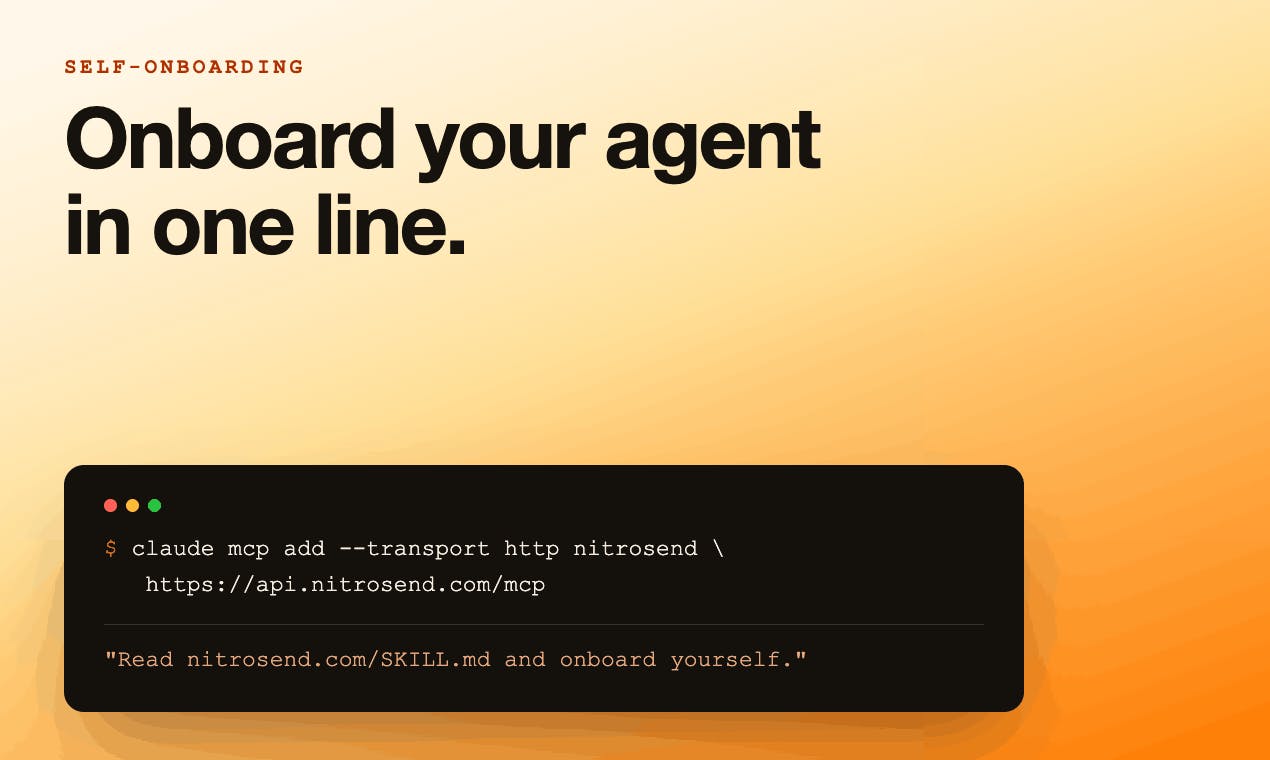
At its heart, Nitrosend functions as an intermediary layer between AI models and the email ecosystem. Users can onboard their AI agents to the platform, granting them the necessary permissions to interact with email accounts. Once configured, an AI agent can be instructed to perform a variety of email-related actions. This could range from sending a promotional email to a list of prospects to responding to customer service inquiries based on a knowledge base.
The process typically involves an AI agent being given a task, such as drafting an email to a specific recipient with certain parameters. Nitrosend then facilitates the sending of this email. More sophisticatedly, when an email arrives at an account managed by Nitrosend, the platform can pass the content to an AI agent for analysis. The agent can then decide on the appropriate course of action, whether it's a simple acknowledgment, a detailed response drawing from external data, or a request for further clarification. The platform then handles the transmission of the AI-generated reply.
This capability is particularly relevant for applications such as automated customer support, lead generation outreach, and internal communication management. Imagine an AI agent that can sift through incoming job applications, respond to candidates with updates, and even schedule interviews. Or an AI sales agent that can engage with potential leads, answer their questions about a product, and book a demo call. These are the kinds of scenarios Nitrosend aims to enable.

Potential Applications and Impact
The introduction of a platform like Nitrosend signals a significant step towards more autonomous AI systems that can operate within real-world communication channels. For businesses, this could translate into enhanced efficiency and scalability of their outreach and support operations. Customer service teams could see a reduction in response times and an increase in the volume of inquiries handled. Sales teams might benefit from AI agents that can pre-qualify leads and handle initial engagement, freeing up human agents for more complex closing activities.
For developers, Nitrosend opens up new possibilities for building AI-powered applications. Instead of wrestling with SMTP servers, email parsing libraries, and the nuances of different email clients, they can focus on developing the AI logic and integrating it with the Nitrosend API. This abstraction layer can dramatically reduce development time and complexity for applications that require sophisticated email interaction.
The platform also raises interesting questions about the future of human-AI collaboration in communication. As AI agents become more adept at handling email, the role of human professionals may shift towards oversight, strategy, and handling exceptions or high-stakes interactions. This could lead to a more efficient and productive workforce, where AI handles the repetitive and time-consuming aspects of communication, allowing humans to focus on tasks requiring creativity, empathy, and strategic decision-making.
Considerations and Future Outlook
While the potential is vast, the successful implementation of such a system hinges on several factors. Security and privacy are paramount, as AI agents will be handling sensitive email communications. Nitrosend must ensure robust security measures are in place to protect user data and prevent unauthorized access or misuse. Furthermore, the effectiveness of the AI agents themselves will depend on the quality of the underlying AI models and the clarity of the instructions and data provided to them.
The ability of AI agents to generate contextually appropriate and nuanced replies is critical. Poorly formulated responses could damage a brand's reputation or lead to misunderstandings. As the technology matures, we can expect to see more sophisticated AI models trained specifically for email communication, capable of understanding tone, intent, and complex conversational flows.
What remains to be seen is how quickly businesses will adopt such autonomous communication tools and what ethical guidelines will emerge around their use. The line between automated communication and potential spam or manipulation could become blurred, necessitating clear standards and user education. However, the fundamental capability Nitrosend offers—empowering AI agents to manage email—is a powerful one that could redefine digital communication workflows for years to come.