NHTSA Issues Stern Warning to Autonomous Vehicle Developers
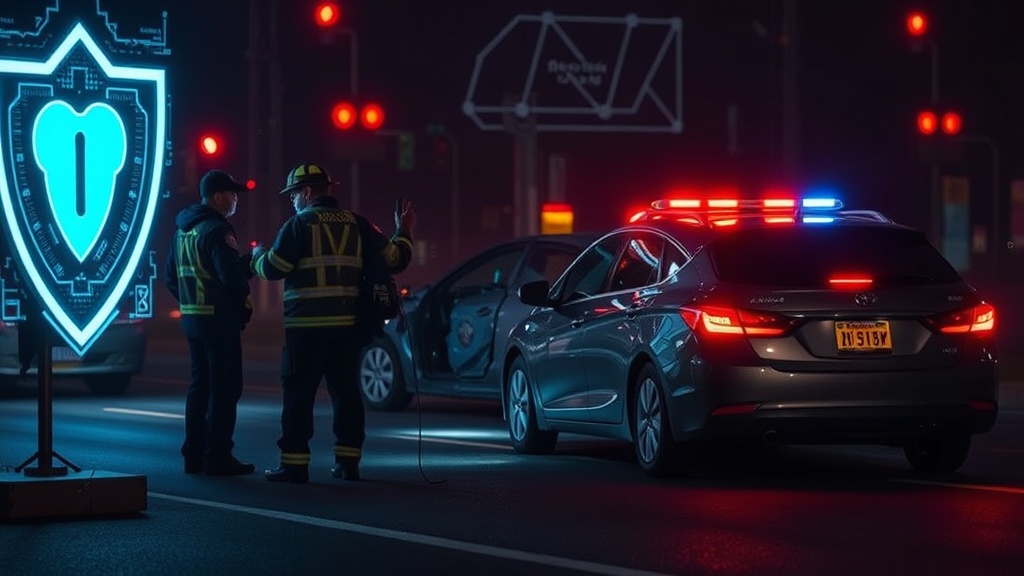
The National Highway Traffic Safety Administration (NHTSA) has formally directed autonomous vehicle (AV) companies to cease behaviors that interfere with emergency responders at accident scenes. In a clear and unambiguous directive, the agency stated that the presence of AVs at crash sites is not an "edge case" to be managed, but a recurring and critical safety issue that demands immediate attention and resolution from developers. This intervention by the federal regulator signals a growing concern that the rapid advancement and deployment of self-driving technology are outpacing established safety protocols, particularly when human lives are at stake. While AVs promise a future of enhanced road safety, their current interactions with the chaotic environments of emergency scenes are proving problematic. The NHTSA's statement underscores a fundamental disconnect: AVs are programmed to navigate predictable road conditions, but emergency situations, characterized by flashing lights, debris, and the presence of first responders directing traffic or attending to victims, present complex, unpredictable scenarios that current AV systems may not adequately handle. The agency's demand implies that AVs are, in some instances, failing to yield appropriately, obstructing the movement of emergency vehicles, or even posing additional hazards to personnel on the ground. This is not merely a matter of inconvenience; it is a direct threat to the ability of firefighters, paramedics, and police officers to perform their duties efficiently and safely. The core of the issue lies in how AVs perceive and react to the unique visual and auditory cues present at an emergency scene. Traditional traffic management relies on human interpretation of signals like flashing lights, hand gestures from traffic controllers, and the sounds of sirens. AVs, relying on sensors and algorithms, may not be programmed to recognize these as overriding directives or may interpret them in ways that lead to unsafe behavior, such as stopping unexpectedly or failing to move when necessary. NHTSA's stance is a critical reminder that the development of autonomous technology must encompass not only the vehicle's ability to drive itself but also its capacity to integrate safely and cooperatively into the broader ecosystem of road users, especially during critical incidents. The agency is effectively telling companies that their responsibility extends beyond the immediate operation of their vehicles to their impact on public safety infrastructure.The Unforeseen Challenge of Emergency Scene Navigation
The complexity of emergency scenes presents a multifaceted challenge for autonomous vehicle programming. These environments are dynamic, often involving a confluence of emergency vehicles with active lights and sirens, first responders directing traffic or attending to individuals, debris scattered across roadways, and the unpredictable movements of other human-driven vehicles and pedestrians. For an AV, processing this data in real-time and making appropriate decisions is significantly more demanding than navigating routine traffic. One of the primary concerns is the AV's ability to distinguish between emergency vehicle lights and other flashing lights, such as those from construction zones or advertising. Furthermore, AVs may struggle to interpret the non-verbal communication and directives from human first responders. A police officer waving an AV through an intersection, for example, is a command that current AV systems might not be equipped to understand or obey. This can lead to AVs stopping in critical pathways, blocking access for ambulances, fire trucks, or police cruisers, thereby delaying vital aid.