
Next.js Evolves Towards SPA-like Performance
Next.js is rapidly shedding its perception as solely a server-side rendering framework. Recent developments, highlighted by Aurora Scharff's ongoing work, are pushing the framework to deliver user experiences that rival traditional Single Page Applications (SPAs) in speed and fluidity. This evolution is not about abandoning server rendering but about intelligently augmenting it with client-side optimizations that make web applications feel instantly responsive.
The core of this enhancement lies in how Next.js now handles data and component rendering. Historically, achieving SPA-like performance meant heavy reliance on client-side JavaScript to fetch data after the initial page load, often resulting in visible loading spinners or content shifts. Next.js's new features aim to eliminate these jarring transitions by keeping data and components readily available.
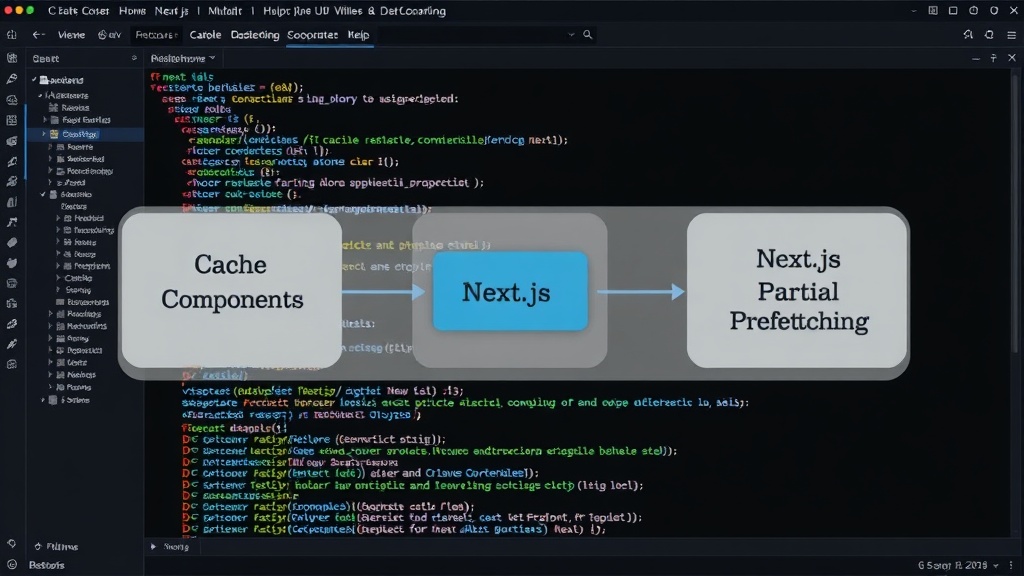
Cache Components for Instant Data Recall
A significant advancement is the introduction of Cache Components. Think of this less like a traditional browser cache and more like a highly organized personal assistant who remembers exactly what you asked for last time and has it ready before you even finish the sentence. When a user navigates through a Next.js application built with these new features, previously visited components and their associated data are intelligently cached on the client. This means that upon returning to a previously viewed page or section, the content doesn't need to be re-fetched or re-rendered from scratch. The application can instantly display the cached version, creating a sensation of immediate navigation.
This caching mechanism extends beyond simple static assets. It targets dynamic data fetched for components, ensuring that users see up-to-date information without the usual delay. This persistent data layer drastically reduces the perceived loading time between interactions, a key characteristic of a smooth SPA experience. Developers can leverage this to maintain application state and user context across different views, making the overall user journey feel more cohesive and less fragmented.
Partial Prefetching for Proactive Loading
Complementing Cache Components, Partial Prefetching addresses the anticipation of user actions. Instead of prefetching entire pages, which can be resource-intensive and sometimes unnecessary, Next.js now supports prefetching only the essential data or components needed for the *next likely interaction*. This is a more nuanced approach, akin to a skilled chef preparing just the next course ingredients while you're still enjoying the appetizer, rather than prepping the entire meal at once.
This technique means that as a user hovers over a link or performs an action that suggests navigation, Next.js can proactively fetch the necessary data or components in the background. By the time the user actually clicks or commits to the action, the required resources are often already available, leading to near-instantaneous screen transitions. This is particularly powerful for applications with complex data requirements or where network latency is a concern. It minimizes the dreaded blank screen or loading indicator, keeping users engaged without interruption.
The Reality of Database Interactions
While Next.js is smoothing out the user-facing experience, it's crucial to remember the underlying infrastructure. A reminder from a recent discussion highlights that even with advanced frontend capabilities, the performance and reliability of backend services, particularly databases, remain paramount. A perfectly optimized Next.js frontend can be undermined by inefficient or surprising database behavior. For instance, the nuances between database systems like MySQL and PostgreSQL can still lead to unexpected performance bottlenecks. A seemingly innocuous paginated query, while syntactically correct, might perform differently or expose edge cases under load depending on the database's specific implementation of `LIMIT` and `OFFSET`.
This serves as a critical reminder for developers: optimizing the frontend experience is only half the battle. Ensuring robust, performant, and well-understood data retrieval from the backend is equally vital. The smooth, SPA-like experiences Next.js is enabling depend on a solid foundation, and that includes the database layer. Developers must remain diligent in understanding their database's behavior, especially when dealing with common patterns like pagination, to avoid introducing performance regressions that negate frontend gains.
Implications for Developers and Users
For developers, these Next.js advancements mean a more streamlined path to building high-performance web applications. The framework is providing tools that abstract away much of the complexity involved in achieving SPA-like responsiveness, allowing them to focus on core application logic. It bridges the gap between the SEO benefits of server rendering and the user experience of client-side interactivity.
For end-users, the impact is a more fluid, faster, and less frustrating web experience. Applications built with the latest Next.js features will feel more polished and professional, reducing bounce rates and increasing user satisfaction. The invisible performance enhancements mean users spend less time waiting and more time interacting with the application.
The question remains how widely these new caching and prefetching strategies will be adopted and how effectively they will be implemented across diverse application architectures. But the direction is clear: Next.js is committed to delivering top-tier user experiences without compromising on the benefits of server rendering.