The Deceptive Nature of File Extensions
In the digital realm, trust is often placed in the familiar. File extensions, like .pdf or .exe, serve as quick indicators of a file's nature and intended use. However, this reliance on extensions creates a significant security vulnerability, particularly on Windows systems where extensions can be hidden by default. A file named invoice.pdf.exe, for instance, might appear to users simply as invoice.pdf, complete with a PDF icon. This deceptive presentation is a common tactic employed by attackers to trick unsuspecting users into executing malicious code disguised as benign documents.
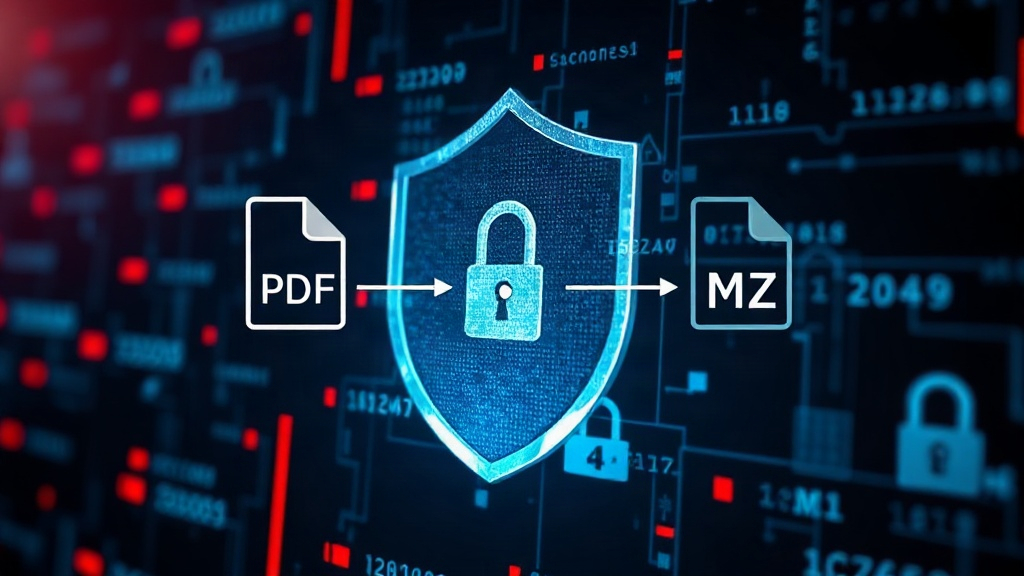
The core problem lies in the fact that a file extension is merely a label, a claim made by the file itself. It doesn't inherently dictate the file's actual content or behavior. True identification comes from the file's intrinsic characteristics. For example, a Portable Document Format (PDF) file invariably begins with the byte sequence %PDF-, while a Windows executable typically starts with the characters MZ, representing the header of the Microsoft DOS executable format.
These initial bytes, often referred to as a 'magic number' or file signature, are fundamental to the file's structure and are consistently present. They act as an immutable fingerprint, revealing the file's true type regardless of what name or extension it has been given. This fundamental principle forms the basis of a new Windows application designed to combat this specific threat.
How the File Type Identifier Works
The application developed to address this vulnerability operates by reading these critical first bytes of any given file. Upon receiving a file, it doesn't immediately trust the extension. Instead, it performs a deep inspection of the file's header. By comparing the initial bytes against a database of known file signatures, the tool can accurately determine the file's genuine type. For instance, if a file is presented with a .pdf extension but its first bytes match the signature for an executable, the tool flags it as potentially dangerous.
This signature matching is a robust method for file type identification. It bypasses the potential deception of file extensions and looks directly at the file's intrinsic code. The application maintains a curated list of these magic numbers for various file formats, enabling it to distinguish between common document types, executables, archives, and other file structures.
Beyond identifying executables masquerading as documents, the tool also offers functionality to recover the type of files whose extensions have been deliberately removed. In such cases, where a file might be named simply invoice, the signature analysis is the only reliable way to determine if it's a PDF, an executable, or something else entirely. This is crucial for forensic analysis or when dealing with files from unknown or untrusted sources.
A secondary, perhaps more niche, feature of the tool is its ability to guess the programming language of source code files. By examining characteristic patterns and keywords that are unique to different programming languages (e.g., keywords like `def` in Python, `function` in JavaScript, or `#include` in C++), the application can infer the language, aiding developers in organizing or analyzing codebases.
The 'Safe to Open' Button Vulnerability
During the development and testing phase, a critical security flaw was discovered in the application's proposed 'safe to open' button functionality. This button was intended to provide a quick, user-friendly confirmation of a file's safety. However, the developer identified a scenario where a file could be engineered to present a misleading signature while still being a malicious executable.
The vulnerability arose from how the application handled specific edge cases in signature parsing. It was possible to craft a file that contained a valid signature for a seemingly innocuous file type (like an image or a simple data file) at the very beginning, satisfying the initial check, but then contained malicious executable code immediately following that deceptive header. The 'safe to open' logic, in its initial iteration, did not perform a comprehensive scan of the entire file structure or verify that the entire file conformed to the identified type. It relied too heavily on the initial bytes alone to grant a