
The Fusion of Mobile and Vehicle Identifiers
A new generation of surveillance technology is emerging that bridges the gap between mobile device identifiers and vehicle license plate data. This development transforms passive roadside cameras into active tracking tools, capable of building detailed profiles of individuals' movements. By correlating anonymized Bluetooth and Wi-Fi signals emitted by smartphones with data captured by Automatic License Plate Readers (ALPRs), law enforcement and potentially other entities can create a comprehensive digital trail of a person's physical presence at specific locations and times.
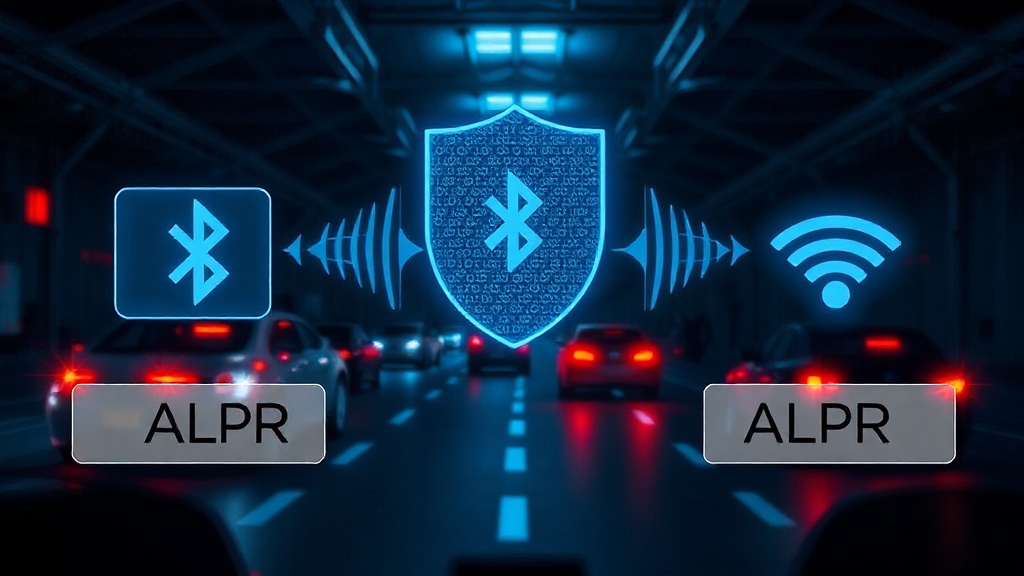
This fusion of data streams moves beyond traditional vehicle tracking. ALPRs have long been used to log vehicle movements, creating a record of where a car has been. However, without a direct link to an individual, the utility of this data was limited to vehicle ownership and general location history. The integration of mobile device signals, such as Bluetooth identifiers (like MAC addresses or randomized equivalents) and Wi-Fi probe requests, adds a critical layer of individual identification. When a smartphone emitting these signals is within range of a compatible roadside sensor, and that sensor is also capturing a license plate, the system can link the two. This creates a direct correlation between a specific device identifier and a specific vehicle at a specific moment.
The technology leverages the ubiquity of smartphones. Most modern smartphones continuously broadcast Bluetooth and Wi-Fi signals to discover nearby devices and networks. While many of these signals are anonymized or randomized to protect user privacy, they can still be captured and, under certain circumstances, potentially de-anonymized or used for correlation. The roadside hardware, often already in place for ALPRs or traffic monitoring, can be upgraded or augmented with new sensors capable of detecting and logging these mobile device signals. The critical innovation lies in the software that processes these disparate data streams, performing the correlation and creating the link.
Think of it less like a simple camera and more like a digital informant that notes not just which car drove by, but also which phone was likely inside that car, and when. This allows for the reconstruction of a person's daily commute, their visits to specific businesses, their attendance at public events, or even their presence in sensitive areas, all tied back to a unique device identifier that can then be cross-referenced with other data sources.
Implications for Privacy and Surveillance
The privacy implications of this technology are profound and far-reaching. While proponents argue for its utility in law enforcement for tracking suspects, locating missing persons, or investigating crimes, the potential for misuse and mass surveillance is significant. The ability to link a mobile device to a vehicle, and by extension to an individual, creates an unprecedented level of insight into people's lives. This data can reveal patterns of behavior, associations, and routines that were previously private.
One of the key concerns is the scope of data collection. If these systems are deployed broadly, they could create a de facto national surveillance network. Every time a person drives a car and their phone is on, their movements could be logged and linked. The anonymization of mobile signals, while a privacy safeguard, is not always foolproof. Sophisticated analysis can sometimes de-anonymize or re-identify devices, especially when combined with other data points. Furthermore, even if the device identifier remains anonymous, the pattern of locations it visits, when correlated with a license plate that can be traced to an owner, can reveal a great deal about the person associated with that vehicle.
The question of who has access to this data, and under what legal framework, is paramount. Without strict oversight and robust legal protections, this technology could be used for purposes beyond legitimate law enforcement, such as commercial tracking, political monitoring, or even personal vendettas. The aggregation of this data with other personal information held by government agencies or private companies could create highly detailed profiles of citizens, eroding anonymity and potentially chilling free speech and association.
Technological Underpinnings and Future Trajectories
The technical feasibility of this surveillance capability relies on several interconnected technologies. Firstly, ALPR systems, which use optical character recognition to read license plates, are already widely deployed by law enforcement agencies and private companies. Secondly, the ability to detect and log mobile device signals (Bluetooth and Wi-Fi) requires specialized sensors that can operate in conjunction with or be integrated into existing roadside infrastructure. These sensors capture the unique identifiers broadcast by devices.
The core of the system is the data correlation engine. This software analyzes the timestamps, signal strengths, and identifiers captured by both ALPRs and mobile signal detectors. It uses algorithms to match devices to vehicles based on proximity and timing. For instance, if a phone's Bluetooth signal is detected within a certain radius of a camera that simultaneously captures a license plate, and the timestamps align, the system can infer a link. The accuracy of this correlation depends on factors like the density of signals, the range of the sensors, and the sophistication of the matching algorithms.
What nobody has addressed yet is the long-term data retention policies for this combined dataset. If this information is stored indefinitely, it creates a permanent record of individuals' movements, accessible potentially for decades. The technical challenge of managing and securing such vast quantities of sensitive data, coupled with the ethical dilemma of its potential use, remains a significant hurdle.
The trajectory of this technology points towards increased integration and sophistication. Future iterations could incorporate other sensor data, such as cellular network information or even facial recognition, to create even richer and more invasive tracking capabilities. The push for more efficient and comprehensive surveillance tools by governments worldwide suggests that technologies like this will likely proliferate unless strong legal and ethical guardrails are put in place.
Potential Applications and Concerns
Beyond law enforcement, other applications are conceivable, though often highly controversial. For example, private companies could potentially use this technology for targeted advertising, measuring foot traffic to retail locations, or tracking customer behavior without explicit consent. Insurance companies might explore using it to assess driving habits or verify location data for claims. The commercialization of such powerful tracking tools raises significant ethical and privacy questions.
The counter-argument from proponents is that these systems can be deployed with privacy-preserving measures. This could include strict access controls, data anonymization techniques that are harder to de-anonymize, and clear policies on data retention and deletion. However, the history of surveillance technology deployment often shows a gradual expansion of capabilities and a loosening of initial restrictions.
For individuals, the awareness that their phone's signals can be tied to their vehicle's movements adds another layer to the ongoing debate about digital privacy. It underscores the need for users to understand their device's broadcasting capabilities and to utilize available privacy settings, such as disabling Bluetooth and Wi-Fi when not in use or opting for randomized identifiers where possible. However, for many, the convenience and functionality offered by these features outweigh the perceived risks, especially when the surveillance mechanisms are largely invisible.
The development and deployment of technology that links mobile device signals to license plates represent a significant leap in surveillance capabilities. It offers powerful tools for investigation but simultaneously poses a substantial threat to personal privacy. The critical challenge lies in balancing the potential benefits with the imperative to protect civil liberties in an increasingly connected world.