
The Problem: LLM Agents and Idempotency Failures
Large Language Model (LLM) agents are increasingly capable of interacting with external tools and services. However, a fundamental challenge arises when these agents call network-based tools: retries. Network hiccups are common, and agents are often designed to retry failed operations. The critical issue emerges when the tool being called is not idempotent. Idempotency means that making the same request multiple times has the same effect as making it once. If a tool is not idempotent, a retried network call can lead to unintended consequences: duplicate charges, duplicate orders, duplicate emails, or any other action that should only occur once.
This problem isn't new; it's a classic distributed systems challenge. However, with the rise of LLM agents that abstract away direct API calls and can spontaneously retry operations based on their internal logic, the issue has resurfaced in a new guise. Developers building agentic systems found themselves facing this bug without a readily available, simple solution tailored for the agentic context. Existing solutions often involve complex state management or are not easily integrated into the typical LLM agent frameworks.
The author of the latch library, Sangaraju, highlights that this is not a novel concept but rather an old problem applied to a new paradigm. The lack of a straightforward, installable fix prompted the creation of latch. The core idea is to ensure that even if an LLM agent attempts to execute a non-idempotent action multiple times due to network issues or internal retries, the action is only performed once.
Introducing latch: The Solution
latch is a small, pip-installable Python library designed to wrap around non-idempotent tool calls made by LLM agents. Its primary function is to prevent duplicate executions. It achieves this by maintaining a record of recently executed operations and their outcomes. Before executing a tool call, latch checks if an identical call has already been processed within a specified time window. If it has, latch returns the cached result instead of executing the tool again.
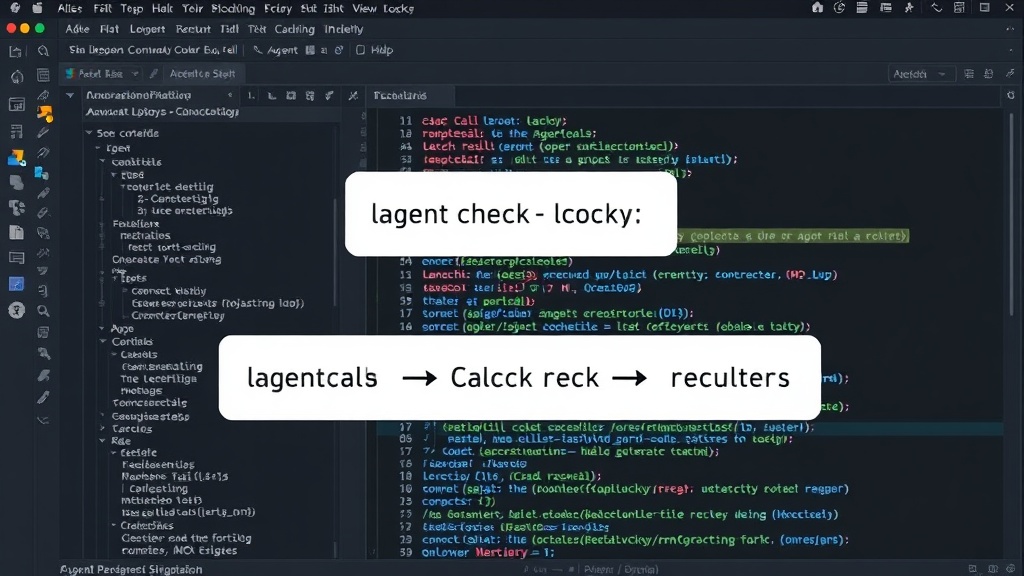
The library operates by intercepting calls to designated functions. When a function is called for the first time, latch executes it, stores the result along with a unique identifier for the call (e.g., a hash of the function arguments), and returns the result. If the same function is called again with the exact same arguments within the configured retention period, latch bypasses the actual function execution and returns the previously stored result. This ensures that even if the LLM agent makes multiple requests for the same operation, only the first one results in an actual execution and its associated side effect.
The implementation is deliberately kept simple to minimize overhead and ease integration. Developers can wrap their tool functions with latch decorators or use its programmatic interface. The library handles the logic of tracking calls, storing results, and managing the cache, abstracting away the complexity for the end-user.
How latch Works Under the Hood
At its core, latch relies on a mechanism to uniquely identify function calls and store their results. A common approach involves hashing the arguments passed to the function. This hash, combined with the function's identity, creates a unique key for each distinct operation. This key is then used to look up previous execution results in a cache.
The cache itself can be implemented in various ways, from in-memory dictionaries for simple use cases to more persistent solutions like Redis or databases for distributed or long-running agents. The library needs to manage the lifecycle of these cached results, typically by setting an expiration time. This ensures that old results do not persist indefinitely, freeing up memory or storage and allowing for genuine new operations after a sufficient period has passed.
Consider the example of a payment processing function: process_payment(user_id, amount). If an LLM agent calls this function with user_id='user123' and amount=50, latch generates a key based on these parameters. It executes the function, stores the payment confirmation (or failure) associated with this key, and returns it. If the agent, due to a network retry, calls process_payment('user123', 50) again a few seconds later, latch finds the key in its cache and immediately returns the stored confirmation without invoking the actual payment processing logic. This prevents a double charge.
Integration and Use Cases
Integrating latch into an LLM agent framework typically involves identifying the non-idempotent tools the agent uses. These might include functions for:
- Processing payments or financial transactions
- Sending emails or notifications
- Creating or updating database records
- Placing orders on e-commerce platforms
- Initiating workflows or background jobs
Developers can then wrap these functions using latch. For instance, in Python, this might look like:
from latch import latch_function

@latch_function(ttl_seconds=600)
def place_order(product_id, quantity):
    # Actual order placement logic here
    return place_order_in_system(product_id, quantity)
The ttl_seconds parameter specifies how long the result of a successful call should be cached. This value should be chosen carefully based on the business logic; for example, a payment confirmation might be cached for several minutes, while a one-time code generation might be cached for only a few seconds.
The library is designed to be framework-agnostic, meaning it can be used with popular LLM orchestration tools like LangChain, LlamaIndex, or custom-built agent systems. The key is that these frameworks allow developers to define and expose tools to their LLM agents, and latch can be applied at the point where these tools are defined.
Broader Implications and Future Considerations
The emergence of libraries like latch signifies a maturing ecosystem around LLM agents. As agents move from experimental toys to production-ready systems, the need for robust handling of side effects and operational reliability becomes paramount. This is not just about preventing duplicate charges; it's about building trust and ensuring predictable behavior in systems that operate autonomously.
The challenge of idempotency is one of many that developers face when deploying LLM agents in real-world scenarios. Other considerations include robust error handling, security of tool access, efficient prompt engineering, and managing the agent's state over long conversations. latch addresses a specific, critical piece of this puzzle, making agentic systems more dependable.
What remains to be seen is how widely such libraries will be adopted and whether they will become standard components in LLM agent development toolkits. As LLM agents become more sophisticated, their interactions with external systems will increase, making solutions for safe and reliable execution essential. The success of latch will depend on its ease of integration, performance, and its ability to handle the complexities of various agent architectures and tool integrations.