The LLM Context Window Problem for Developers
Developers frequently encounter a common frustration when working with large language models (LLMs) like Claude or ChatGPT: the context window limitation. Pasting an entire codebase into a chat interface often results in the LLM truncating the input or failing entirely, forcing developers to guess or manually prune code. This guesswork is inefficient and interrupts the workflow. To address this, a new command-line interface (CLI) tool named Tokenazire has been developed.
Tokenazire: Functionality and Features
Tokenazire offers a streamlined solution to pre-emptively check if a codebase will fit within an LLM's context window. The tool operates by scanning a specified local directory or a remote GitHub repository. For GitHub repositories, Tokenazire automatically clones the repository to perform the analysis.
At its core, Tokenazire utilizes the `tiktoken` library, the same tokenizer used by OpenAI models. This provides a robust approximation for token counting across a wide range of LLMs, as many models share similar tokenization strategies. The CLI outputs a color-coded breakdown of token counts per file, ranging from green for minimal tokens to red for files consuming a significant portion of the context. This visual cue allows users to quickly identify the most token-heavy files in their project.
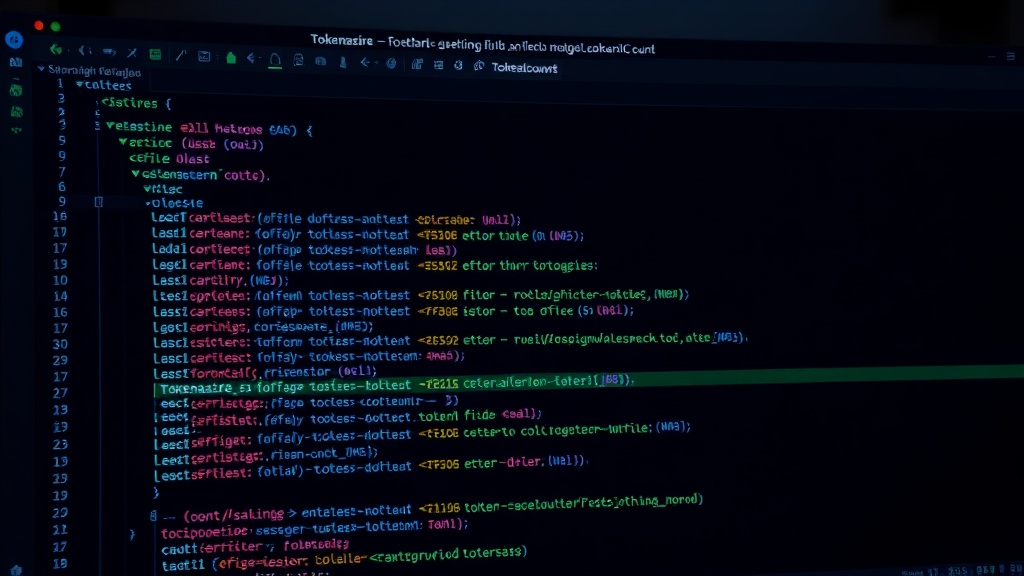
The tool calculates the total token count for the project and expresses it as a percentage of a configurable context window size, defaulting to 200,000 tokens. This provides a clear, quantitative measure of how much of the LLM's capacity the codebase occupies.
Tokenazire is designed to be intelligent about what it scans. It automatically ignores common directories that do not contain relevant code, such as `.git`, `venv`, and `node_modules`, preventing these from artificially inflating the token count. This ensures the analysis focuses on the actual source code and project assets.
Exporting Code for LLM Interaction
A particularly useful feature of Tokenazire is its `--export` flag. When invoked, this flag bundles the entire project—preserving the folder structure and including the content of every relevant file—into a single text file. This consolidated file is then ready to be pasted directly into an LLM's chat interface. This feature is invaluable for developers who need to provide a complete, albeit tokenized, snapshot of their project to an LLM for analysis, debugging, or code generation tasks without manual file consolidation.
Technical Implementation and Usage
Tokenazire is a small, self-contained CLI tool. Its reliance on `tiktoken` ensures a consistent and accurate token estimation method that aligns with industry standards for LLM input processing. The ability to scan GitHub repositories directly simplifies the workflow for developers who often work with code hosted on platforms like GitHub.
The default context window of 200k tokens is generous, reflecting the capabilities of newer, more powerful LLMs. However, the configurability of this limit is crucial, as different LLMs offer varying context window sizes. Users can adjust this parameter to match the specific LLM they intend to use, ensuring the analysis remains relevant.
The automatic exclusion of build artifacts and version control directories is a critical aspect of Tokenazire's utility. Without this, the perceived size of a codebase could be significantly inflated by temporary files or metadata, leading to inaccurate assessments of LLM compatibility. By focusing on source code and essential project files, Tokenazire provides a more accurate representation of the input that an LLM would actually process.
The Future of LLM Interaction with Codebases
As LLMs become more integrated into developer workflows, tools like Tokenazire are essential for bridging the gap between complex codebases and the inherent limitations of current AI models. The ability to accurately gauge the token footprint of a project before submission saves time, prevents errors, and enables more effective utilization of LLM capabilities for code-related tasks. The `--export` functionality, in particular, directly tackles the practical challenge of feeding large code projects into LLM interfaces, paving the way for more comprehensive AI-assisted coding.
What remains to be seen is how LLM providers will evolve their context window strategies. Will we see a continued race towards ever-larger windows, or will innovation focus on more efficient in-context learning and retrieval-augmented generation (RAG) techniques that do not require entire codebases to be passed as raw input? Tools like Tokenazire will be vital in either scenario, adapting to measure and manage code inputs for whatever the future of LLM context holds.