
The Problem with Storing Financial Documents
Most personal finance applications today require users to surrender significant amounts of sensitive data. This typically involves connecting to bank aggregators, uploading PDF statements, or even submitting photos of receipts. While companies may have good intentions, the raw financial documents – statements detailing every transaction, or receipts showing partial card numbers – become a liability. This data, once stored on a server, represents a potential target for breaches and leaks, even with robust security measures in place.
The core question driving the development of PennyRush was: what information does a money tracker *truly* need to retain? The original document format is merely a vehicle for essential data points. The critical fields are the date of a transaction, the amount spent, the merchant, and a categorized understanding of the expenditure. The entire file itself is often superfluous once this core information is extracted.
PennyRush's Core Design: Extract and Discard
PennyRush is built on a fundamental principle: extract the necessary fields from financial documents and discard the original file immediately. The design goal is to prevent the raw statement data from ever touching persistent storage, whether on disk or a server. This approach drastically reduces the data liability for the application and, by extension, for the user.
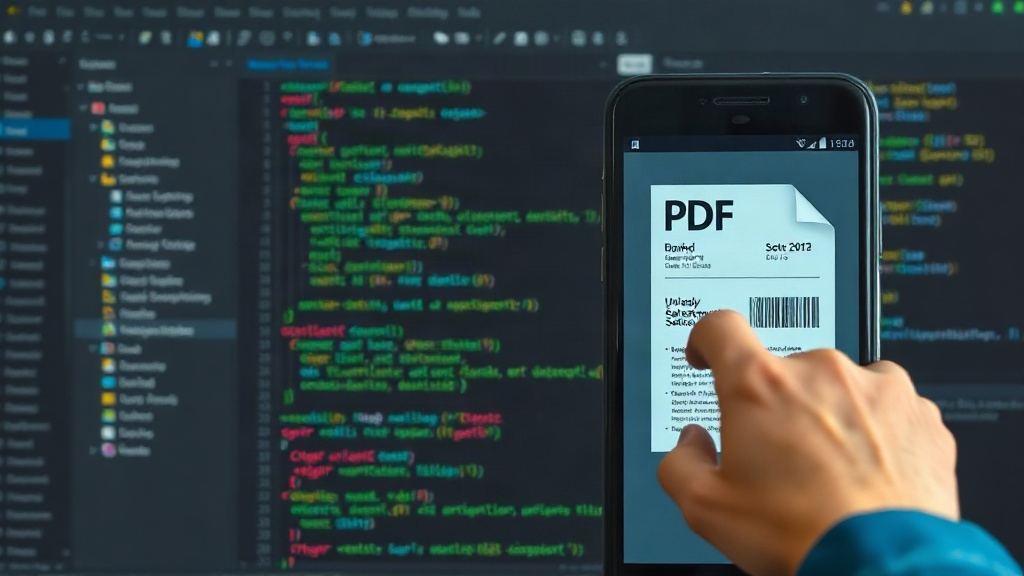
The application is developed as a native Android app, utilizing Kotlin and Jetpack Compose. This choice allows for a streamlined, efficient user experience optimized for mobile devices. The parsing logic is designed to operate within the device's memory. When a user uploads a PDF statement or provides another document format, the application processes it locally. During this in-memory processing, the application identifies and extracts key transaction details: the date, the amount, the merchant name, and any available categorization information. Once these fields are successfully parsed and stored in the app's internal, non-persistent memory, the original uploaded file is immediately deleted. It is never written to the device's storage, nor is it transmitted to any backend servers for storage.
Technical Implementation and Security Implications
The technical challenge lies in robustly parsing various financial statement formats. PDFs, in particular, can be notoriously difficult to parse accurately due to their complex structure, which is designed for visual presentation rather than data interchange. PennyRush employs sophisticated parsing techniques to identify tabular data, text blocks, and specific keywords that indicate transaction details. This parsing occurs entirely within the application's runtime memory. This means that the sensitive raw document data is only present for the duration of the parsing operation and is garbage collected by the operating system once the process is complete and the extracted fields are secured internally.
This in-memory processing model offers significant security advantages. Unlike applications that store uploaded files, PennyRush eliminates the risk of a data breach originating from the server-side storage of these sensitive documents. If the app's servers were ever compromised, there would be no raw financial statements to steal. The only data at risk would be the extracted fields, which are deliberately minimal and transient. This aligns with a principle of data minimization, where only the absolute necessary information is retained, and even that is handled with care.
User Experience and Data Minimization
For the end-user, this approach translates to enhanced privacy and reduced risk. They can track their finances without the anxiety of uploading sensitive documents that might reside on a company's servers for extended periods. The app feels like a personal, secure ledger that only holds the essential financial summaries, not the full, original records. This is akin to having a meticulous accountant who takes notes on key figures during a meeting but immediately shreds the meeting minutes afterward. The core information is captured, but the extraneous details and the original context are left behind, minimizing the potential for misuse.
The decision to build PennyRush as a native Android app further supports this security posture. Native applications generally have a smaller attack surface compared to web applications or cross-platform solutions that might rely on less secure inter-process communication or larger runtime environments. By keeping the entire parsing and initial data handling process on the device, PennyRush aims to provide a level of privacy and security that is difficult to achieve when financial data is routinely uploaded and stored centrally.
Future Considerations and Potential Challenges
While the in-memory parsing approach significantly enhances security, it is not without its challenges. The accuracy of the parsing engine is paramount. Errors in extraction could lead to incorrect financial tracking for the user. Furthermore, handling a wide variety of bank statement formats from different institutions will require continuous development and refinement of the parsing algorithms. The app must also consider the legal and regulatory landscape concerning financial data. Even though the raw files are discarded, the extracted fields, if stored, would still be subject to data protection laws. PennyRush's strategy of keeping these extracted fields in memory and potentially not persisting them long-term, or only persisting anonymized/aggregated data, is key to its minimal-liability model.
The question remains: can this model scale to support complex financial analysis that might benefit from historical raw data or more detailed metadata? For now, PennyRush is focused on the core need of transaction tracking. Its commitment to discarding original files after in-memory parsing sets a strong precedent for how personal finance tools can prioritize user privacy and data security in an increasingly data-conscious world.