NeuralAgent 3.0: AI-Powered UI Automation Arrives
NeuralAgent 3.0, a new AI-driven tool, promises to automate user interface (UI) actions on a computer with remarkable speed, executing tasks in approximately 285 milliseconds. This development positions NeuralAgent as a potentially significant player in the burgeoning field of AI agents designed to interact with and control desktop applications. The core innovation lies in its ability to interpret user intent and translate it into a series of precise UI interactions, effectively acting as a digital assistant capable of performing complex sequences of actions with minimal delay.
The implications of such rapid automation are far-reaching. For developers, it could mean faster debugging cycles, automated testing scenarios that mimic real user behavior with high fidelity, and quicker execution of repetitive development tasks like code compilation, deployment, or environment setup. For power users across various professions, it offers a pathway to offload tedious manual work, from data entry and report generation to software configuration and file management. The ~285ms execution time is particularly noteworthy, as it approaches the speed of human reaction and cognitive processing, suggesting that the AI can act almost instantaneously upon receiving a command or recognizing a pattern.
Technical Underpinnings and Performance
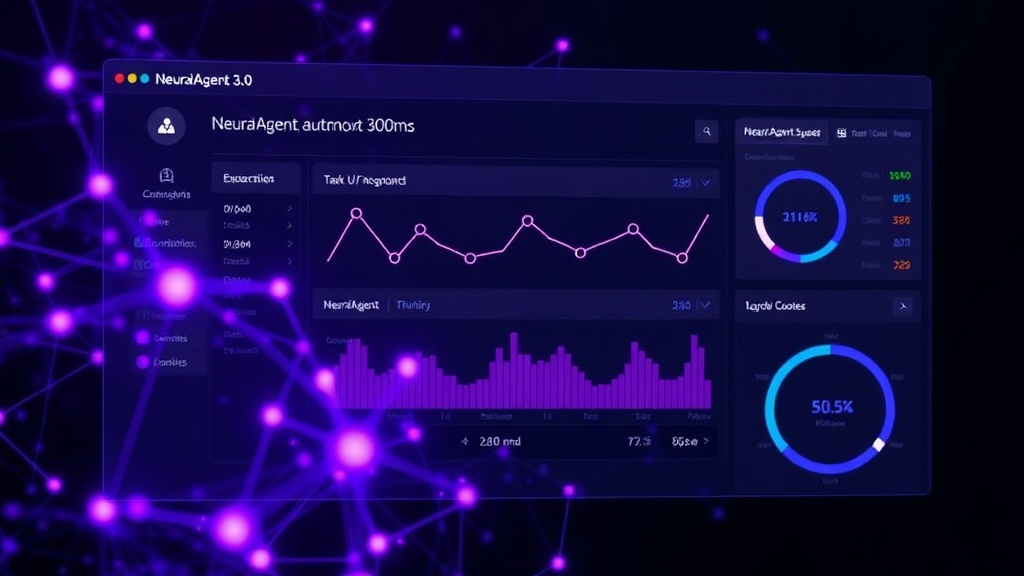
While specific technical details regarding the architecture of NeuralAgent 3.0 are not extensively detailed in the initial announcements, its reported performance suggests a sophisticated integration of AI models with operating system-level control mechanisms. This likely involves several key components: a natural language understanding (NLU) module to interpret user commands, a planning and reasoning engine to break down tasks into actionable steps, and an execution layer that interfaces directly with the computer's UI framework. The speed suggests highly optimized algorithms and potentially a lightweight model that can run efficiently on local hardware, minimizing network latency.
The ability to achieve sub-300ms execution for UI actions implies that NeuralAgent 3.0 is not relying on slow, interpreted processes or extensive cloud-based inference for every step. Instead, it might employ a hybrid approach, leveraging pre-trained models for common tasks and a rapid local inference engine for immediate action execution. This could involve sophisticated computer vision techniques to identify UI elements, keyboard and mouse event simulation, and intelligent error handling to recover from unexpected UI states. The competition in this space is heating up, with various companies exploring AI agents for desktop automation, but NeuralAgent's focus on raw speed could be a significant differentiator.
Potential Use Cases and Workflow Integration
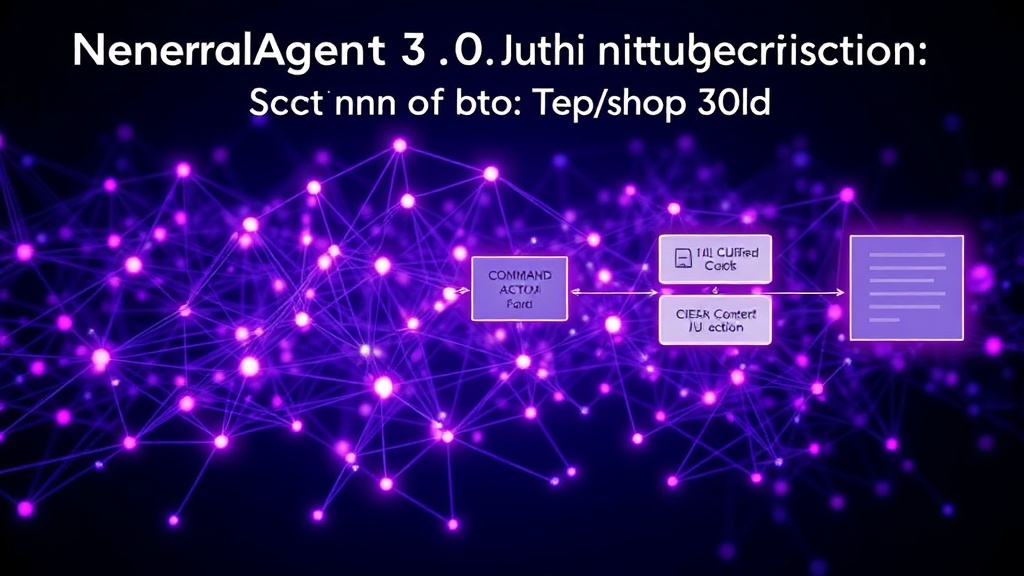
The immediate applications for NeuralAgent 3.0 are varied. Developers could use it to automate the repetitive tasks associated with software development. Imagine a scenario where a developer needs to test a new build: NeuralAgent could launch the application, navigate to specific screens, input test data, and report the results—all triggered by a single command. This could drastically reduce the time spent on manual testing and quality assurance, freeing up engineers to focus on more complex problem-solving and feature development.
Beyond development, marketing professionals could automate the creation of social media posts or campaign reports. Data analysts might use it to scrape data from various desktop applications, format it, and generate preliminary reports. Even general users could benefit from automating tasks like organizing files, managing email filters, or setting up complex software configurations. The key advantage is its speed; actions that might take a human several seconds or minutes to perform manually can be executed by NeuralAgent in the blink of an eye, making it feasible to integrate into highly responsive workflows or even real-time operations.
The broader trend towards AI agents capable of acting autonomously on user devices is accelerating. Tools like NeuralAgent 3.0 represent a shift from AI that merely provides information to AI that actively performs tasks. This raises questions about the future of human-computer interaction and the skills that will be most valuable in an increasingly automated digital landscape. As these agents become more capable and faster, the line between human and AI-driven actions on a computer may begin to blur.
What remains to be seen is the breadth of applications NeuralAgent 3.0 can effectively control and the robustness of its error handling when encountering novel or unexpected UI elements. The ability to learn and adapt to new software interfaces will be crucial for its long-term success. Furthermore, the security implications of an AI agent with deep control over a user's computer warrant careful consideration, though the reported speed suggests a focus on efficient, localized execution rather than broad, intrusive data collection.