The Illusion of Multilingualism in Large Language Models
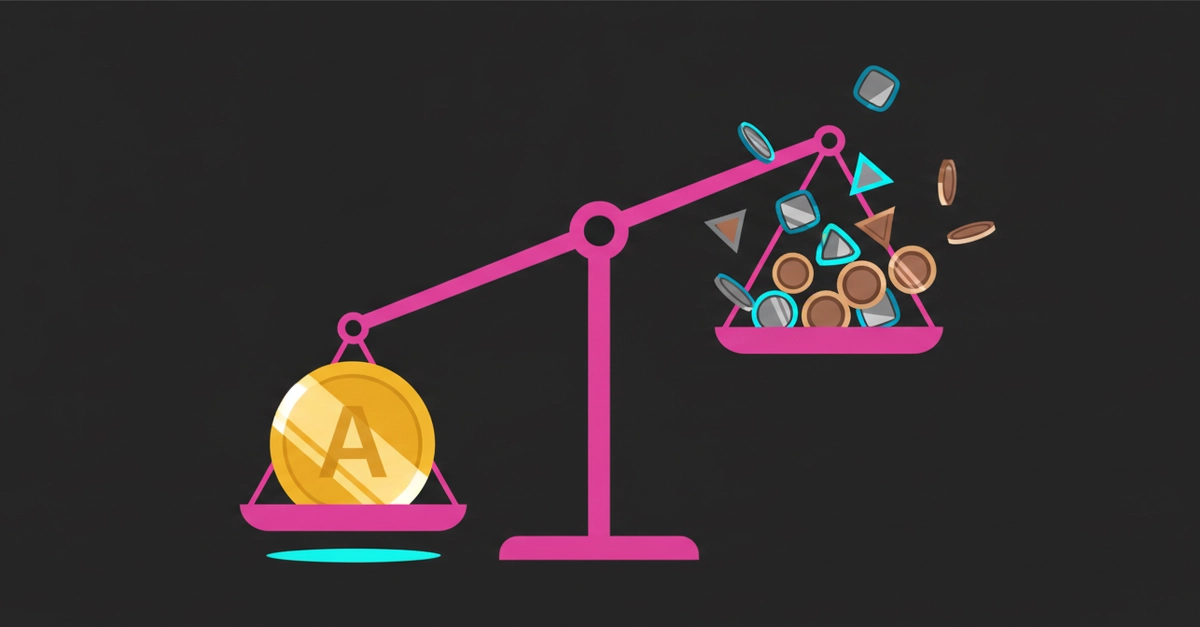
When models like ChatGPT or Claude respond fluently in languages such as Swahili or Thai, it's easy to assume they possess an equal understanding of all languages. This perception, however, is a significant oversimplification. The reality is far more complex, with inherent architectural limitations and data biases creating a substantial performance gap between languages. This disparity isn't a minor cosmetic issue; it penetrates the core of how these models process and generate text, stemming from the very initial stages of text preparation.
Tokenization: The First Point of Inequality
Large Language Models (LLMs) do not process raw text. Instead, text is first broken down into discrete units called tokens by a tokenizer. These tokens are the fundamental units the model operates on. The problem arises because tokenizers are trained on massive datasets that are overwhelmingly dominated by English and code. For instance, a significant portion of Llama 3's training data comprised 95% English and code, leaving only 5% for all other languages combined. This severe imbalance means that tokenizers are highly efficient for English, producing fewer tokens per word or concept. In contrast, for many other languages, the tokenizer is far less efficient, breaking down words or even sub-words into numerous tokens. This not only increases computational cost but also means the model receives a less coherent or representative input for non-English text, fundamentally undermining its ability to understand and generate that language with the same fidelity.
Consider the process for a word in English like "unbelievable." A well-trained English tokenizer might represent this with 2-3 tokens. However, a word with a similar concept in a language with agglutinative morphology, like Turkish, might require significantly more tokens to represent its nuanced meaning, potentially leading to a loss of contextual information or a more fragmented understanding by the model. This inefficiency is not a bug; it's a direct consequence of prioritizing the dominant language in the training corpus. The model is effectively learning a richer, more detailed representation of English than any other language.
Data Imbalance and its Downstream Effects
The tokenization issue is a symptom of a larger problem: the pervasive imbalance in training data. While efforts are made to include diverse languages, the sheer volume of English text available for training dwarfs that of most other languages. This means LLMs develop a deeper, more nuanced understanding of English grammar, idioms, cultural references, and even subtle emotional tones. When these models generate text in less-represented languages, they often rely on patterns learned from English and then attempt to translate or adapt them, leading to outputs that can feel unnatural, grammatically awkward, or even factually incorrect. It’s akin to a chef who has only ever practiced with a few premium ingredients trying to cook a complex dish with limited, lower-quality substitutes – the result will inevitably be compromised.
This data disparity affects not just generation but also comprehension. A model might misinterpret the subtleties of a culturally specific idiom in Japanese, or fail to grasp the precise social context of a polite request in Korean, because its training data provided far fewer examples of such linguistic nuances compared to English. The model is essentially working with a less complete map of the linguistic landscape for non-English languages.
Beyond Tokenization: Architectural and Evaluation Challenges
The problem extends beyond initial tokenization and data volume. The very architecture of some LLMs might be inherently biased towards the structure and characteristics of English. Furthermore, evaluation metrics used to assess multilingual capabilities often fall short. Benchmarks might focus on surface-level fluency or accuracy on specific tasks, failing to capture deeper semantic understanding, cultural appropriateness, or the ability to handle complex, domain-specific language in non-English contexts. A model might score well on a translation task but struggle with nuanced creative writing or technical explanation in that same language.
What remains largely unaddressed is the long-term impact of this linguistic inequality. As LLMs become more integrated into global communication, education, and commerce, the inherent bias towards English could inadvertently reinforce existing linguistic dominance, marginalizing smaller language communities and hindering their digital participation. The illusion of equal multilingualism masks a growing digital divide.
Pathways to More Equitable Multilingualism
Addressing this challenge requires a multi-pronged approach. Firstly, significant investment in curating and cleaning high-quality, diverse language datasets is crucial. This involves not just quantity but also quality, ensuring that data accurately reflects the richness and complexity of each language. Secondly, research into more language-agnostic or equitable tokenization strategies is needed. This could involve developing tokenizers that are optimized for linguistic diversity rather than the statistical properties of a single dominant language, or employing sub-word units that are more consistent across different language families.
Finally, developing more robust and nuanced evaluation methodologies that capture true multilingual understanding is paramount. This means moving beyond simple accuracy scores to assess cultural competence, idiomatic expression, and the ability to handle complex discourse in a wide array of languages. Only through these concerted efforts can we begin to dismantle the illusion of equal multilingualism and build LLMs that truly serve a global user base.