
The Orchestra Without a Conductor: Self-Organizing AI Agents
The future of Artificial Intelligence is increasingly leaning towards multi-agent systems. These systems, composed of multiple individual AI agents, are designed to work collaboratively to achieve complex goals. A critical aspect of this evolution is the ability of these agents to self-organize and coordinate their efforts, much like an orchestra playing a symphony without a conductor dictating every note. Each agent, specialized in its own domain, can focus on its specific tasks, contributing to a larger objective. This decentralized approach promises greater flexibility, scalability, and resilience compared to traditional monolithic AI models. Instead of a single, all-powerful AI making every decision, a network of specialized agents can dynamically adapt and respond to changing conditions.
The core idea is that individual agents, possessing distinct expertise, can identify their roles, communicate effectively, and autonomously decide on the best course of action to fulfill their part of the mission. This is particularly powerful in domains requiring diverse skill sets. For instance, in a complex engineering design process, one agent might handle material science simulations, another might focus on structural integrity analysis, and a third could optimize for manufacturing feasibility. Without a central controller, these agents can interleave their tasks, passing information and results to each other as needed, leading to a more organic and efficient workflow. This emergent behavior, where complex global outcomes arise from simple local interactions, is a hallmark of sophisticated multi-agent systems.
The Challenge of Boundaries: Human vs. AI Effort
While the self-organizing nature of multi-agent AI is a significant advantage, a primary challenge emerges at the intersection of human and AI efforts. Defining clear boundaries and responsibilities between human operators and AI agents is crucial for effective collaboration and accountability. Without well-defined lines, there's a risk of confusion, task duplication, or even conflicting actions. This is not about a hierarchical command structure, but rather about establishing protocols for interaction, oversight, and intervention.
Consider a scenario where an AI agent is tasked with optimizing a complex industrial process. The AI might propose a series of adjustments. The challenge lies in determining which of these proposals require human review, which can be automatically implemented, and how the human operator should provide feedback or override decisions. This requires not just technical integration but also a deep understanding of the human cognitive load and decision-making processes. Think of it less like a human boss delegating tasks and more like a seasoned AI team lead who knows when to ask for a human expert's opinion and when to trust the collective intelligence of the agent network. The effectiveness of the system hinges on this delicate balance, ensuring that AI augments human capabilities without undermining human judgment or control.
Coordination Mechanisms and Communication Protocols
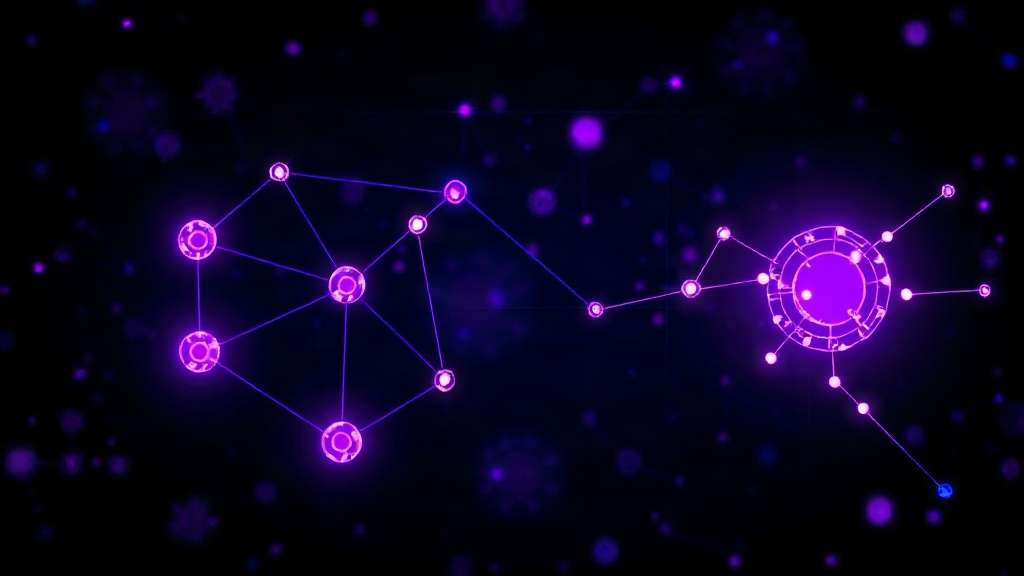
Effective coordination in a conductorless orchestra of AI agents relies heavily on robust communication protocols and intelligent coordination mechanisms. Agents need to signal their intentions, report their progress, and request information or assistance from others. This can involve various techniques, from simple message passing to more sophisticated distributed constraint satisfaction or negotiation protocols. The goal is to enable agents to form emergent consensus or to resolve conflicts autonomously, ensuring the overall system moves towards its objective without a central coordinator.
For example, agents might use a shared knowledge base or a blackboard system to post updates and query information. Alternatively, they could employ auction-based mechanisms where agents bid on tasks or resources based on their capabilities and current state. The design of these protocols is critical; they must be efficient enough to avoid becoming bottlenecks, yet flexible enough to accommodate diverse agent behaviors and task requirements. The surprising detail here is not the complexity of the individual agents, but how simple, well-defined interaction rules can lead to remarkably complex and coherent collective behavior. This is akin to how a flock of birds or a school of fish achieves intricate synchronized movements through basic local interaction rules.
Future Directions and Unanswered Questions
The field of multi-agent AI systems is rapidly evolving, but several key questions remain. How do we best ensure the safety and alignment of these self-organizing systems, especially as they become more autonomous? What are the optimal architectures for human-AI teaming in these decentralized environments? And critically, how can we develop robust mechanisms for auditing and explaining the decisions made by emergent collective intelligence, especially when no single agent holds the complete picture?
What nobody has addressed yet is what happens to the human roles in creative or strategic domains when AI agents can collaborate to generate novel solutions or strategies with minimal human input. Will humans shift from being decision-makers to curators, or will entirely new forms of human-AI co-creation emerge? The path forward requires not only advancements in AI algorithms but also a thoughtful consideration of the human element, ensuring that these powerful systems serve humanity's best interests. The ultimate goal is an AI ecosystem that is powerful, adaptable, and seamlessly integrated with human expertise.