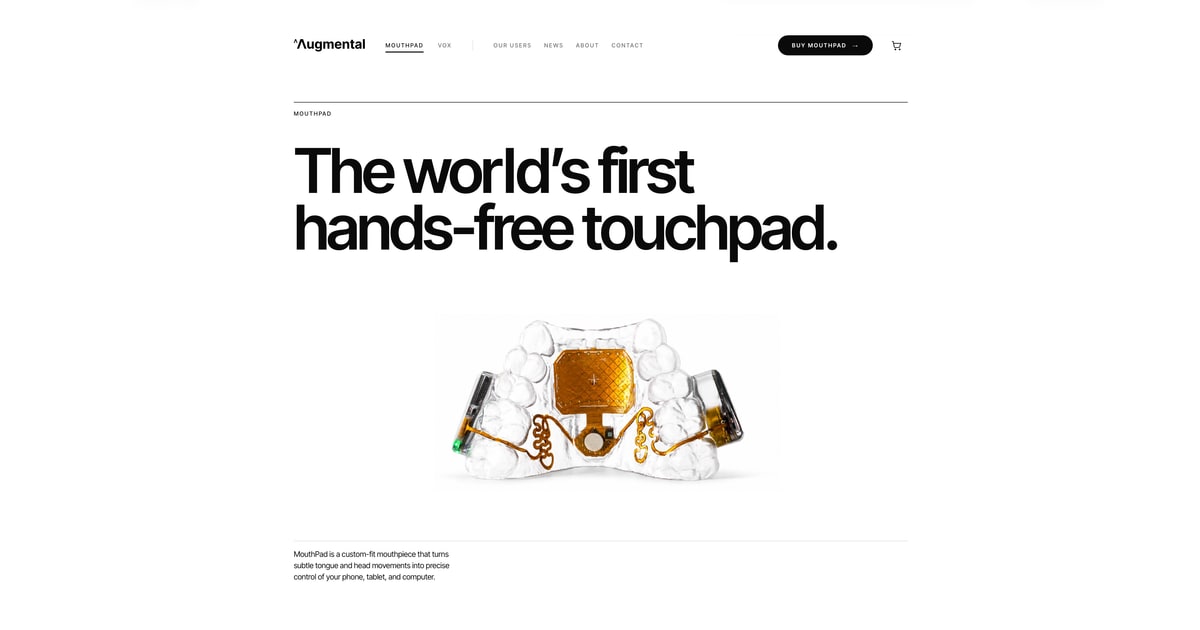
Introducing MouthPad: The Tongue-Controlled Interface
Augmental, a startup focused on novel human-computer interfaces, has unveiled the MouthPad, a device that allows users to control a computer using their tongue. This innovation promises a hands-free computing experience, potentially transforming accessibility for individuals with motor impairments and opening new avenues for general computer interaction.
The MouthPad is a small, discreet device that rests on the roof of the mouth, similar to a dental retainer or mouthguard. It features an array of sensors that detect the precise position and movement of the user's tongue. These movements are then translated into commands that can navigate cursors, click buttons, and interact with digital interfaces. The core technology relies on a combination of pressure sensors and potentially other micro-sensing elements to capture the nuanced gestures of the tongue.
The implications of such a device are significant. For individuals with conditions that limit hand or arm mobility, such as quadriplegia, severe arthritis, or repetitive strain injuries, the MouthPad could offer a much-needed alternative to traditional input methods like keyboards and mice. This could dramatically improve their ability to work, communicate, and engage with the digital world independently. The device aims to provide a high degree of control, allowing for both fine cursor movements and distinct command gestures.
Beyond accessibility, Augmental envisions the MouthPad as a tool for anyone seeking a more integrated and fluid computing experience. Imagine controlling presentations, interacting with augmented reality environments, or even gaming without needing to physically touch a device. The potential for seamless, in-the-moment control without occupying one's hands is a compelling proposition for power users and professionals across various fields.
The development of the MouthPad represents a significant step in exploring alternative input modalities. While the concept of tongue-controlled interfaces is not entirely new, Augmental's approach appears to focus on creating a user-friendly, commercially viable product. The challenge lies in achieving sufficient accuracy, comfort, and a low learning curve to make it a practical replacement or supplement to existing input devices.
How MouthPad Works: Sensing and Translation
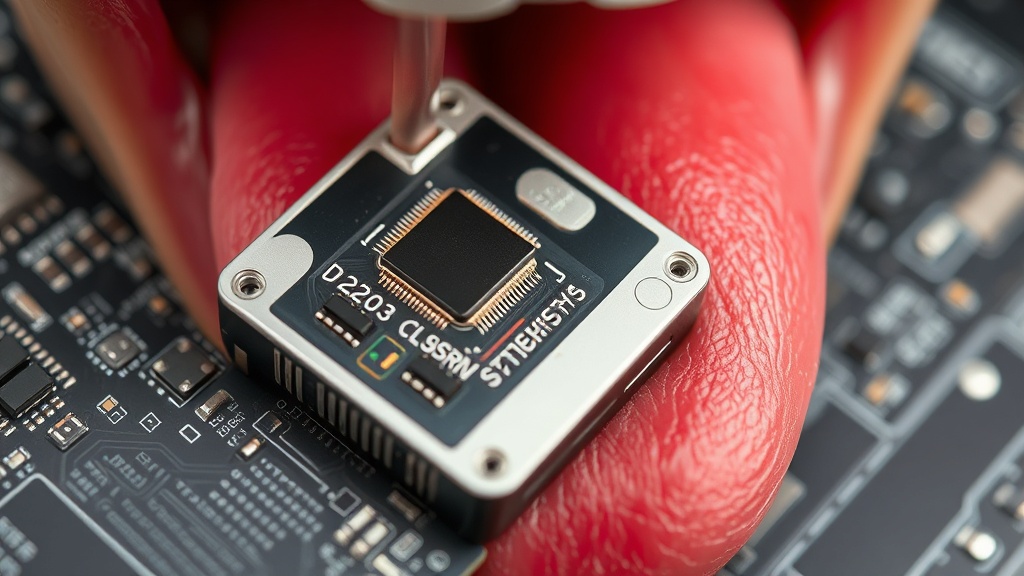
At the heart of the MouthPad is its sophisticated sensor array. These sensors are designed to be highly sensitive to the subtle pressures and movements of the tongue. When a user moves their tongue against the device, the sensors register these changes. This data is then processed by onboard microelectronics, which translate the raw sensor input into digital signals that a connected computer can understand.
The translation process is crucial. Simple left-right or up-down movements might control cursor position. More complex gestures, perhaps involving licking specific points or making specific tongue shapes, could be mapped to actions like clicking, scrolling, or activating specific software functions. Augmental has indicated that the system is designed to be customizable, allowing users to tailor the gesture-to-command mappings to their preferences and specific use cases. This adaptability is key to its potential broad appeal.
Comfort and hygiene are paramount for an intraoral device. Augmental has stated that the MouthPad is constructed from medical-grade, biocompatible materials. The design aims for a snug yet comfortable fit, minimizing any interference with speech or eating when not actively in use. The device is also designed for easy cleaning to ensure user safety and longevity.
Connectivity is established wirelessly, likely via Bluetooth, to a paired computer or mobile device. This allows for a cable-free experience, further enhancing the sense of freedom and mobility. The power requirements are expected to be low, given the nature of the sensors and processing, allowing for extended use on a single charge, though specific battery life details are yet to be fully disclosed.
Accessibility and Broader Applications
The most immediate and profound impact of the MouthPad is its potential to enhance accessibility. For individuals with severe physical disabilities, the ability to control a computer with precision using their tongue could be life-changing. It offers a pathway to greater independence, enabling them to perform tasks that were previously difficult or impossible. This includes everything from professional work and academic pursuits to personal communication and entertainment.
Compared to existing assistive technologies, the MouthPad offers a unique form factor and a potentially more intuitive control scheme for some users. While eye-tracking and sip-and-puff devices have been available for years, the tongue offers a richer set of movements and a more direct control over fine motor actions. The learning curve for mastering tongue movements for computer control is expected to be manageable, especially with a well-designed calibration and training system.
Beyond accessibility, the MouthPad taps into the growing trend of hands-free interaction. In professional settings, surgeons could potentially control imaging software without breaking sterility. Designers might manipulate 3D models in real-time. Gamers could gain an edge with additional, unconventional control inputs. The possibilities extend to situations where users' hands are occupied or when a more immersive, integrated digital experience is desired.
The company's focus on a sleek, discreet design suggests an ambition to move beyond niche accessibility markets and into mainstream adoption. If the MouthPad can deliver on its promise of accurate, comfortable, and intuitive control, it could carve out a new category of human-computer interaction. The success will hinge on rigorous user testing, refinement of the gesture recognition algorithms, and building a robust ecosystem of compatible software and applications.
Challenges and the Road Ahead
Despite the exciting potential, the MouthPad faces several significant challenges. The primary hurdle is user adoption. Learning to control a computer with one's tongue requires a degree of motor skill and adaptation that may not be universally achievable or desirable. The learning curve, while potentially manageable, will still be a factor.
Another critical aspect is long-term comfort and oral hygiene. Wearing any device inside the mouth for extended periods can lead to discomfort, dry mouth, or even dental issues if not designed and maintained properly. The materials must be rigorously tested for biocompatibility and durability. Furthermore, the device needs to be easily cleanable and resistant to the oral environment.
Technical accuracy and reliability are also paramount. For the MouthPad to be a viable alternative, its cursor control and gesture recognition must be precise and responsive. False positives or missed inputs could quickly render the device frustrating to use, especially for critical tasks. The ability to differentiate between intentional commands and involuntary tongue movements will be key.
The market for alternative input devices is competitive, with established players and emerging technologies. Augmental will need to demonstrate a clear advantage in performance, usability, or cost to gain traction. Building software compatibility and developer support will also be crucial for expanding the device's functionality and appeal. The company's ability to iterate based on user feedback and address these challenges will determine whether the MouthPad becomes a niche assistive tool or a more broadly adopted interface technology.