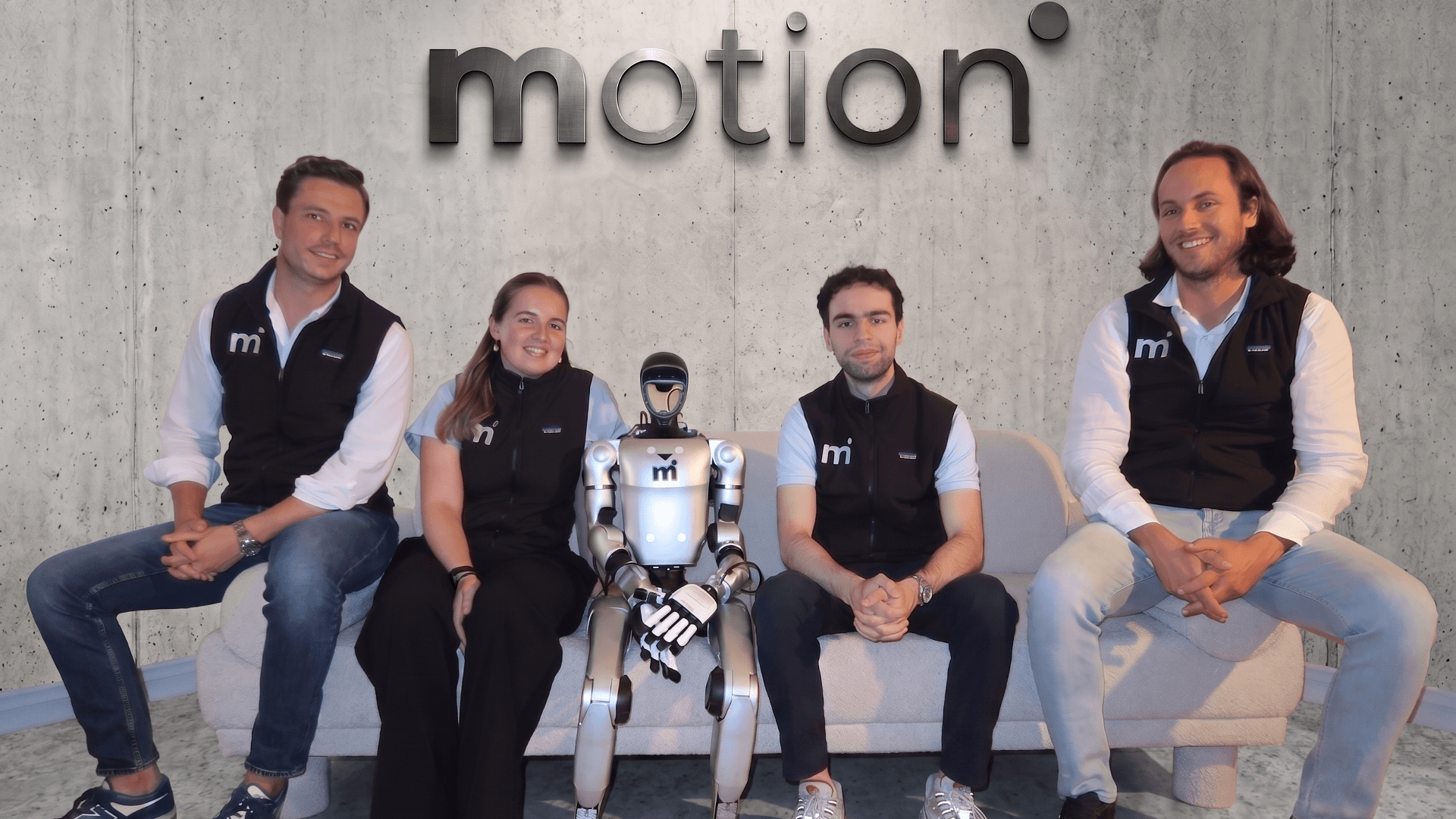
Motion Scales Humanoid Robotics with $2M Pre-Seed Funding
Brussels-based robotics company Motion has secured $2 million in pre-seed funding. This capital infusion is earmarked for expanding its Humanoids-as-a-Service (HaaS) platform and transitioning existing industrial pilot projects into full commercial deployment. The company aims to solidify its presence across Europe by leveraging this investment to scale operations and meet growing demand for advanced robotic solutions in industrial and logistical settings.
Motion differentiates itself by offering a service-based model for humanoid robots, abstracting the complexities of hardware acquisition, integration, and maintenance for its clients. This approach lowers the barrier to entry for businesses looking to adopt cutting-edge automation. The $2 million raised is expected to fuel significant growth in its European market penetration, focusing on key industrial hubs where the efficiency gains from humanoid robots are most pronounced.
The Humanoids-as-a-Service Model
The core of Motion's offering is its Humanoids-as-a-Service (HaaS) model. This is not simply about selling robots; it's about providing a complete robotic solution as a subscription. Think of it less like buying a car and more like leasing a fleet, complete with ongoing maintenance, software updates, and performance monitoring. This model allows businesses to adopt advanced robotics without the substantial upfront capital expenditure typically associated with purchasing and integrating complex machinery. For industrial clients, this means predictable operational costs and the flexibility to scale their robotic workforce up or down as needed.
Motion's HaaS platform handles the entire lifecycle of the humanoid robot, from initial deployment and customization to ongoing operational support. This includes ensuring robots are programmed for specific tasks, integrated seamlessly with existing workflows, and maintained to the highest standards. The company's focus on a service-oriented approach aims to de-risk the adoption of humanoid robotics for a broader range of businesses, particularly small and medium-sized enterprises that might otherwise be hesitant due to cost and complexity.
European Expansion Strategy
With this $2 million in pre-seed funding, Motion plans a strategic expansion across the European market. The company has already established industrial pilots, and the new funding will accelerate the transition of these pilots into full commercial deployments. This means moving from testing phases to production-level operations where the robots are integral to the client's daily business functions. The focus will be on regions with a strong industrial base and a clear need for automation in sectors like manufacturing, logistics, and warehousing.
The expansion will likely involve building out Motion's sales, support, and engineering teams within key European countries. Establishing a robust local presence is crucial for delivering on the HaaS promise, ensuring timely on-site support and rapid response to any operational issues. The company's strategic goal is to become a leading provider of accessible and scalable humanoid robotic solutions across the continent, making advanced automation a practical reality for more businesses.
The Path Forward for Motion
The successful closure of this pre-seed round positions Motion to make significant strides in the burgeoning field of humanoid robotics. The company's innovative HaaS model addresses a critical market need for flexible and cost-effective automation. As industrial sectors increasingly look for ways to enhance productivity, reduce operational costs, and address labor shortages, Motion's offering is well-timed.
What remains to be seen is how quickly Motion can replicate its pilot successes across a diverse range of European industrial environments. Each sector and each client site presents unique challenges for robotic integration. The ability to adapt its HaaS platform and robotic capabilities to these varied contexts will be key to its long-term success. The company's next steps will involve demonstrating scalable deployment and proving the economic viability of its service model beyond initial pilot phases.
The investment will also likely support further development of Motion's robot fleet and software platform. This could include enhancing the robots' dexterity, improving their AI capabilities for more complex tasks, and refining the data analytics provided to clients to optimize robot performance. By focusing on both hardware and service, Motion aims to create a comprehensive ecosystem for industrial automation that is both powerful and accessible.