%22%20%2F%3E%0A%20%20%3C%2Fsvg%3E)
Understanding Motherboard VRMs
The Voltage Regulator Module (VRM) on a motherboard is a critical component, responsible for converting the power supply unit's (PSU) 12V rail into the precise voltages required by the CPU. Think of it less like a simple switch and more like a sophisticated, miniature power plant for your processor. It comprises MOSFETs (Metal-Oxide-Semiconductor Field-Effect Transistors), chokes, and capacitors, all working in concert to deliver stable, clean power. The quality and design of these components, along with the heatsinking applied, directly influence how well a motherboard can handle the power demands of a CPU, especially under load.
When a CPU draws power, particularly during intensive tasks like gaming, rendering, or compiling code, it can demand significant current. A robust VRM can deliver this power efficiently, maintaining stable voltages and keeping its own temperature in check. Conversely, a less capable VRM might struggle, leading to voltage fluctuations and increased heat. This heat is a primary concern, as excessive temperatures can cause the VRM to throttle its own performance to prevent damage, indirectly limiting the CPU's potential.
The difference between a budget motherboard and a high-end one often lies in the VRM's design: the number of power phases, the quality of the MOSFETs and other components, and the size and effectiveness of the heatsinks. More power phases generally allow for a more even distribution of load, reducing stress on individual components and enabling higher current delivery. Premium components are often chosen for their efficiency and thermal characteristics. Finally, substantial heatsinks are crucial for dissipating the heat generated by the VRM components, preventing thermal throttling.
Testing Methodology and Results
To determine if these differences translate into real-world performance advantages, a direct comparison between a budget and a high-end motherboard was conducted. The test setup involved identical CPUs, RAM, and other components to isolate the VRM's impact. The primary metric for evaluation was the thermal performance of the VRMs under sustained load, using thermal imaging and temperature sensors. CPU performance was measured using synthetic benchmarks and real-world application tests.
The results showed a significant disparity in thermal performance. Under heavy CPU loads, the budget motherboard's VRMs reached considerably higher temperatures than those on the high-end board. Thermal imaging revealed hot spots on the budget board that were absent on its premium counterpart. The advanced heatsinks and more robust power delivery system on the high-end board effectively managed the heat, keeping VRM temperatures well within safe operating limits.
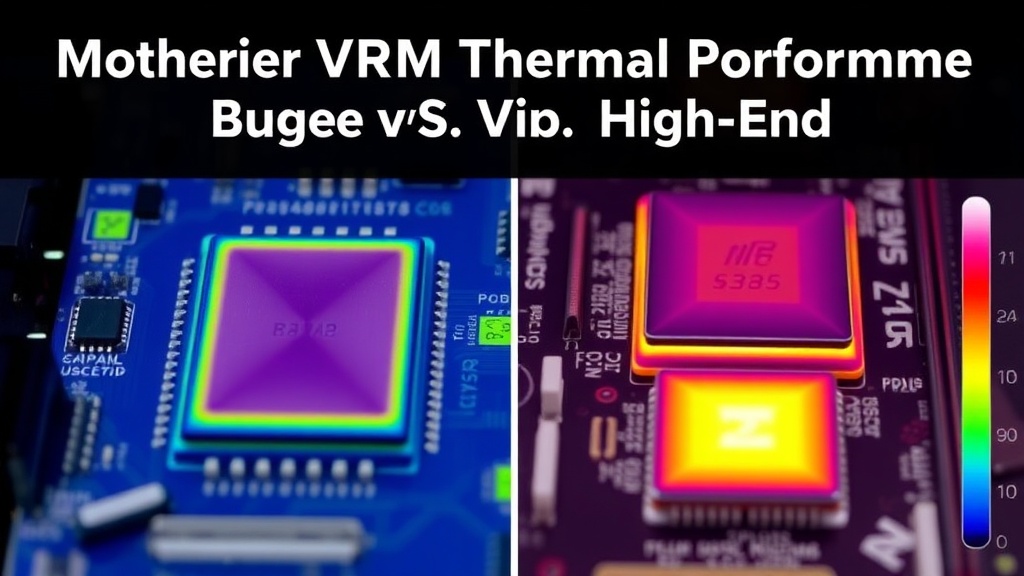
This thermal advantage for the high-end board directly correlated with CPU performance. While both boards could technically run the CPU, the budget board showed signs of thermal throttling. This means that as the VRM heated up, it began to limit the CPU's clock speed to prevent overheating. The high-end board, with its superior thermal management, maintained higher and more consistent CPU clock speeds throughout the stress tests. This difference was measurable in benchmark scores, with the high-end board consistently outperforming the budget board, especially in tasks that heavily utilized the CPU for extended periods.
Does it Really Matter?
For the average user performing light tasks like web browsing, office applications, or casual gaming, the difference in VRM performance might be negligible. A modern CPU is often capable of boosting adequately even on a basic motherboard for these workloads. The thermal headroom provided by a high-end VRM is largely overkill when the CPU is not being pushed to its absolute limits consistently.
However, for enthusiasts, content creators, developers running complex simulations, or gamers pushing for the highest frame rates with high-end CPUs, the distinction becomes critical. Processors like Intel's Core i9 or AMD's Ryzen 9 series are power-hungry chips. When paired with a budget motherboard, their full potential is often artificially capped by the VRM's inability to deliver stable, high-current power without overheating. This leads to lower sustained clock speeds, reduced performance, and potentially a less stable system under prolonged heavy use. The extra cost of a high-end motherboard, in these scenarios, is directly invested in unlocking the full performance of the CPU and ensuring system stability under demanding conditions.
The surprising detail here is not just the temperature difference, but how directly it translates into measurable performance loss on the budget board. It’s not a subtle, few-percent difference; in sustained heavy loads, the throttling can become quite pronounced, leaving significant performance on the table. This suggests that for users with high-performance CPUs, skimping on the motherboard's VRM can be a false economy, directly impacting the very performance they paid for in the CPU.
Furthermore, a more robust VRM can contribute to system longevity. By operating at lower temperatures, the VRM components are under less thermal stress, which can lead to a longer lifespan for the motherboard itself. While the initial cost is higher, the potential benefits in performance, stability, and durability make a compelling case for investing in a motherboard with a capable VRM, especially for users who intend to push their hardware.
Conclusion: Performance and Price
The testing confirms that motherboard VRM thermal performance is not merely an academic specification; it has tangible impacts on CPU performance, particularly under sustained heavy loads. Budget motherboards can often handle basic computing tasks, but they may struggle to deliver the consistent power required by high-end CPUs without encountering thermal throttling. Premium motherboards, with their superior VRM designs and heatsinking, provide the necessary thermal headroom and power delivery to allow CPUs to perform at their peak potential.
For users with mid-range CPUs and moderate usage patterns, a budget board may suffice. However, if you have invested in a high-end processor and plan to utilize its full capabilities for demanding applications, gaming, or content creation, the cost of a motherboard with a robust VRM is a worthwhile investment. It ensures that your expensive CPU can perform as intended, without being artificially held back by inadequate power delivery and thermal management.