
MosMos: A Unified Meeting Workflow Tool
The modern professional juggles an ever-increasing number of meetings, often leaving a trail of fragmented notes, missed action items, and duplicated effort. MosMos emerges as a new contender in the productivity space, aiming to consolidate the entire meeting lifecycle—from pre-meeting preparation to post-meeting follow-up—under a single, voice-driven platform. The core promise of MosMos is to transform spoken conversations into actionable insights and documentation, reducing the cognitive load on participants and ensuring that valuable information isn't lost.
At its heart, MosMos is a voice writing tool. This means it leverages speech-to-text technology to capture discussions. However, its ambition extends beyond simple transcription. The platform is designed to be integrated into various stages of the meeting process. Before a meeting, it can help users prepare by providing templates or summarizing previous related discussions. During the meeting, it actively transcribes the conversation in real-time. Crucially, after the meeting, MosMos is intended to provide summaries, identify action items, and facilitate follow-up, effectively acting as a digital scribe and assistant.
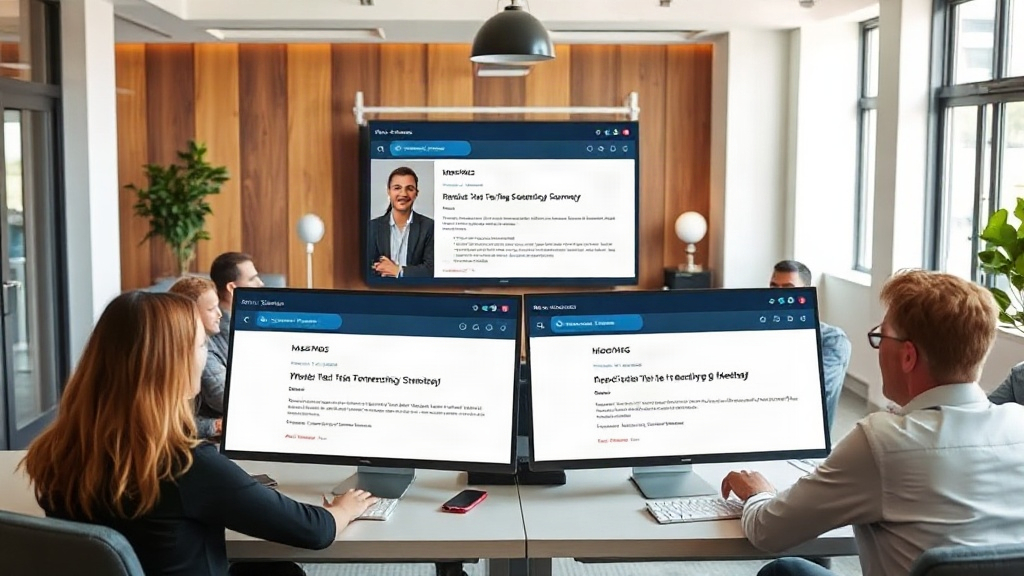
Capturing Conversations, Generating Insights
The technology behind MosMos relies on robust speech recognition to accurately convert spoken words into text. This isn't merely about creating a transcript; it's about understanding the context and intent of the conversation. For instance, MosMos is designed to differentiate between speakers, allowing for clearer attribution of points and action items. This speaker diarization is critical for making the transcript useful, moving beyond a monolithic block of text to something that resembles meeting minutes.
The 'before' aspect of MosMos’s offering suggests it could integrate with calendars and task management tools to help users prepare agendas or review prior outcomes. This proactive element is often overlooked in meeting productivity tools, which tend to focus solely on the post-meeting cleanup. By prompting users to think about the meeting's purpose and expected outcomes beforehand, MosMos aims to make meetings more efficient from the outset.
During the meeting, the real-time transcription serves multiple purposes. It can act as a safety net for note-takers, ensuring that key details are not missed. For remote or hybrid teams, it provides an accessible record for those who might have connectivity issues or who simply prefer to listen rather than type. The platform's ability to handle various accents and speaking styles will be a key determinant of its practical utility. The surprising detail here is not the real-time transcription itself, but the platform's stated intention to parse that transcription for specific types of information, such as decisions made and tasks assigned, without explicit commands.
Post-Meeting Automation and Follow-Up
The real value proposition of MosMos, as with many AI-powered productivity tools, lies in its post-meeting capabilities. The tool aims to automatically generate concise summaries of the discussion, highlighting key decisions and action items. This is where the 'voice writing' concept truly comes into play, transforming raw audio into structured, digestible information.
For founders and team leads, this means less time spent manually compiling notes and distributing follow-ups. Instead, MosMos could theoretically provide a draft summary and task list that can be reviewed and edited. This automation can significantly speed up the dissemination of meeting outcomes, ensuring that tasks are assigned and understood promptly. The efficiency gained here is not just about saving minutes; it's about accelerating project timelines and reducing the friction that often plagues collaborative work.
The platform's ability to identify action items is particularly important. Think of it less like a simple to-do list generator and more like a diligent assistant who has been listening intently, flagging commitments made by specific individuals. This requires a nuanced understanding of language, recognizing phrases that indicate agreement or assignment of responsibility. If MosMos can reliably do this, it moves beyond a transcription service to a genuine productivity enhancer.
The Competitive Landscape and Future Implications
MosMos enters a crowded market of meeting productivity tools. Companies like Otter.ai, Fireflies.ai, and Fathom offer similar transcription and summarization services. What might differentiate MosMos is its emphasis on a holistic workflow that spans before, during, and after meetings. Many existing tools focus primarily on transcription and summarization, leaving preparation and proactive follow-up to other applications.
For developers, the integration capabilities of MosMos will be key. Can it seamlessly connect with popular project management tools like Jira, Asana, or Trello? Can it export summaries and action items in formats that developers are accustomed to using? The success of such a tool often hinges on its ability to fit into existing developer workflows rather than forcing users to adopt entirely new processes.
What nobody has addressed yet is the long-term impact of such tools on meeting culture itself. Will the promise of automatic summarization lead to more, or fewer, meetings? Will it encourage participants to be less engaged in note-taking, relying solely on the AI, potentially missing subtle interpersonal cues or nuances that an AI cannot yet grasp? The effectiveness of MosMos will ultimately depend on its accuracy, its ease of integration, and its ability to genuinely simplify, rather than complicate, the complex social and logistical dance of professional meetings.