
Morsa Signals: Bridging the Gap in Developer Tool Visibility
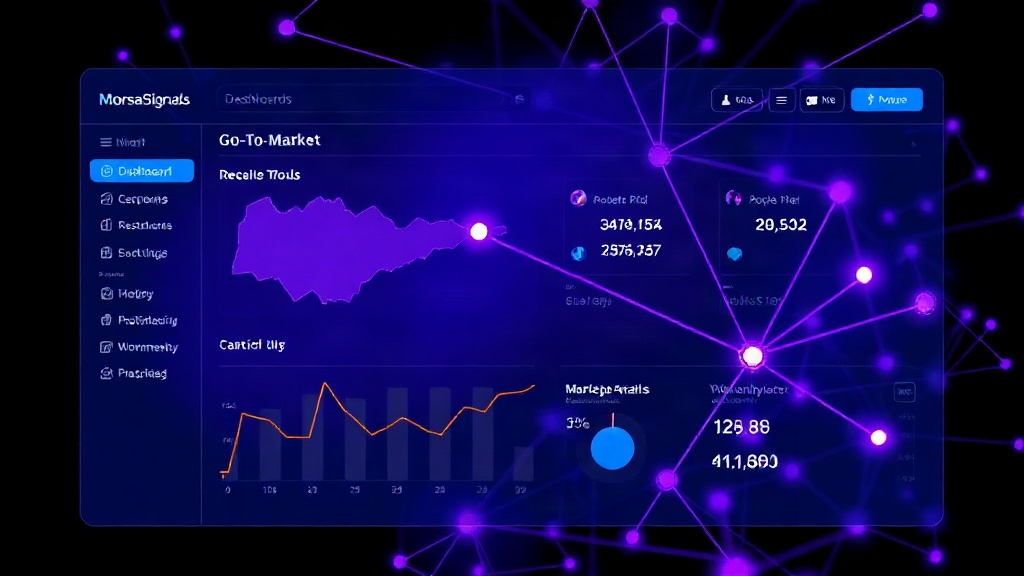
Morsa Signals officially launched today, introducing a new platform designed to enhance Go-To-Market (GTM) and AI visibility specifically for developer tools. The company aims to address a critical gap in how software companies understand product adoption, user behavior, and the performance of AI models integrated into their offerings.
For many companies building developer tools, understanding how their product is actually used—and by whom—can be a significant challenge. Traditional analytics tools often fall short, failing to capture the nuanced workflows and technical metrics that matter to developers. Morsa Signals positions itself as the solution, providing a suite of tools to shed light on these often-opaque areas.
Understanding Go-To-Market for Developer Tools
The Go-To-Market strategy for developer tools differs substantially from consumer or enterprise software. Developers are a discerning audience; they value utility, performance, and seamless integration. Marketing and sales efforts must resonate with technical needs and pain points. Morsa Signals seeks to provide actionable insights into which GTM strategies are proving effective for developer tools. This includes tracking metrics related to adoption rates, feature usage among different developer segments, and the effectiveness of various outreach channels. The platform aims to help teams identify which features are resonating, where users might be encountering friction, and how effectively new features are being adopted.
This visibility is crucial for product managers and GTM teams. Without it, companies risk investing resources in marketing campaigns that don't reach their target audience, or developing features that go unused. Morsa Signals provides a data-driven approach, allowing teams to iterate on their GTM strategies based on real user behavior rather than assumptions.
AI Visibility: Tracking Model Performance and Integration
Beyond GTM, Morsa Signals focuses on the increasingly critical aspect of AI visibility. As more developer tools incorporate AI features—from code completion and generation to intelligent debugging and analytics—understanding the performance of these AI models becomes paramount. This is not just about accuracy metrics; it's about how the AI impacts the user experience and the overall utility of the developer tool.
Morsa Signals aims to provide developers and product teams with the tools to monitor AI model performance in real-world scenarios. This could include tracking metrics like inference speed, the relevance of AI-generated outputs, user feedback on AI features, and potential biases or errors. For instance, a tool using AI for code generation might see its adoption rise, but Morsa Signals could reveal that users frequently have to edit the generated code, indicating a performance issue with the AI model itself.
This level of granular AI visibility is essential for several reasons. Firstly, it allows for continuous improvement of AI models. By understanding where and how models are underperforming, teams can retrain them, fine-tune parameters, or explore alternative architectures. Secondly, it helps manage user expectations and build trust. Transparency about AI performance, even when it's not perfect, is often better than opaque failures. Finally, it can directly impact the bottom line. A poorly performing AI feature can lead to user churn, while a well-integrated and effective AI component can become a significant competitive advantage.
The Morsa Signals Approach
The platform is built with developers in mind, aiming for seamless integration into existing workflows. While specific technical details of its integration methods are not yet public, the emphasis on developer tools suggests an architecture that respects developer environments and data privacy. The goal is to provide these insights without adding significant overhead or complexity to the developer's day-to-day work.
Morsa Signals is entering a market where companies like Datadog, New Relic, and others offer broad observability solutions. However, Morsa Signals is carving out a niche by focusing specifically on the intersection of GTM and AI within the developer tool ecosystem. This specialized focus allows for deeper, more tailored insights than general-purpose observability platforms might provide for these specific use cases.
The company's Product Hunt launch indicates a direct appeal to the developer community for feedback and early adoption. This approach aligns with the ethos of many developer-first companies, fostering a collaborative environment for product development.
What This Means for the Future of Developer Tools
The launch of Morsa Signals highlights a maturing market for developer tools. As the ecosystem grows, so does the need for sophisticated analytics and performance monitoring. Companies that can effectively leverage data to understand their users and optimize their AI integrations will likely gain a significant edge.
For founders of developer tool companies, Morsa Signals offers a way to de-risk product development and GTM strategies. By providing clear visibility into what's working and what's not, it enables more agile and data-informed decision-making. For developers, it promises tools that are not only functional but also demonstrably improving through focused AI performance tracking and better GTM alignment that reflects their actual needs.
The challenge ahead for Morsa Signals will be to prove the depth and accuracy of its insights, and to demonstrate tangible ROI to its target customers. As AI continues to be embedded into more developer workflows, platforms that can provide clear visibility into these complex systems will become increasingly indispensable.