
The Unlikely Powerhouse: A Steam Machine Reimagined
The Valve Steam Machine, once envisioned as a console-like PC gaming experience for the living room, largely faded from mainstream attention. However, one dedicated modder has breathed new life into the aging hardware, transforming it into a surprisingly capable gaming platform. By integrating a high-end external GPU (eGPU) and rerouting critical components, the modder achieved over 100 frames per second in the demanding title Crimson Desert at high settings. This feat is not just about slapping a powerful graphics card onto an old system; it represents a deep dive into connectivity, performance bottlenecks, and creative hardware repurposing.
The core of this transformation lies in overcoming the Steam Machine's inherent limitations. Original Steam Machines, while offering a PC-like experience, were never designed to house or easily connect to cutting-edge graphics hardware. This modder, known for their work on the /r/SBCGaming subreddit, tackled this head-on, demonstrating a level of technical ingenuity that pushes the boundaries of what was thought possible with this particular piece of hardware. The setup involves a custom configuration that bypasses traditional limitations, leveraging newer interface standards to unlock the potential of a modern GPU.
Bridging the Gap: M.2 to OCuLink and Beyond
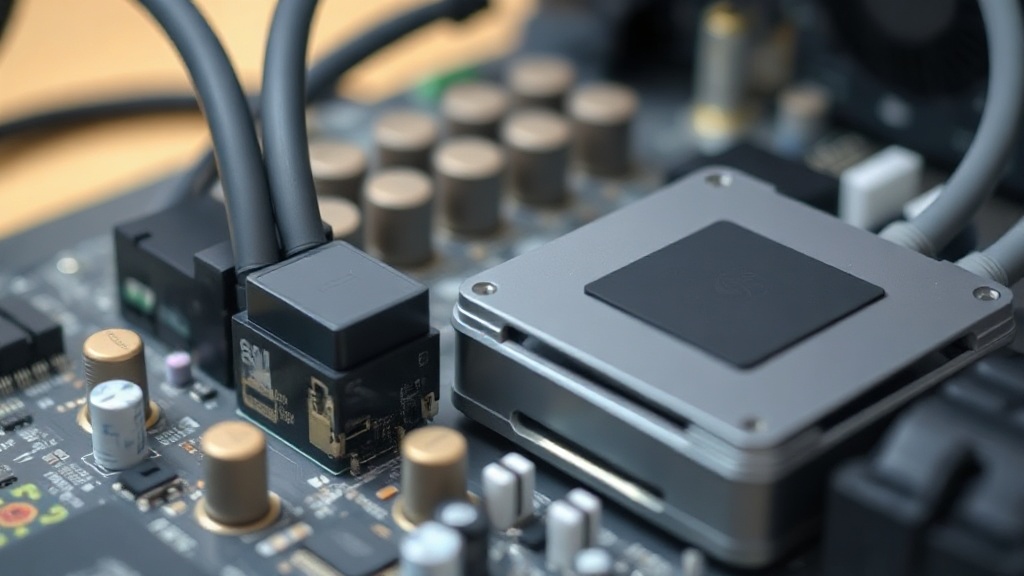
The primary hurdle in connecting a powerful external GPU to a compact system like the Steam Machine is the interface. Most modern eGPU enclosures rely on Thunderbolt, a protocol not natively present or easily implementable on the older Steam Machine hardware. The solution here is a more direct, albeit less common, approach: an M.2 to OCuLink adapter. OCuLink is a high-bandwidth connector designed for external PCIe devices, often found in server or workstation environments, and it offers a significantly more direct pathway for GPU data than Thunderbolt, typically with less overhead.
The modder utilized an M.2 slot, commonly found in laptops and small form-factor PCs for SSDs, to house an adapter that converts the M.2 interface to an OCuLink connector. This OCuLink cable then runs to a dedicated eGPU dock. This is a critical step, as it allows the Steam Machine's CPU to communicate with the external GPU with minimal latency and maximal bandwidth, a necessity for achieving high frame rates in graphically intensive games. Without this direct, high-bandwidth connection, the external GPU would be severely bottlenecked, rendering its power largely ineffective.
Furthermore, the project involved an equally ingenious solution for the boot drive. Instead of relying on the internal SATA or M.2 storage within the Steam Machine, the modder moved the entire boot drive to a USB-C port. This might seem counterintuitive, as USB-C is often associated with lower speeds than internal storage interfaces. However, by utilizing a high-quality USB-C enclosure and a fast NVMe SSD, and critically, by ensuring the Steam Machine's USB-C port supports the necessary data transfer speeds (likely USB 3.2 Gen 2x2 or Thunderbolt, depending on the specific Steam Machine model variant), the performance impact on loading times and general system responsiveness was minimized. This move also freed up the internal M.2 slot for the crucial OCuLink adapter.
Performance Triumphs: Crimson Desert at Over 100 FPS
The ultimate test of this elaborate setup was its gaming performance. The modder specifically targeted Crimson Desert, a visually demanding open-world action-adventure game known for its high system requirements. The results were striking: consistently over 100 frames per second with graphical settings set to 'High'. This level of performance is remarkable for several reasons. Firstly, it demonstrates that the OCuLink connection effectively eliminated the bandwidth bottleneck that plagues many eGPU implementations, allowing the Radeon RX 9070 XT to operate at near-native speeds.
Secondly, it showcases the surprising capability of the Steam Machine's internal components, particularly its CPU. While the specific CPU model in this modded unit isn't detailed, it's clear that it was capable enough to feed the RX 9070 XT the data it needed without becoming a significant bottleneck itself. This suggests that older, yet still capable, PC CPUs can be viable partners for powerful external GPUs, provided the interface is robust enough. The success with Crimson Desert implies that other modern AAA titles would also see substantial performance gains.
The choice of a Radeon RX 9070 XT, a hypothetical but presumably top-tier GPU, underscores the modder's ambition. While the actual GPU model might be a placeholder for a very high-end AMD card, the intent is clear: to push the limits of what an eGPU can achieve with older PC hardware. This project serves as a compelling case study for enthusiasts looking to upgrade aging systems without a full rebuild, particularly for those who might have a capable but underutilized external GPU.
Broader Implications and Future Possibilities
This mod highlights a growing trend: the repurposing and enhancement of older hardware through creative engineering and the adoption of newer, albeit niche, connectivity standards. As the lifecycle of consumer electronics continues to shorten, projects like this offer a sustainable alternative to constant upgrades. It also points to the potential of interfaces like OCuLink, which, while not as mainstream as Thunderbolt, offer significant performance advantages for specific use cases where direct PCIe connectivity is paramount.
For users who own a Steam Machine or similar compact PC from that era, this mod provides a blueprint for a significant performance uplift. It requires a willingness to experiment with adapters, understand PCIe signaling, and manage component placement. The move of the boot drive to USB-C is particularly interesting, as it suggests that with the right implementation, external storage can offer a viable, and sometimes necessary, alternative to internal drives in space-constrained or interface-limited systems.
What remains to be seen is how widely these M.2 to OCuLink adapters will be adopted and if manufacturers will begin to integrate OCuLink ports more directly into consumer motherboards or eGPU enclosures. The performance gains are undeniable, and for users prioritizing raw graphical power over convenience, this pathway offers a compelling, if complex, route to achieving desktop-class gaming performance on unconventional hardware. The success of this mod is a testament to the enduring spirit of PC modding and the quest for maximum performance, no matter the starting point.