The Allure of the Algorithmic Crystal Ball
The promise of machine learning in stock prediction is a potent siren song for many. Picture yourself scrolling through finance forums at 2 a.m., the glow of candlestick charts reflected in your tired eyes, when someone claims to have built an LSTM that predicts Apple’s next move with 92% accuracy. This is a familiar scene, evoking that potent mix of excitement and deep-seated skepticism. The quest to harness ML for consistent market gains is a journey many embark on, often driven by the belief that complex algorithms can transform the inherent noise of market data into a predictable signal. The reality, however, is far more nuanced. The core challenge isn't about finding a magic bullet, but about understanding the fundamental nature of financial markets and the realistic capabilities of ML within them. The journey often teaches more about humility than about hitting home runs.
Markets: Adaptive, Noisy, and Fundamentally Unpredictable
The stark truth is that financial markets are almost impossible to predict with consistent accuracy. They are not static systems governed by immutable laws; instead, they are dynamic, adaptive ecosystems. Every piece of information, every trade, every human emotion and algorithmic decision alters the landscape in real-time. The moment you think you've modeled a pattern, the market adapts, rendering your model obsolete. This inherent adaptiveness, coupled with the sheer volume of unpredictable factors—geopolitical events, unexpected news, shifts in consumer sentiment, and the actions of millions of other market participants—creates a level of noise that defies simple prediction. ML models, while powerful, are trained on historical data. If the market's underlying dynamics change, as they constantly do, past performance becomes a poor indicator of future results.
The Misconception: ML as a Price Predictor
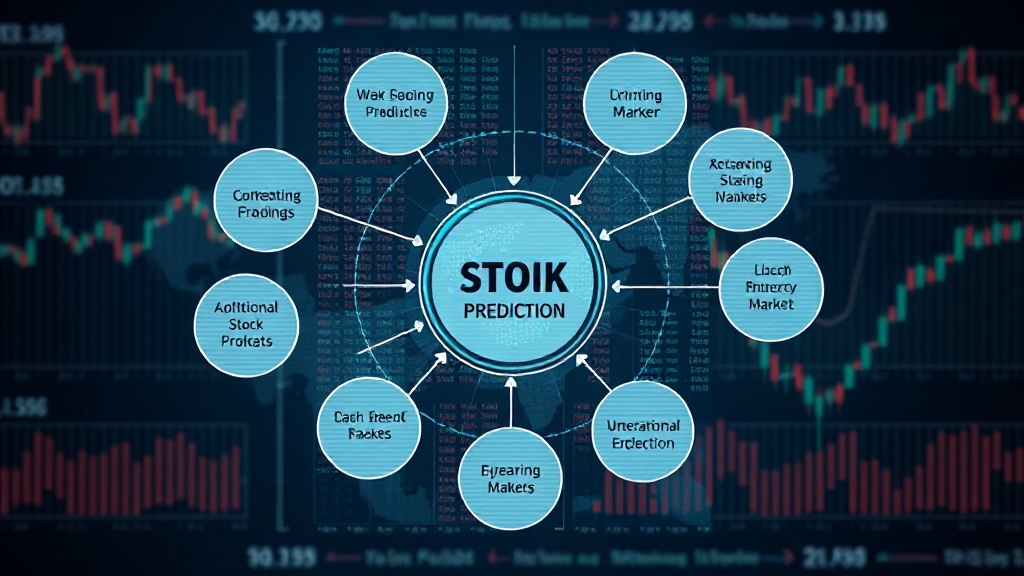
A common misconception is that ML can be used to reliably predict future stock prices. This is where the hype often overshadows reality. While ML algorithms can identify correlations and patterns in historical data, these patterns are often ephemeral. An LSTM model might achieve high accuracy on a specific historical dataset, but this accuracy rarely translates to out-of-sample, real-world trading performance. The market is not a fixed dataset to be solved. It’s a living entity that reacts to, and is influenced by, the very act of prediction. If a model becomes widely used and successful, its own trading activity would alter market dynamics, diminishing its own predictive power. This is a fundamental feedback loop that makes pure price prediction a Sisyphean task.
The True Power: Risk Management and Insight Generation
Where ML truly shines in finance is not in predicting exact prices, but in managing risk and generating deeper insights. Instead of a crystal ball, think of ML as a sophisticated risk assessment tool. It can analyze vast datasets—news sentiment, economic indicators, company fundamentals, social media trends, and historical price movements—to identify potential risks and opportunities that a human might miss. These models can help in:
- Volatility Forecasting: Predicting periods of high or low market volatility, allowing for adjustments in trading strategies or portfolio hedging.
- Sentiment Analysis: Gauging market sentiment from news and social media to understand the prevailing mood, which can be a leading indicator of price movements.
- Anomaly Detection: Identifying unusual trading patterns or data points that might signal manipulation, errors, or significant upcoming events.
- Portfolio Optimization: Using ML to construct portfolios that balance risk and return based on complex correlations and predicted market conditions.
- Factor Identification: Discovering subtle, non-obvious factors that influence asset prices, which can then be incorporated into more traditional quantitative models.
This shift in perspective—from prediction to risk management and insight generation—is crucial. It moves ML from the realm of speculative prediction to that of informed decision-making. The goal becomes not to know precisely what will happen, but to understand the probabilities and potential outcomes, and to position oneself accordingly to mitigate downside and capture upside where feasible.
The Human Element: Strategy, Interpretation, and Humility
Even with advanced ML tools, the human element remains indispensable. ML models provide data-driven insights and risk assessments, but human judgment is required to interpret these outputs within a broader strategic context. A trader must decide how to act on a sentiment analysis report, or whether to hedge a portfolio based on a volatility forecast. Furthermore, the development and deployment of these ML systems require expertise not only in data science and ML but also in finance and economics. A deep understanding of market mechanics, behavioral finance, and the limitations of the models themselves is paramount. This understanding fosters a necessary humility—an acknowledgment that the market will always retain an element of unpredictability, and that no model is perfect. The true skill lies in building robust systems that can adapt to evolving market conditions and in using ML as a powerful assistant, rather than an infallible oracle.
Separating Hype from Reality: What Developers Need to Know
For developers and data scientists venturing into ML for finance, it's vital to temper expectations. The narrative of effortless, high-accuracy stock prediction is largely a myth. Instead, focus on building models that enhance understanding of market dynamics, identify risk factors, and generate actionable insights. This involves rigorous backtesting, out-of-sample validation, and a constant awareness of model drift and market regime changes. Success is measured not by a single prediction's accuracy, but by the ability to consistently generate better risk-adjusted returns or to make more informed decisions than would be possible without ML. Embrace the complexity, acknowledge the noise, and focus on the practical applications of ML in risk management and intelligence gathering.