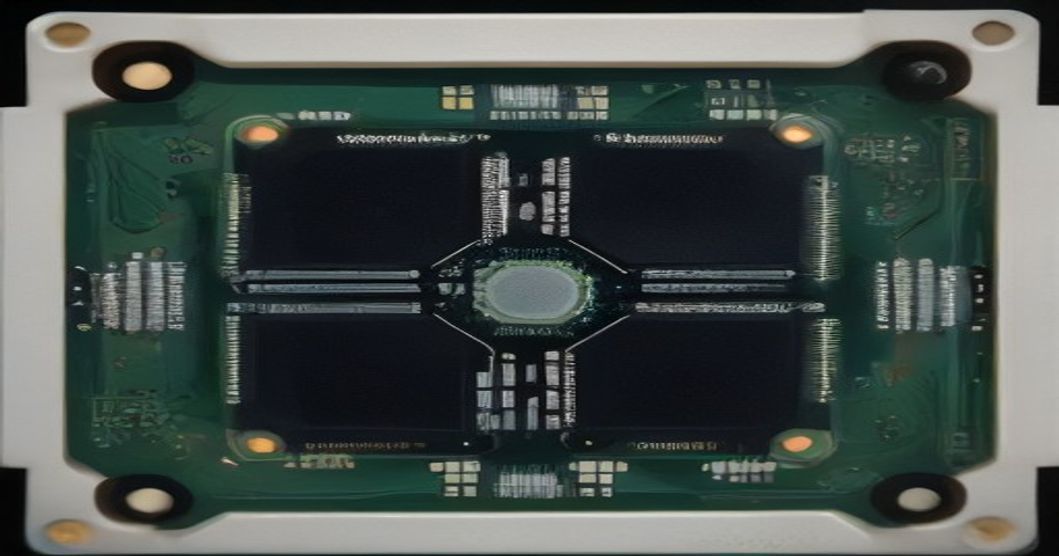
The MK Robot's New Brain: Raspberry Pi 5
The MK Robot, a personal project aiming to create a fully autonomous and interactive physical agent, is undergoing a significant hardware upgrade. At its core, the project is integrating a Raspberry Pi 5 with 16GB of RAM. This move is not merely an iterative improvement; it represents a strategic decision to bolster the robot's edge processing capabilities. Edge AI, processing data directly on the device rather than relying on cloud servers, is crucial for real-time decision-making, reduced latency, and enhanced privacy in autonomous systems. The Raspberry Pi 5, with its significantly improved CPU and GPU performance over previous generations, is well-suited for this task, offering a more powerful platform for running complex AI models locally.
The user behind the MK Robot project, posting on Reddit's r/artificial, outlines a clear roadmap focused on transforming a functional physical frame into a truly intelligent agent. This involves not just hardware upgrades but also a sophisticated AI strategy. The choice of the Raspberry Pi 5 is a deliberate one, likely driven by its affordability, extensive community support, and the growing ecosystem of AI libraries and frameworks compatible with ARM architectures. For a project that aims for autonomy and interactivity, having a robust local compute unit is paramount. This allows the robot to perceive its environment, process that sensory data, make decisions, and act upon them without the delays inherent in cloud communication. Think of it less like a remote-controlled toy and more like a self-driving car's onboard computer, but on a smaller, more accessible scale.
AI Roadmap and Future Capabilities
The upgrade to the Raspberry Pi 5 is the first step in a larger AI roadmap. The ultimate goal is to achieve full autonomy and interactivity. This implies several key capabilities that the new hardware will enable:
- Real-time Perception: Processing sensor data (from cameras, lidar, ultrasonic sensors, etc.) to understand the robot's surroundings in real-time. This is essential for navigation, object recognition, and avoiding obstacles.
- On-board Decision Making: Running AI models for tasks such as path planning, behavior selection, and adaptive responses to environmental changes. The 16GB RAM will be critical for loading larger, more sophisticated models.
- Interactive Communication: Potentially enabling natural language processing (NLP) and voice recognition/synthesis locally, allowing for more seamless human-robot interaction without cloud dependency.
- Learning and Adaptation: Facilitating on-device machine learning, enabling the robot to learn from its experiences and improve its performance over time.
The specific AI models and algorithms to be employed are not detailed in the initial announcement, but the choice of a powerful edge processor like the Raspberry Pi 5 suggests an ambition to run advanced techniques. This could include deep learning models for computer vision, reinforcement learning for navigation and control, and potentially even generative AI for more dynamic interactions. The 16GB RAM variant is particularly noteworthy, as it typically allows for larger neural network architectures and more extensive datasets to be loaded into memory, directly impacting the complexity and accuracy of the AI's capabilities.
Implications for Autonomous Agents
The MK Robot project, by prioritizing on-board compute with the Raspberry Pi 5, aligns with a broader trend in robotics and AI development. As AI models become more powerful and hardware becomes more efficient, there's a growing push to move AI processing from the cloud to the edge. This has profound implications for the future of autonomous agents, whether they are robots, drones, or even smart devices.
Edge AI offers several distinct advantages. Latency is a primary concern; for a robot to react quickly to a sudden obstacle, it cannot afford the round-trip delay to a cloud server. Security and privacy are also enhanced, as sensitive data from sensors can be processed locally without being transmitted. Furthermore, edge processing reduces reliance on stable network connectivity, making autonomous systems more reliable in diverse environments. The Raspberry Pi 5, positioned as a powerful yet accessible edge computing platform, democratizes the development of such advanced agents. It allows hobbyists, researchers, and small teams to experiment with sophisticated AI capabilities that were previously only accessible with much larger, more expensive hardware.
What remains to be seen is the specific software stack the MK Robot project will deploy. Will they leverage frameworks like TensorFlow Lite, PyTorch Mobile, or ONNX Runtime for optimized model inference? The choice of operating system, likely a Linux distribution tailored for the Raspberry Pi, will also play a crucial role. The success of the MK Robot's journey from a functional frame to a fully autonomous agent will hinge on the synergy between its chosen hardware, the AI algorithms it implements, and the software that orchestrates their interaction. This project serves as a microcosm of the challenges and opportunities in building intelligent, physical agents that can operate independently in the real world.